
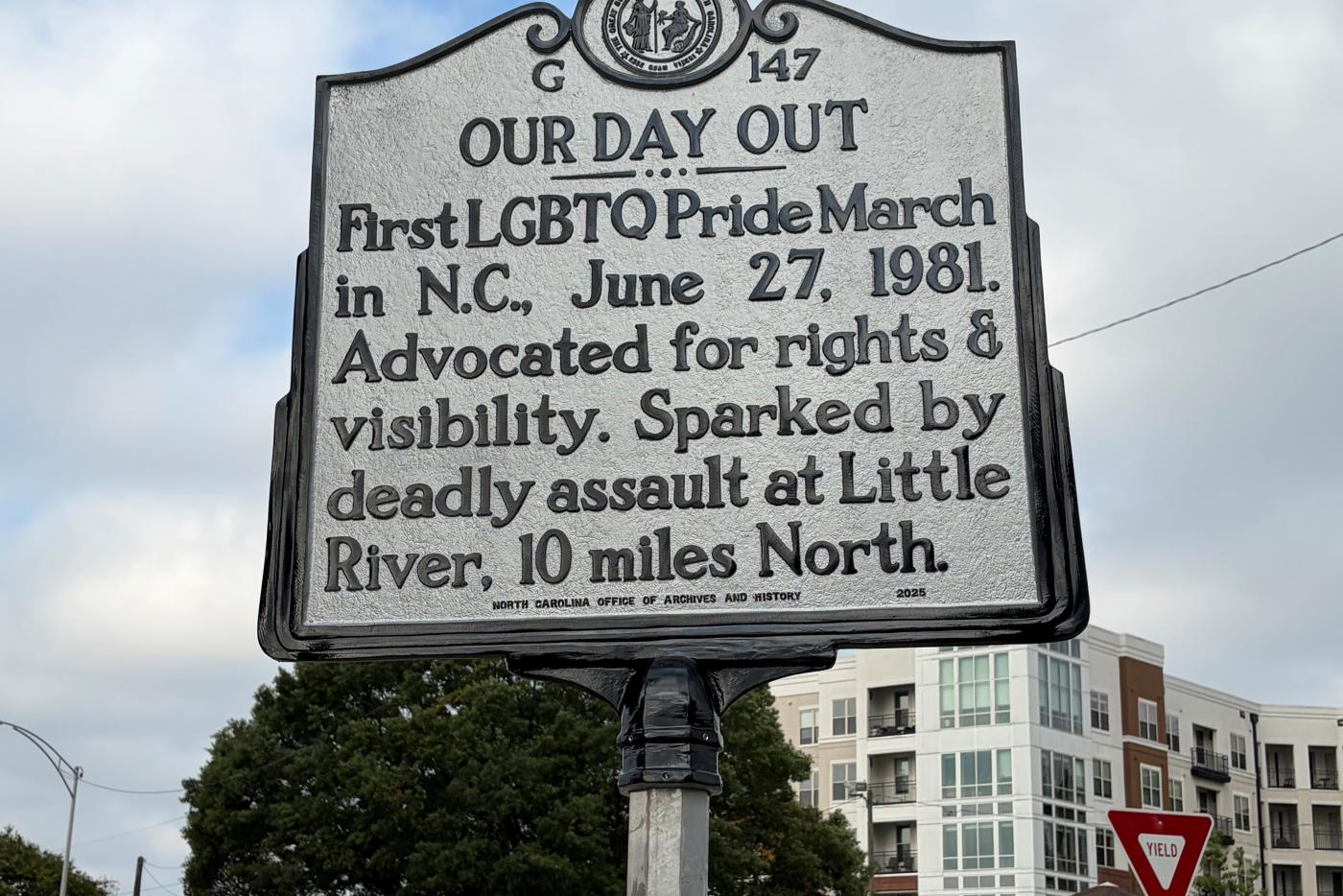
Location: N. Great St. and Bus 70 in Durham
County: Durham
Original Date Cast: 2025
On April 12, 1981, a violent anti-gay attack at Little River in Durham County, North Carolina, became a pivotal moment in the state’s LGBTQ+ rights movement. Ronald “Sonny” Antonevitch, a 46-year-old father, was among those brutally attacked while sunbathing and later died from his injuries. Although Antonevitch was not part of the LGBTQ+ community, the attack was understood as being motivated by homophobic assumptions. His death galvanized queer North Carolinians and their allies, drawing attention to the violence and discrimination faced by LGBTQ+ people across the state.
The attack, which also injured three others, sparked immediate outrage. Vigils were held outside the Durham County Courthouse, and within weeks, activists organized “Our Day Out,” the first LGBTQ+ pride march in North Carolina, held on June 27, 1981. The march began at Five Points Plaza in downtown Durham and looped past the courthouse, where the vigils had taken place. Approximately 300 people participated; some marchers wore paper bags over their heads to conceal their identities, underscoring the danger of being openly queer in 1980s North Carolina.
The march was both a protest and a celebration. It marked a shift from mourning to mobilization, transforming grief into collective action. This event laid the groundwork for future Pride celebrations in the state, including the establishment of an annual Pride march in Durham in 1986.
The significance of “Our Day Out” lies not only in its status as North Carolina’s first Pride march but also in its role as a response to violence. As John Short, former director of the North Carolina Pride Parade and Festival, described it, the history of Pride in the state begins with “a murder, a march, a parade.” The march was part of a broader national trend of LGBTQ+ communities responding to violence with visibility and activism, echoing the legacy of the Stonewall Riots and other early liberation movements.
Ronald Antonovitch's death and the subsequent "Our Day Out" march were crucial in shaping the trajectory of LGBTQ activism in Durham and North Carolina. These events highlighted the intersection of personal tragedy and political activism, showing how individual acts of violence can spur broader social movements. The courage displayed by the marchers in 1981 continues to inspire and inform contemporary LGBTQ advocacy, reminding us of the ongoing struggle for equality and justice.
References:
Durham Morning Herald. “Gays Call for Rights During Durham March.” Durham Morning Herald, June 28, 1981.
Greensboro Justice Fund. “Greensboro Justice Fund Deplores Murders.” Press release, April 17, 1981. LGBTQ Collection, North Carolina Collection, Durham County Library.
News & Observer. “40 Years of Pride in Durham: History of a Moment That Ignited a City’s LGBTQ Movement.” News & Observer, June 27, 2021.
Seim, Ian. Interview with John Short. Southern Oral History Program, University of North Carolina at Chapel Hill, March 12, 2014.
The Durham Voice. “‘Oh God, I’m Dying!’ The Forgotten Man Whose Murder Founded Durham Pride.” The Durham Voice, March 4, 2025.
The Front Page. “One Man Murdered, Three Injured in Anti-Gay Attack Near Durham.” The Front Page, April 1981.