Summer is in full swing at the North Carolina Aquarium on Roanoke Island as the aquarium launches a refreshed lineup of hands-on, imagination-fueled camps for children ages 6 to 13. The aquarium is part of the N.C. Department of Natural and Cultural Resources and is one of four facilities within the N.C. Aquariums system.
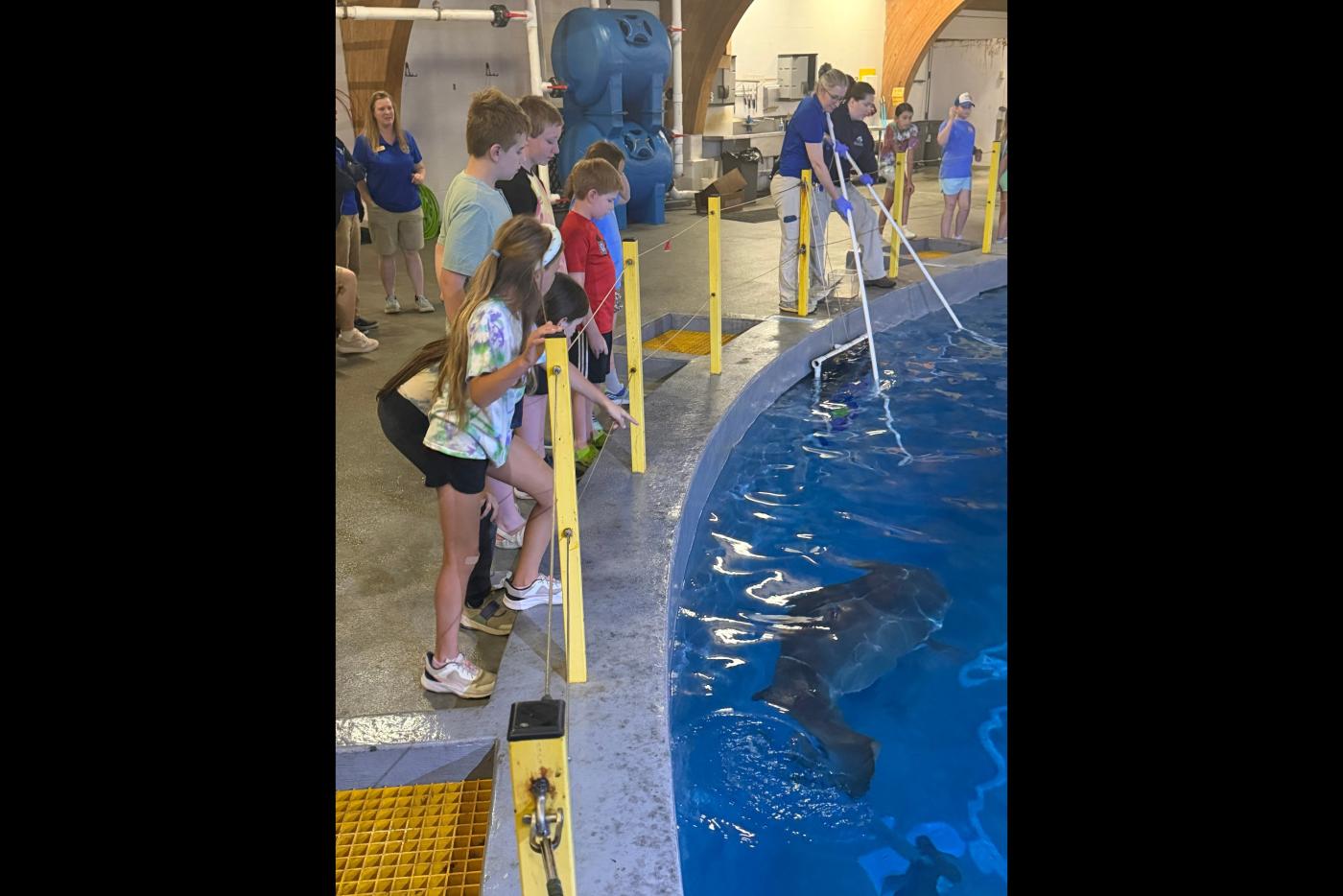
Camp season kicked off with Junior Aquarist for a Day, giving ages 9 to 12 a rare behind-the-scenes look at aquarium operations. Campers tested water quality, toured complex life-support systems, observed a shark feeding from above the Graveyard of the Atlantic exhibit and dissected squid for an up-close look at marine adaptations.
More adventures follow all summer long. Single-day August camps give the youngest naturalists (ages 6-8) new ways to connect with wildlife. Scales, Fur & Feathers Day Camp on Aug. 10 introduces animal adaptations through live encounters, while Aquarium Time! Day Camp on Aug. 11 offers a playful, VIP-style tour of the aquarium’s exhibits. Creepy Crawlies Day Camp highlights the tiny but mighty world of invertebrates, and older campers (ages 9-12) can hit the road to explore local coastal sites during Coastal Trotters Day Camp.
One of this year’s can’t-miss programs is Nature Play Wonders Camp, running Aug. 3-7 for ages 6 and 7. Campers can dive into outdoor discovery with leaf-monster creations, “Mud Café” play, rainbow nature hunts and habitat building across the aquarium’s grounds. Each day blends outdoor exploration with visits to aquarium exhibits and animal ambassadors — making it a perfect choice for kids who love to move, imagine and explore.
For an even deeper experience, Aquarist Day Camp invites campers into a full week of marine-care training, including diet prep, life-support system basics, enrichment techniques and animal-welfare insights. Meanwhile, Junior Fisherman’s Camp reels in young anglers for a hands-on introduction to native fish, sustainable practices, knot-tying, crabbing and conversations with marine science partners.
Several camps still have openings, with registration available through the aquarium’s website.
Teens and adults seeking ways to stay involved beyond childhood can join the aquarium’s year-round volunteer program, supporting touch pools, visitor services, discovery carts and guest learning throughout the facility. Family volunteer opportunities offer ways for adults and children to participate together.
This summer also marks the aquarium’s 50th anniversary — celebrating five decades of conservation, education and community connection on the North Carolina coast.
About the North Carolina Aquarium on Roanoke Island
Located on the Outer Banks in Manteo, N.C., the N.C. Aquarium on Roanoke Island is part of N.C. Aquariums, which includes four attractions along North Carolina’s coast and is a division of the N.C. Department of Natural and Cultural Resources. The 63,000 square-foot facility on 16 acres overlooks the Croatan Sound and houses over 2,200 animals. Over 315,000 guests visit the Aquarium each year to see the 285,000-gallon "Graveyard of the Atlantic" shark and ocean habitat, visit the Sea Turtle Assistance and Rehabilitation (S.T.A.R.) Center, and learn why North Carolina's waterways are so special. As an educational attraction, the mission of N.C. Aquariums is to inspire appreciation and conservation of our aquatic environments. The Aquarium is open from 9 a.m. to 5 p.m. every day except Thanksgiving and Christmas. For more information, visit www.ncaquariums.com/roanoke-island.
About the North Carolina Department of Natural and Cultural Resources
The N.C. Department of Natural and Cultural Resources (DNCR) manages, promotes, and enhances the things that people love about North Carolina — its diverse arts and culture, rich history, and spectacular natural areas. At more than 100 sites across the state, the department enhances education, stimulates economic development, improves public health, expands accessibility, and strengthens community resiliency. For more information, please visit www.dncr.nc.gov.