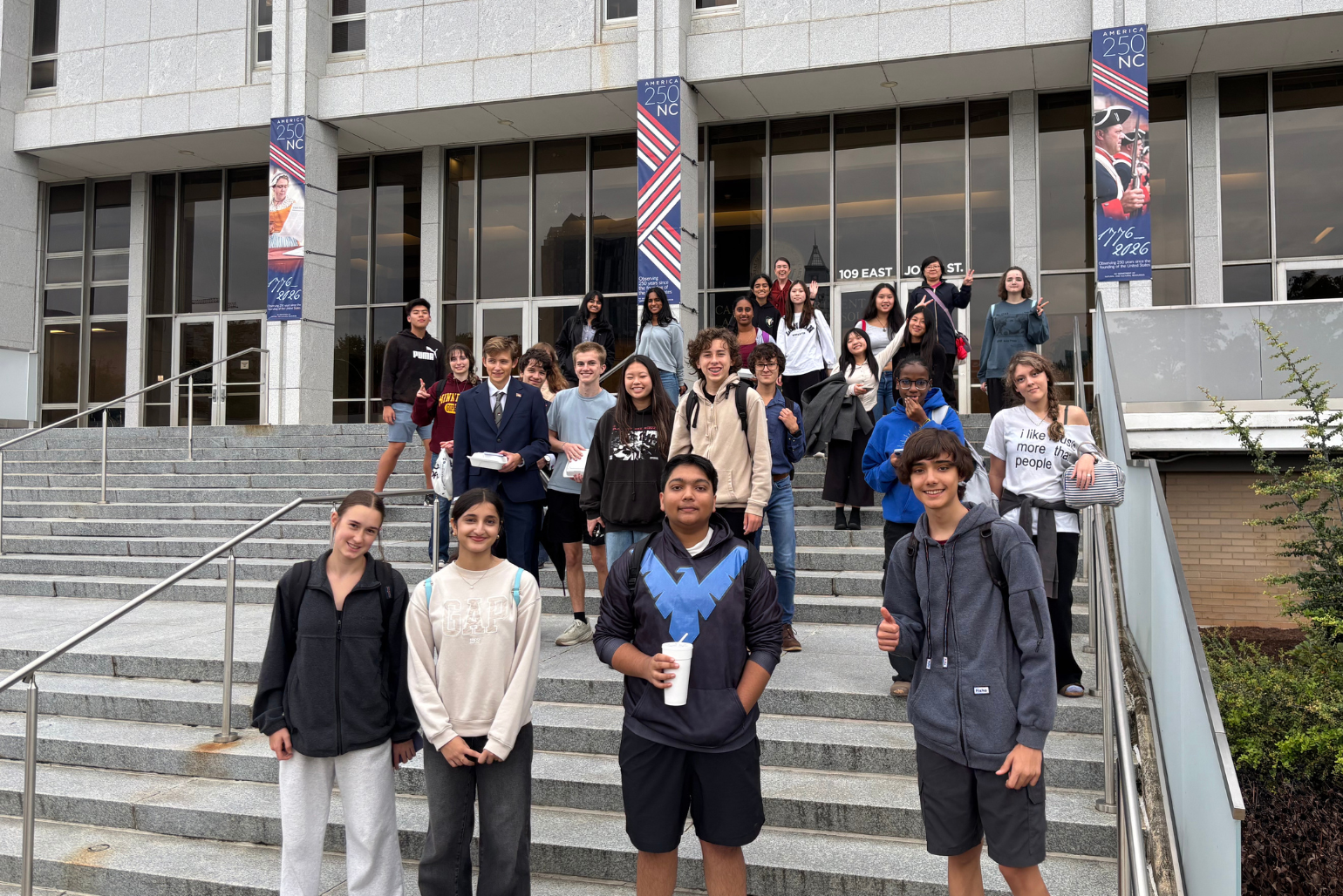
…I was thrilled to see the NC State Capitol was hosting an exhibit that featured issues we were studying in class, and the Department of Natural and Cultural Resources staff were beyond helpful in setting up a field trip!
Green Hope High School is proud to be the first in Wake County to offer Asian American Studies Honors as an elective course. This class invites students to explore the rich histories and contemporary experiences of Asian Americans through critical themes central to Social Studies. Drawing on my experience as a 2025 America 250 NC Freedom Fellow, I’ve been applying the Fellowship’s emphasis on place-based learning into our curriculum. An exciting opportunity emerged when I discovered that the North Carolina State Capitol, managed by the NC Department of Natural and Cultural Resources (DNCR) Historic Sites division, was hosting an exhibit directly aligned with our studies: A Place We Call Home: Indian Americans in North Carolina. Thanks to DNCR’s support, we organized a meaningful and memorable field trip that brought our classroom learning to life.
We left from Green Hope and made our way to Raleigh strategically passing Cary landmarks to frame our day. The Nancy Jones House is the oldest residential structure in Cary, just down the road from Sri Venkateswara Temple of North Carolina. We compared and contrasted these structures and the way they have and currently serve important community needs. We are lucky to live in such a rich and varied community!
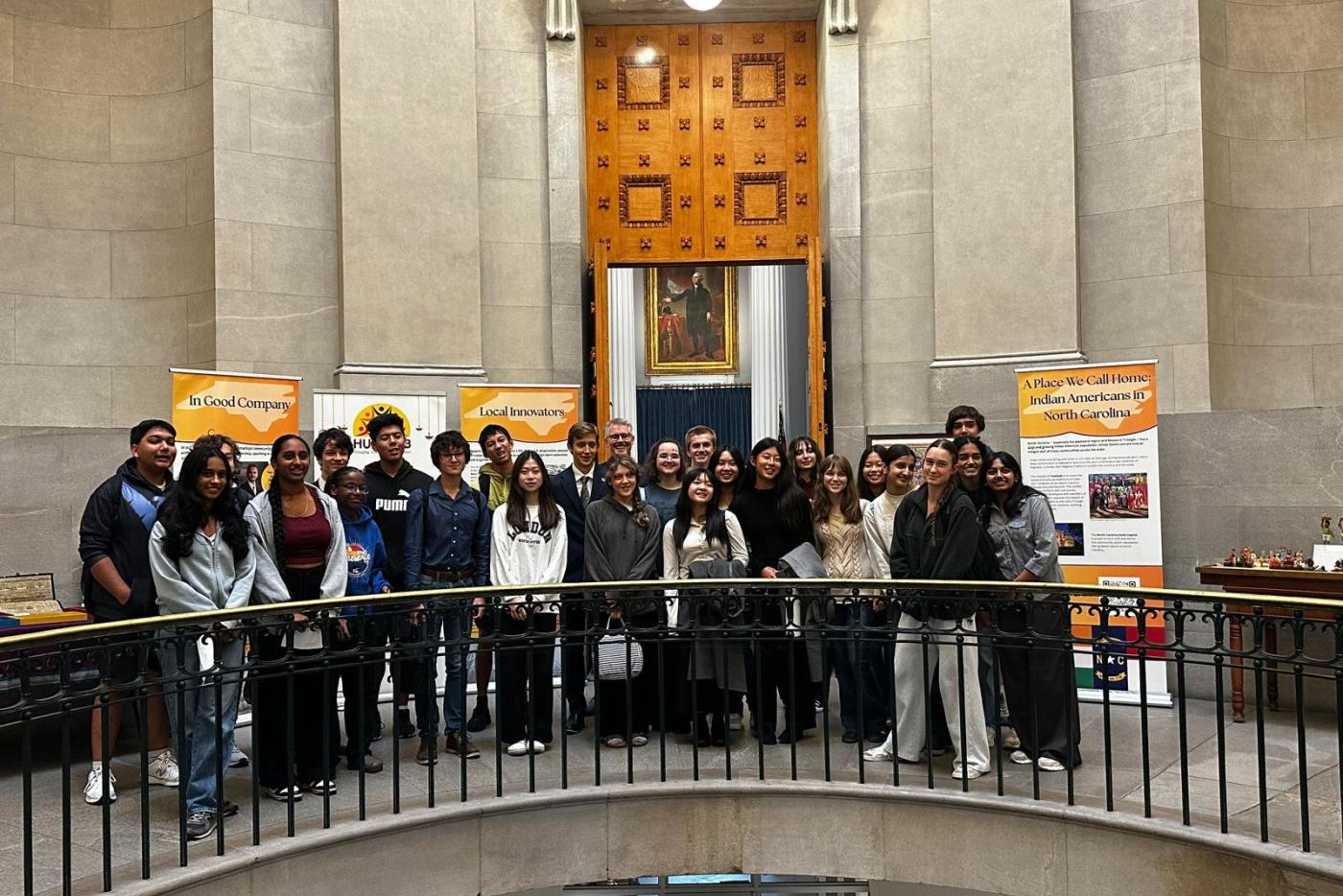
Our first stop was DNCR’s NC State Capitol, where Curator Anna Freeman took students through an engaging introduction to the space and the exhibit on display: A Place We Call Home: Indian Americans in North Carolina. Students dug into the cultural, entrepreneurial, and political figures highlighted and shared notes on connections to class themes.
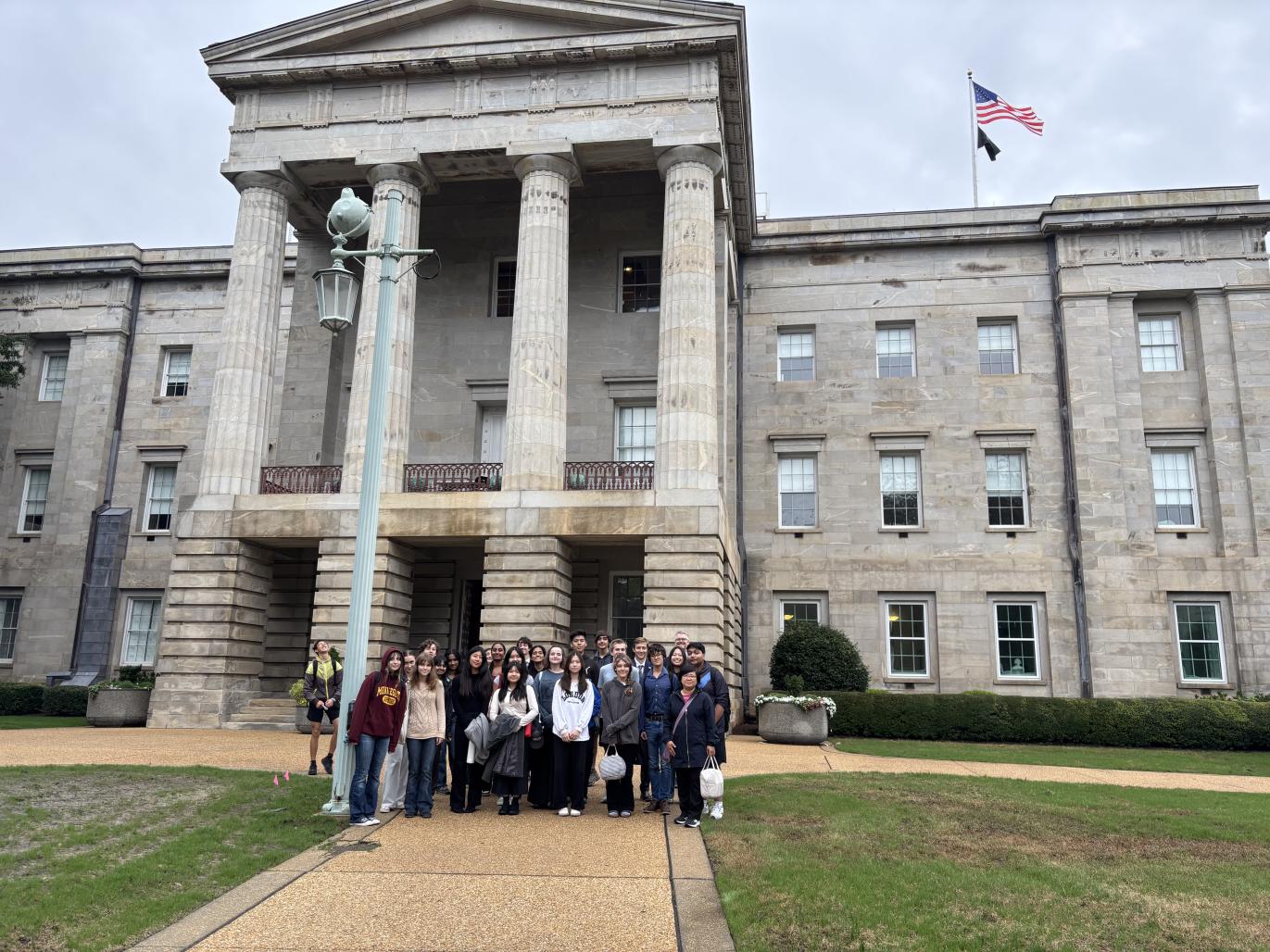
This built upon material from class, and students universally said being in space of the State Capitol, and experiencing the juxtaposition of the histories and cultures between the building and the exhibit, made it an invaluable experience. Students reflected on the experience:
“Building on previous knowledge, I saw examples like Indian Americans’ contributions to medicine and innovation, and I learned more about how Asian American leaders are beginning to shape politics. This confirmed what I knew before, but it gave me more specific and detailed examples.”
“I thought it was super cool to see how these places and objects serve as representations of my culture and religion and how it is seen by my community,” another student shared.
After analyzing the monuments surrounding the Capitol grounds, students toured the NC General Assembly and were honored to speak with Asian American elected officials. Senator Chaudhuri and Representative Cervania were incredibly generous with their time, sharing how their work has emerged from and been beneficial to their community.
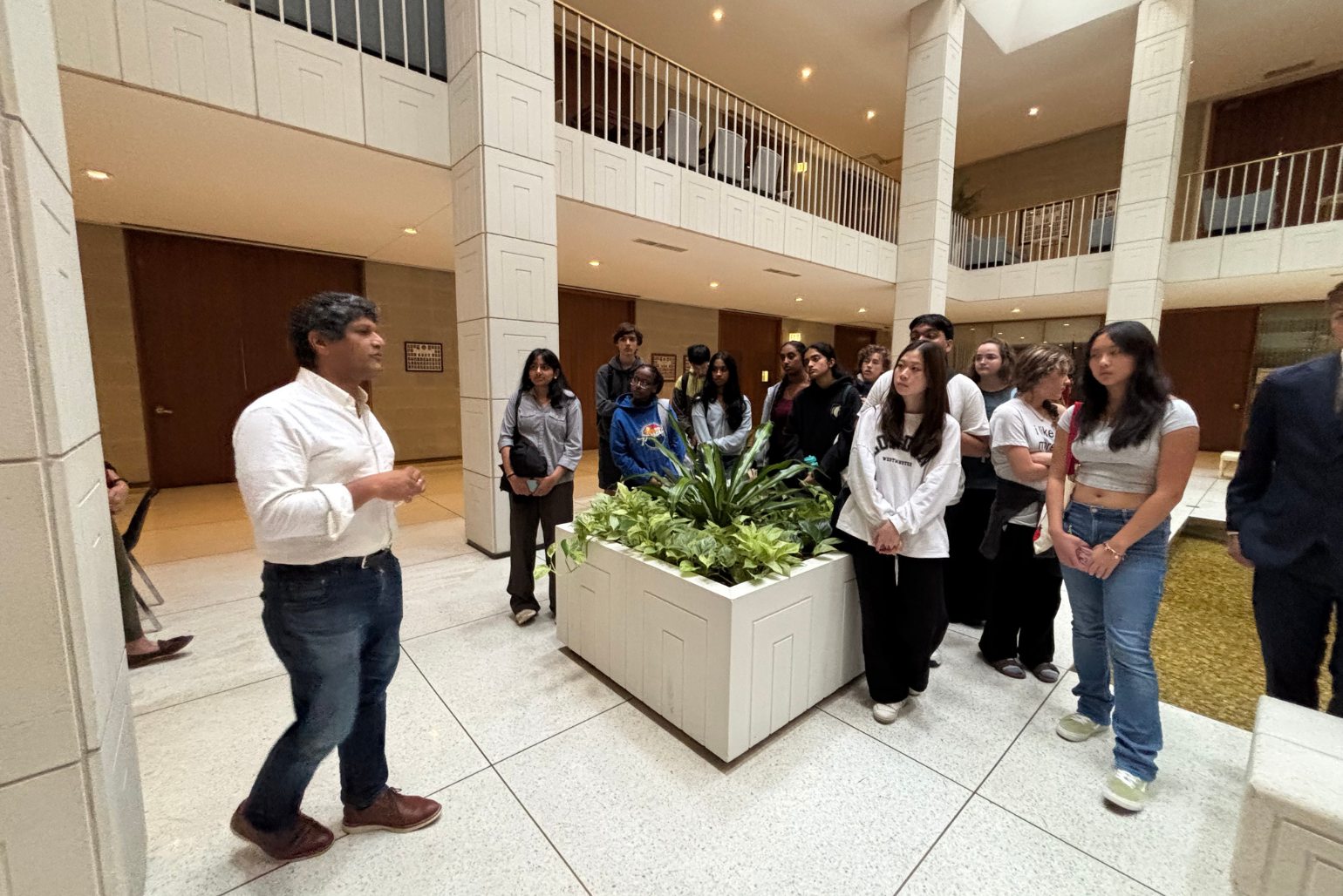
Students reflected on how their own ideas about civic participation changed through these conversations.
“Senator Chaudhuri emphasized that it’s never too young to get involved in politics; our voices should be heard as well.”
The biggest hit of the day was our final stop, the State Archives of North Carolina. I have to confess this is what I was most nervous about. My students are great, but I wondered if the Archives would be “too dry,” and whether they would have anything compelling to show these teenagers that would interest them. I shouldn’t have worried.
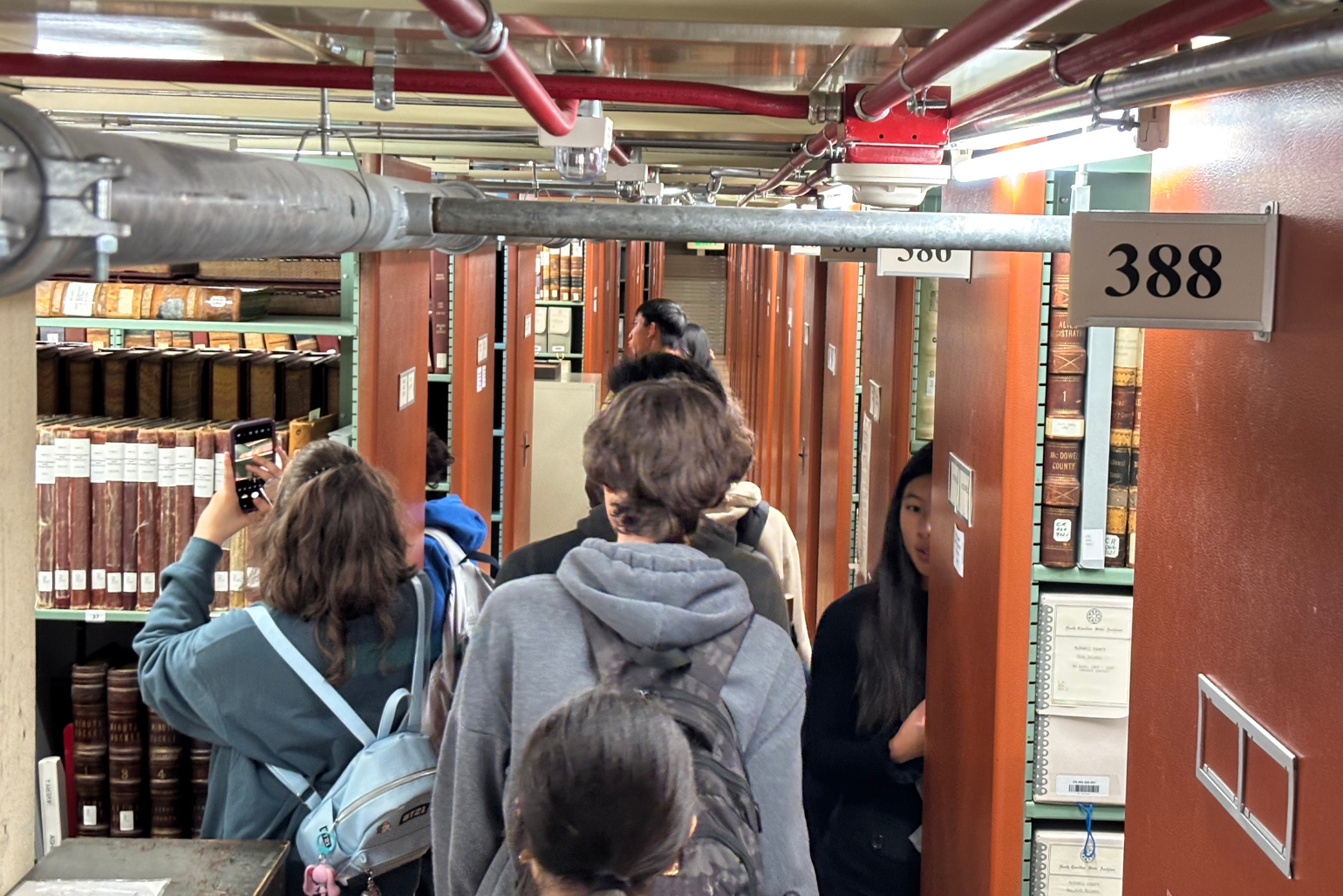
Students were welcomed by Doug Brown, Public Services Unit Manager, who had, with his team, pulled out a variety of primary documents that covered a range of time periods and themes related to Asian Americas in North Carolina. Student response was incredible. They milled around, examining documents and other primary sources, excitedly taking out their phones saying, “I’ve got to show this to my family!”
“…My favorite part was the archive room,” one student commented. “Just the idea that we have all of this tangible evidence of people living their lives, and Asian Americans contributing to this state's history this whole time. [It] reminds me that every life is consequential, whether famous or not.”
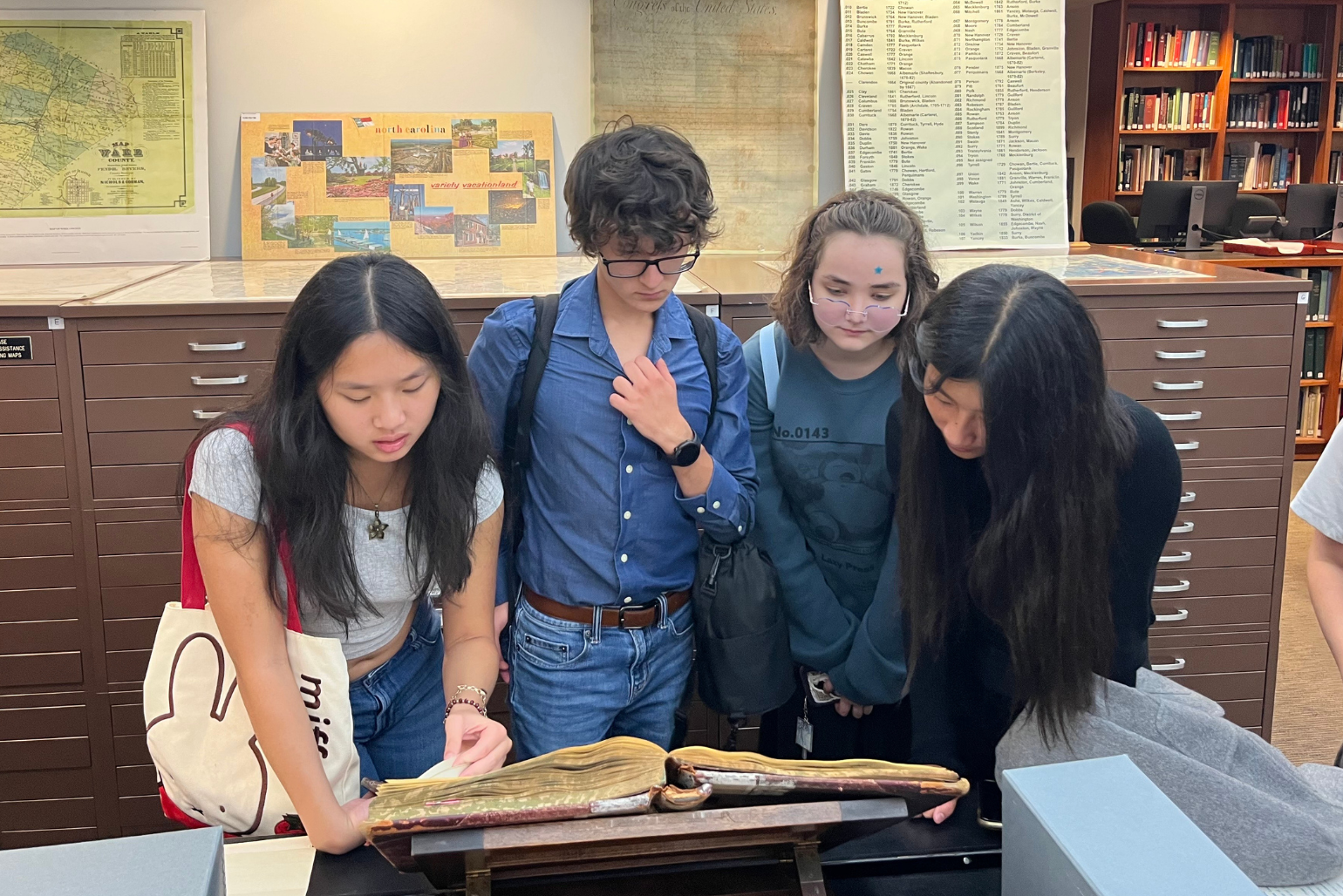
One student stood quietly off to the side, an unusual moment for someone who is typically so engaged. Concerned, I approached to check in.
“That’s me,” she said softly. “I’m there.”
We stood together, looking at the document the Archives staff had pulled—an Arts Council report on a small temple in Wilmington. This student, who analyzes historical records with remarkable insight and has contributed to and served as a leader in the school’s Asian American Oral History Project, was momentarily still. She was taking in the profound experience of seeing her own story and community recognized, documented, and preserved.
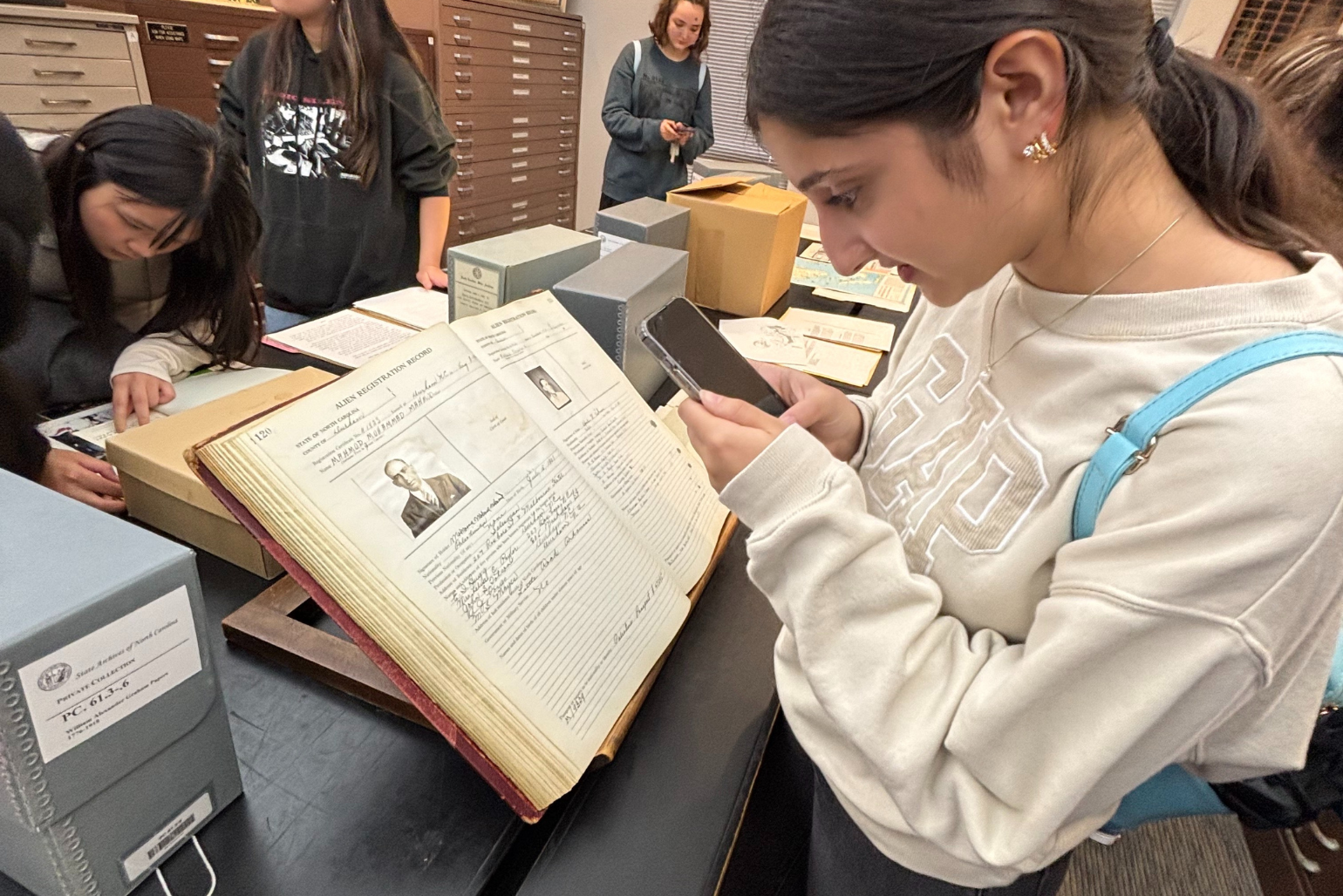
History has the power to transform how we see the world around us, and touring these DNCR sites, with their rich and varied resources, left a lasting impression on our students.
On the ride back to school, their reflections were as diverse as they were heartfelt:
“I loved this field trip so much and I learned so much valuable information!”
“Since Asian Americans are so prevalent in our state, public conversations in North Carolina cannot be held without considering them.”
“That cafeteria was REALLY good.”
What will stay with me most, though, are the quieter moments, when students paused to reflect on their own place in history, and began to imagine the impact they might have on the future.
Special thanks to all who made this trip possible: chaperones including Julie Ross, dedicated DNCR staff including Doug Brown, Anna Freeman, and Malia Lyles, GHHS Principal Cleveland and Assistant Principal Hall, and the exceptional students of Asian American Studies.
Ready to schedule your own trip to DNCR’s downtown Raleigh sites? Visit DNCR’s Capitol Area Visitor Services to get started.
Colin Richardson teaches US History, Sociology, and Asian American Studies at Green Hope High in Cary, NC. A National Board-Certified alum of UNC-Chapel Hill, Colin has led initiatives including an Asian American Oral History Project and international collaborations. He serves on the Town of Cary Historic Preservation Commission and was named 2024 NC History Teacher of the Year. He currently serves as a 2025 America 250 NC Freedom Fellow. Colin enjoys spending time with his wife and friends and chasing his children around the park.