
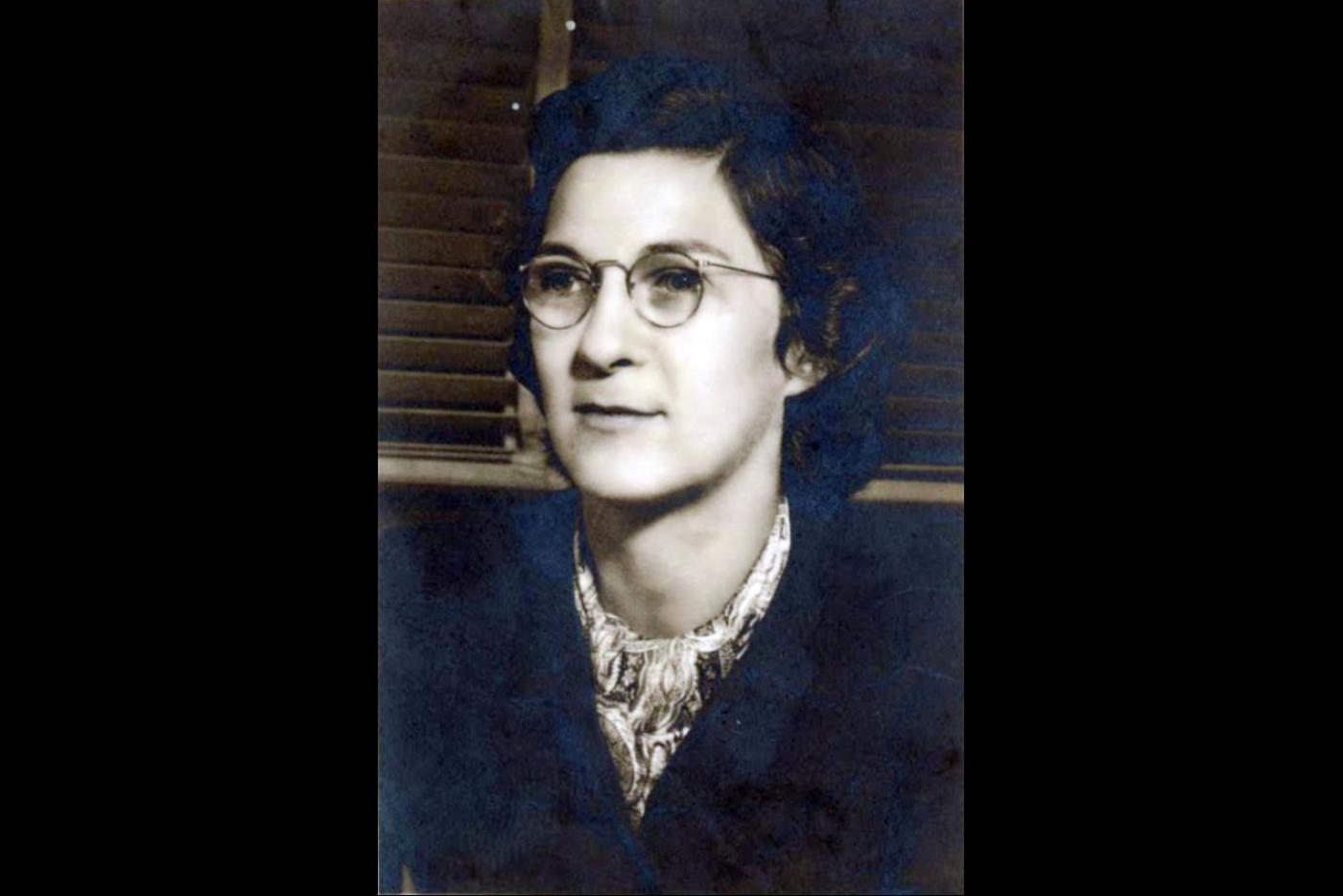
A pioneering mathematician, aeronautical engineer and advocate for women in engineering, soon will be recognized with a North Carolina Highway Historical Marker. The N.C. Historical Marker Program is part of the N.C. Department of Natural and Cultural Resources.
A ceremony commemorating the life and accomplishments of Virginia Tucker will be held Monday, Oct. 5 at UNC Greensboro in the School of Music’s Organ Hall from 10–11 a.m., followed by the marker unveiling near the corner of Market Street and Gray Drive in Greensboro.
Born in Hertford, N.C., in 1909, Tucker graduated from the North Carolina College for Women, now UNC Greensboro, in 1930 with a degree in mathematics and a minor in education. She taught mathematics at Perquimans High School for four years before pursuing a career in aeronautical research.
In 1935, Tucker earned a position at the Langley Memorial Aeronautical Laboratory of the National Advisory Committee for Aeronautics (NACA) after achieving an exceptional score on the Civil Service exam. She was among the first five women hired as human computers, performing complex mathematical calculations that supported research into aircraft performance, stability and safety.
During World War II, Tucker recruited and trained women to meet the growing demand for mathematicians in aeronautical research. She visited colleges and universities throughout the South, encouraging women to pursue scientific careers. Her recruitment efforts at UNC Greensboro helped inspire mathematics graduates to join the Langley laboratory.
By 1946, Tucker had become Overall Supervisor for Computing at Langley, overseeing more than 400 human computers and serving as the laboratory’s most senior woman. She helped establish the computing division as a respected analytical team essential to aeronautical research. Tucker also supervised and supported African American women mathematicians whose work at Langley later gained national attention through the story of the “Hidden Figures.”
In 1948, Tucker moved to California to join Northrop Aircraft as an engineer and aerodynamicist. Two years later, she helped establish the Society of Women Engineers, an organization dedicated to expanding professional opportunities for women in engineering. As an early officer, Tucker advocated for mentorship, professional development and equal access to engineering careers, including support for the organization’s anti-segregation policy.
After 17 years with Northrop, Tucker returned to North Carolina in 1965. She served as Supervisor of Instruction and Evaluation in Perquimans County, where she supported teachers, improved curriculum standards and encouraged students to pursue academic excellence.
Tucker retired in 1974 and died in 1985. Her career in mathematics, aeronautics, engineering and education helped expand opportunities for women in scientific and technical professions and contributed to the development of American aviation.
For more information about the historical marker, please visit the Virginia Tucker blog entry, or call (919) 814-6625.
The Highway Historical Marker Program is a collaboration between the N.C. departments of Natural and Cultural Resources and Transportation.
About the North Carolina Department of Natural and Cultural Resources
The N.C. Department of Natural and Cultural Resources (DNCR) manages, promotes, and enhances the things that people love about North Carolina – its diverse arts and culture, rich history, and spectacular natural areas. At more than 100 sites across the state, the department enhances education, stimulates economic development, improves public health, expands accessibility, and strengthens community resiliency. For more information, please visit www.dncr.nc.gov.