
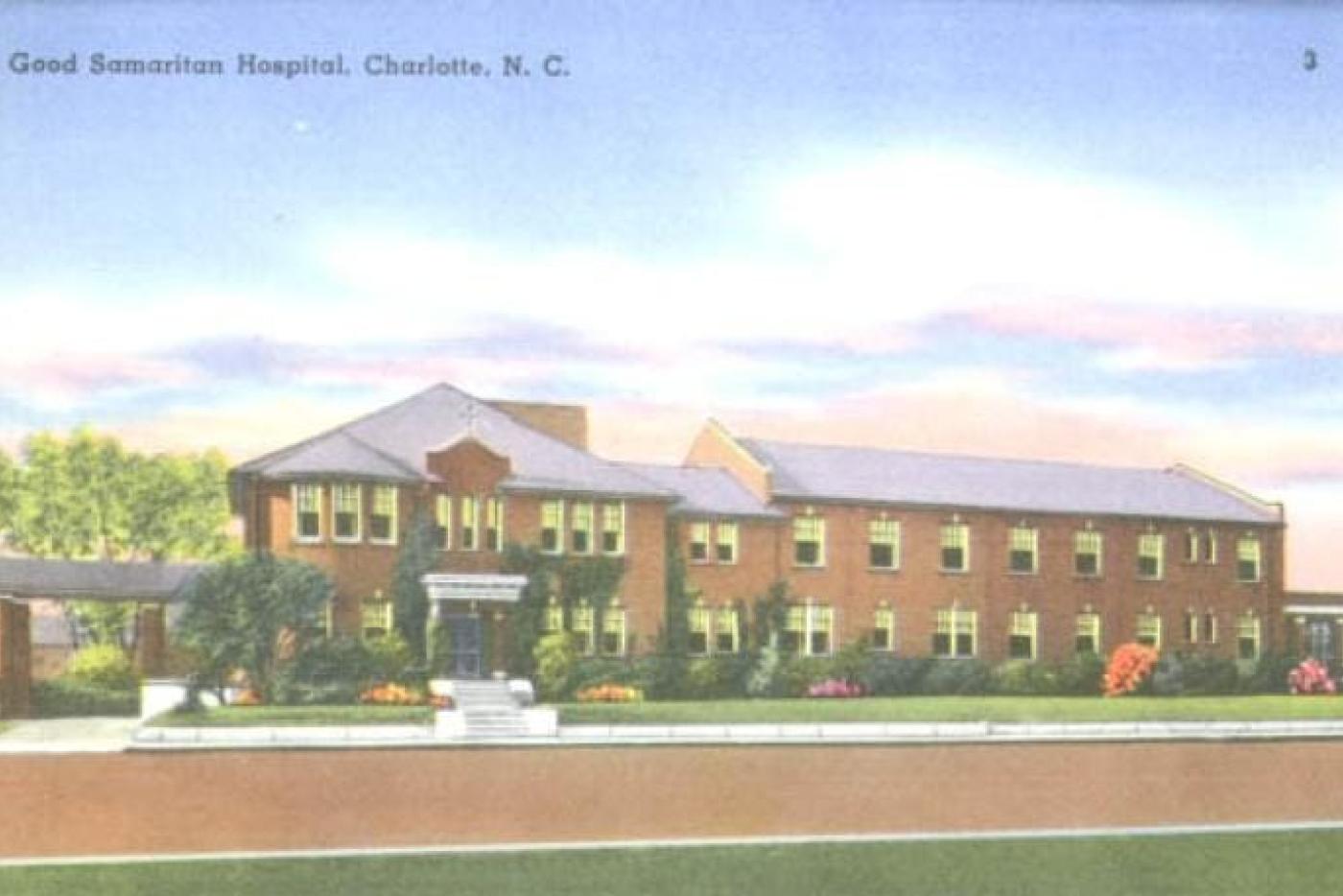
A hospital launched to treat African American patients soon will be recognized with a North Carolina Highway Historical Marker. The N.C. Historical Marker Program is part of the N.C. Department of Natural and Cultural Resources.
The marker commemorating the Good Samaritan Hospital in Charlotte will be dedicated Thursday, May 28, at 11 a.m., at Ebenezer Baptist Church (2020 W. Sugar Creek Rd., Charlotte, NC 28262). The hospital stood at the corner of Mint and Graham streets from 1891-1996. The ceremony will occur at the church, while the marker will be installed later in the day.
Founded in 1891 by Jane Renwick Smedberg Wilkes and others, Good Samaritan was the first public hospital serving Black patients in North Carolina. While it could house only 20 patients, it paved the way for more North Carolina communities to open similar institutions to care for African American residents. Inspired by Good Samaritan, five years later, St Agnes Hospital opened in Raleigh, and in 1901, the Duke family funded Lincoln Hospital in Durham.
In 1903, Good Samaritan opened a school to train Black nurses.
In 1925, an addition to the facility doubled the number of patient beds. In 1936, a new wing was added that increased the hospital’s capacity to 100 patients.
In 1959, the Good Samaritan medical school was closed. Two years later, the hospital was sold to the city of Charlotte. It became Charlotte Community Hospital and treated both Black and white patients, however, they were treated in segregated wards.
It was not until the 1963 U.S. Supreme Court Case Simkins Vs. Moses Cone Memorial Hospital [in Greensboro] that desegregation of medical facilities really began. The case only forced some states to desegregate hospitals. The Civil Rights Act of 1964 ruled that segregation of all public buildings was unconstitutional.
The Charlotte Community Hospital became the Magnolia Rest Home in 1982.
The location was eventually selected for a 75,000-seat stadium for a new National Football League team, the Carolina Panthers.
For more information about the historical marker, please visit the Good Samaritan Hospital blog entry, or call (919) 814-6625.
The Highway Historical Marker Program is a collaboration between the N.C. departments of Natural and Cultural Resources and Transportation.
About the North Carolina Department of Natural and Cultural Resources
The N.C. Department of Natural and Cultural Resources (DNCR) manages, promotes, and enhances the things that people love about North Carolina – its diverse arts and culture, rich history, and spectacular natural areas. At more than 100 sites across the state, the department enhances education, stimulates economic development, improves public health, expands accessibility, and strengthens community resiliency. For more information, please visit www.dncr.nc.gov.