
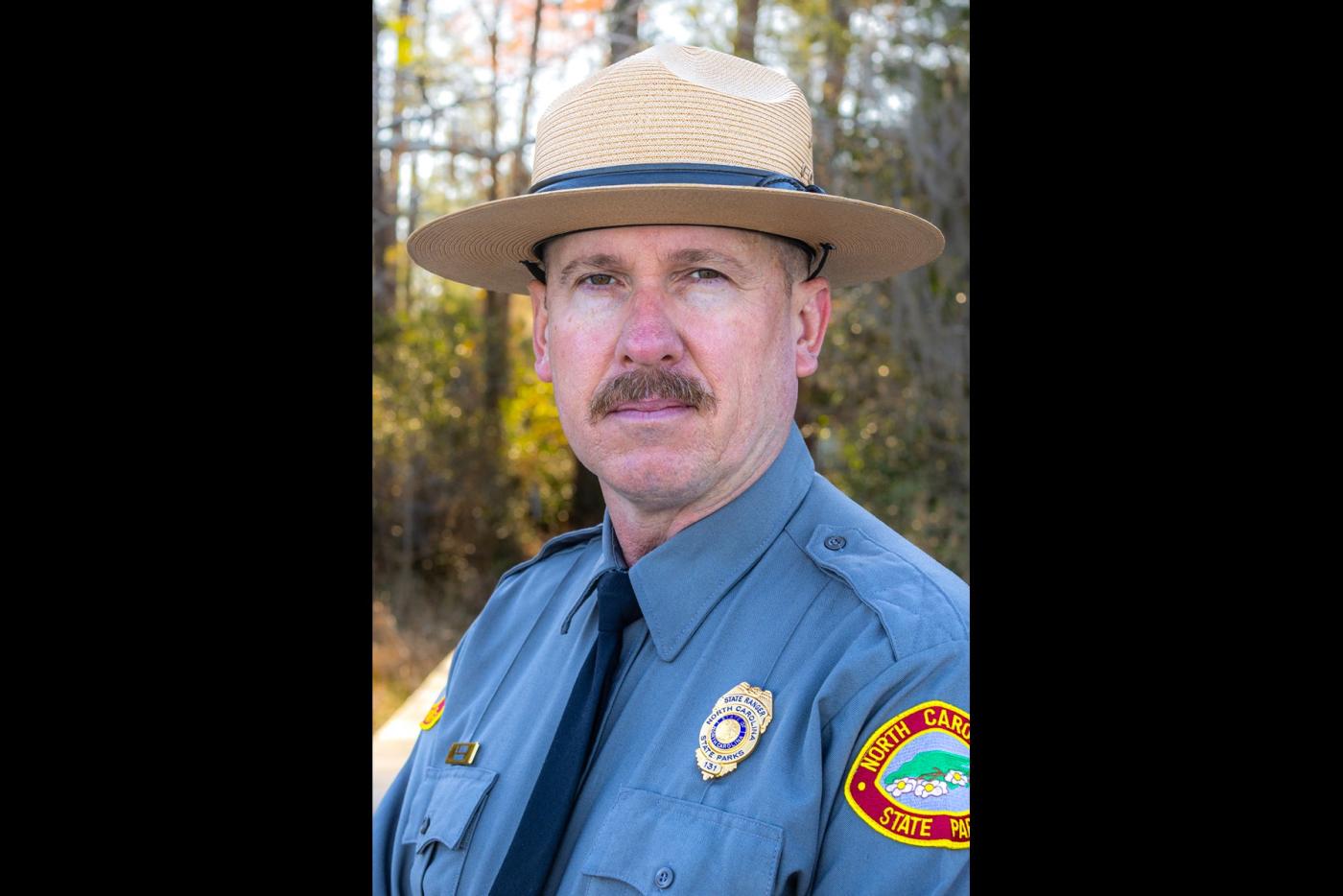
Garrett German has been chosen as the new park superintendent at Singletary Lake State Park in Bladen County, North Carolina State Parks announced. N.C. State Parks is part of the N.C. Department of Natural and Cultural Resources.
Park superintendents manage operations and administration at a park and have wide-ranging responsibilities that include staffing, training, law enforcement, planning, resource management, interpretation and education, and visitor services. In this position, German will manage park and lake operations at Singletary Lake State Park, White Lake State Lake, and Bay Tree Lake State Natural Area. German succeeds Lane Garner, who was promoted last year to district superintendent.
German, a Bladen County native, graduated with a bachelor's degree in recreation management from the University of Mount Olive, where he also excelled in baseball and was later inducted into the university’s Hall of Fame. While in college, he worked as a park attendant at Jones Lake State Park, balancing grounds maintenance with educational programming duties. He was later hired as a full-time park ranger at Jones Lake. Throughout his 22-year career, he has earned numerous certifications, including advanced law enforcement, burn boss, emergency medical responder, advanced interpretive training, Glock armorer, Mossberg armorer, and search and rescue.
“With his extensive experience and deep knowledge of the Bladen County and Carolina Bay ecosystems, Garrett is well positioned to succeed in his new role at Singletary Lake State Park,” said State Parks Director Brian Strong. “His long-standing service, strong leadership and connection to this landscape make him a valuable asset to both the park and the community it serves.”
About North Carolina State Parks
The North Carolina Division of Parks and Recreation exists to inspire all through conservation, education, and recreation, with a vision to connect generations with nature through exceptional outdoor experiences. The state parks system features 35 state parks, 25 state natural areas, four state recreation areas, seven state lakes, four Natural and Scenic Rivers, and 15 state trails — spanning over 264,000 acres of iconic landscapes and welcoming 18 million visitors annually.
In addition to overseeing the state parks system, the division administers federal and state parks and trails grants, including the state-funded Parks and Recreation Trust Fund, the Complete the Trails Program, and the Great Trails State Program, as well as the federally funded Recreational Trails Program and the Land and Water Conservation Fund. The division is part of the North Carolina Department of Natural and Cultural Resources.
About the North Carolina Division of Parks and Recreation
The North Carolina Division of Parks and Recreation exists to inspire all through conservation, education, and recreation, with a vision to connect generations with nature through exceptional outdoor experiences. The state parks system features 35 state parks, 25 state natural areas, four state recreation areas, seven state lakes, four Natural and Scenic Rivers, and 15 state trails — spanning over 264,000 acres of iconic landscapes and welcoming 18 million visitors annually.
In addition to overseeing the state parks system, the division administers federal and state parks and trails grants, including the state-funded Parks and Recreation Trust Fund, the Complete the Trails Program, and the Great Trails State Program, as well as the federally funded Recreational Trails Program and the Land and Water Conservation Fund. The division is part of the North Carolina Department of Natural and Cultural Resources.
About the North Carolina Department of Natural and Cultural Resources
The N.C. Department of Natural and Cultural Resources (DNCR) manages, promotes, and enhances the things that people love about North Carolina – its diverse arts and culture, rich history, and spectacular natural areas. At more than 100 sites across the state, the department enhances education, stimulates economic development, improves public health, expands accessibility, and strengthens community resiliency. For more information, please visit www.dncr.nc.gov.