NCHC Sept24 div reports
North Carolina Historical Commission Report-September 17, 2024
Division of Archives and Records
On behalf of the staff of the Division of Archives and Records, it is my pleasure to update you on some division projects and programming since your June 18 meeting. As with our last report, we are mostly caught up on staffing. Since June 18 we welcomed Dan Brosz as a program coordinator on the America 250 NC team. We also added Leigh Human as the administrative assistant for the project. The Outer Banks History Center is fully staffed again. They welcomed Emily Dingler recently as a new archivist I at the center. Flannery Fitch began work as an archivist II who focuses on appraisal of state agency records. Alice Shahan was promoted from an archivist II to an archivist III. She is now working as our digital archivist focusing on electronic records management guidance and workflows. Erin Templeton began work in the Imaging Unit and Ryan Walch started as the new manager of the State Records Center operations. Two positions were vacated due to a staff person leaving the division. Olivia Carlisle left her role as manager of the Digital Access Branch for a position at the National Archives and Records Administration. Chaunna Carr leaves later this month for a position at the Charlotte Mecklenburg Library. Unfortunately, this leaves the Digital Services Section with 4 of their 9 positions vacant. All of these positions are within the digital access team responsible for our website, online catalog, and digital collections.
In other personnel news we are pleased to report that Josh Hager of the Government Records Section will be awarded the Victoria Irons Walch Emerging Leader Award from the Council of State Archivists. The award recognizes the leadership of a junior leader at a state or territorial archival institution and provides support for the winner to attend the annual conference of the Council.
As noted in previous reports covering summer months, we provide numerous tours for interns during this season. This year proved to be no different. We hosted legal interns from the NC Department of Justice, Office of the Governor, NC Supreme Court, and the NC Court of Appeals. We also hosted multiple page tours. Our audio-visual unit spearheaded a special tour for a group of summer students and chaperones from the Lifting individuals and Families to Excel (L.I.F.E.) Center in Durham. The L.I.F.E. Center serves children and families in low-income environments through academic and leadership programs. This extended tour highlighted not only our collections, but also time in our exploring the concept of an archives and the types of materials collected in our audio-visual collections. We also welcomed nineteen middle school students from the John Hope Franklin Center for the annual tour of their summer program.
The Traveling Archivist Program (TAP), funded by a State Historical Records Advisory Board grant, has made progress serving six 2024 recipients with a recent workday at the Camp Butner Museum and onsite consultations at Forsyth Technical Community College and the Lewisville Historical Society. TAP has expanded in the current grant cycle by adding a paid summer internship. This summer the TAP intern (a recent UNC library program graduate) conducted work to improve archival arrangement, description, and preservation at three previous TAP recipient institutions—Southwestern Community College, Durham Technical Community College, and the Carthage branch of Moore County Public Library.
Targeted outreach programs this quarter included one public program and one for local youth. Sharing freedom stories connected to documents in the Archives’ collections is one way we commemorate Juneteenth. This year, staff hosted a program on Peter Oliver, an enslaved man who worked among the Moravians and successfully negotiated for his freedom. Speakers represented Old Salem Museums & Gardens, the Southern Province of the Moravian Church, and the Creative Corridors Coalition. 89 participants attended the hybrid program, with more than 100 viewing the subsequent recording. In July, staff visited a summer camp at El Centro Hispano, a Durham nonprofit, and led a “memory box” program for 24 children, spanning grades K-8. After discussing archives and preserving family mementos, children engaged in a craft to transform shoeboxes into preservation-safe containers. Staff also provided three handouts in Spanish on collecting and preserving family memories.
A congressionally directed spending project has allowed us to hire a former high school teacher on contract to coordinate the DocsBox program. The goal of the program is to develop primary source sets from the Archives’ collections and send them to classrooms, along with lesson plans and activities. The new coordinator has been busy drafting a DocsBox focused on state constitutional materials for a newly formed teacher advisory board to review.
The Government Records Section continues to offer records management training reaching hundreds of government employees each quarter. They offer workshops in person and virtually. They have standard curriculum offerings and can customize a workshop for specific agencies or boards. In the most recent quarter, they offered another round of disaster preparation training for essential government records. Due to the popularity of the courses, another round of that training begins in the next quarter. The records analysts began the process of creating major updates to the Functional Schedule for North Carolina State Agencies. Working with input from state agencies, boards, and commissions, they are reviewing the entire schedule, particularly around areas where there have been changes in records creation. One such area is around the state’s financial management system software and workflows. The goal is to have the schedule updated and ready for signatures this fall. The Records Analysis Unit also partnered with the Digital Services Section to update some electronic records management guidance documents, including one on SMS messaging. That updated document will be ready for distribution soon.
The division administers the agency’s Cultural Resources Emergency Support Team (CREST). The annual CREST Summit took place on Monday, August 26. Planned participation from 32 team members included DNCR staff and collection managers from partner museums including High Point and Cape Fear. Participants discussed recent and ongoing preservation and recovery projects and learned from two FEMA officials about its Interagency Recovery Coordination.
The division took a special exhibit to the August 24 event in New Bern in commemoration of the 250th anniversary of the First Provincial Congress and the New Bern Resolves. The journal of the congress as well as some supporting exhibit information and activities was displayed at the North Carolina History Center at Tryon Palace as part of the public activities for the event. Visitation to the History Center and the exhibit was strong with staff counting 852 people that day.
Visitors at the NC History Center in New Bern review the special exhibit on the First Provincial Congress.
Additional division products related to the America 250 NC commemoration are in development. On special exhibit about the state constitutions is in production. Another on the experiences of Revolutionary War soldiers is in development. Both will feature original documents, reproductions, and some educational materials to accompany the exhibit. Division staff create blog posts and podcast episodes to support these resources. We also launched a series on Facebook tracing the travels of Richard Caswell to the Continental Congress in Philadelphia in 1774. Using transcriptions from a diary detailing the journey, the series draws attention to the history of the trip and the journey to join the Continental Congress. The fall Friends of the Archives program, “From Edenton to Congress,” will be held November 1 and include presentations on the history of women’s political activism in NC from the Edenton Tea Party to the first congresswoman from NC.
Records Description Unit manager, Josh Hager, and his appraisal archivist, Flannery Fitch, attended the annual conference for clerks of superior court. They discussed a new initiative to inventory court records that are eligible for transfer to the State Archives from county courthouses. We hope in the next year to identify the quantity eligible for transfer, plan for the space required, and begin those transfers. The project seeks to complete the move of any records prior to second court reform (1968) that should eventually be part of our collections.
Previous reports have included information on collaborative division preservation projects. These ongoing activities involve staff from across the division teaming up to work periodically on these important efforts to update archival housing, assess collections, and update or add cataloging information on collections. The preservation assessment of housing on the Treasurer’s and Controller’s Papers wrapped up with 517 old manuscript boxes being replaced with modern, archival ones. Staff also created 189 custom boxes for fragile volumes in the collection. Records Description staff also created a new detailed finding aid and cataloging entries for the collection. Work on rehousing the Governor’s Papers is ongoing with 435 boxes being replaced for the papers from 1901-1932. Staff also continues to create barcodes for archival county records boxes. To date this year 4,389 barcodes have been created and applied. 5,233 additional catalog entries have been made as part of the barcoding project. This allows for remote patrons to have additional information on the county records holdings.
The major collaborative project led by Special Collections covers the review and rehousing of about 443 private collections identified as needing new boxes and folders. The project started with a pilot phase in January 2023. Between July 2023 and July 2024 teams met weekly to conduct the assessment and rehousing of these collections. To-date 90 collections have been reviewed, 701 old manuscript boxes, and thousands of folders have been replaced with more suitable archival housing. This project is expected to continue to completion in 2026.
In other Special Collections updates, archivists across the section continue adding collections and processing existing ones. In the audio-visual group the new archivist managing the unit focused on accessioning collections that had been received in the past but not yet formally accessioned. The oral history team added an interview from Brenda Toineeta Pipestem of the Eastern Band of the Cherokee as well as an oral history with Gregory Tyler, volunteer for the section. The organizational records archivist acquired a new collection (ORG.228) Records of the Trading Path Association. This group is a non-profit that studies and preserved the Indian Trading Path of the Southeastern Piedmont, a series of pre-colonial river crossings, trains, and roads that linked the Chesapeake Bay region and the Catawba, Cherokee, and other Indian towns in the Carolina and Georgia. We also added (CHR.387) Records of Memorial Primitive Baptist Church of Fremont, which includes ledgers of hand-written minutes and membership information dating back to the 1850’s. Other collection additions included (ORG.229) Records of The Book Club of Fayetteville, a group that has been active since 1894, (ORG 230) Friends of North Carolina Public Libraries Records, and (ORG231) Records of the American Association of University Women Sandhills/Southern Pines Branch. Additions were made to our collection of transcripts from defunct post-secondary educational institutions serving NC students, as well as to the Family Bible Genealogy Records Collection. The Outer Banks History Center was gifted a donation of 18 original 1590 engravings of coastal NC scenes drawn by John White and printed by Theodore deBry. The engravings are in German and Latin and accompanied by a modern book of English translations. At the Western Regional Archives, the Donald Folsom Cooper Music Manuscripts and Scores Collection was added. Cooper studied composition with Stefan Wolpe at Black Mountain College.
In our digital collections, we have updated some existing collections, including the Aycock Brown Photographs, Revolutionary War collection, and added new Bible records to the Family Records Collections. New digital collections this year include Capital Buildings, Cohabitation Records, North Carolina Ports, and Records of Enslaved People in Private Collections. All of these collections can be accessed at the North Carolina's Digital Collections. The collections also include a new digital exhibit on Juneteenth.
As we look towards fall, watch our social media channels and blog for important programming updates and news. A new season of the podcast is underway, and staff will put the finishing touches on planning efforts for fall programming. In mid-November we will gather as a division to complete a course offered by the Society of American Archivists on cultural competency for archivists. We hope to see you at in in person or virtual program soon.
Report of Division of Historical Resources To the North Carolina Historical Commission For its September 17, 2024, meeting
Ramona M. Bartos, Division Director and Deputy State Historic Preservation Officer
September 5, 2024
Division in general
Staff updates.
New State Archaeologist. Following the retirement of John Mintz as State Archaeologist, Deputy State Archaeologist (Underwater) Chris Southerly was promoted to the position in June 2024. He most recently served as the Deputy State Archaeologist (Underwater) for the North Carolina Office of State Archaeology (OSA), and has been with OSA since 2000.
Chris was born and raised in the Shenandoah Valley of Virginia not far from the Flint Run (Thunderbird) Archaeological District which piqued his interest in archaeology at an early age. He did undergraduate work in biochemistry at Virginia Tech before earning his BS in anthropology/archaeology from James Madison University. Chris also did graduate work in historical archaeology at the College of William and Mary before moving to North Carolina to focus on underwater archaeology and complete his MA in maritime history from East Carolina University.
Chris has worked on terrestrial and underwater projects from prehistoric to modern times in the mid-Atlantic and southeastern United States and abroad through contract, research, and regulatory perspectives. He joined the Underwater Archaeology Branch (UAB) as a staff archaeologist in 2000. Between 2003 and 2010, he supervised archaeological fieldwork and diving operations on the Queen Anne's Revenge (QAR) Shipwreck Project, including serving as lead instructor for the DiveDown program, teaching recreational divers about North Carolina’s underwater cultural heritage.
Chris became the Deputy State Archaeologist-Underwater in 2019, supervising professional staff responsible for the identification, inventory, evaluation, and management of terrestrial and submerged archaeological sites throughout the state, and curation of associated archaeological data and artifacts. He is a co-principal investigator for the QAR Shipwreck Project and the UAB diving safety officer managing the equipment, logistics, and training of the OSA scientific diving program. Chris is a trained scientific diver and teaches recreational diving and dive safety as a PADI Master Instructor and DAN Instructor-Trainer in his spare time.
His former position as Deputy State Archaeologist (Underwater) is being advertised this month for hiring.
- We are interviewing this month for our vacant Restoration Specialist position for an eastern region, last held by Reid Thomas before he was promoted to Eastern Office Supervisor.
- We also wish to thank agency management for helping us fund a temporary position in the Environmental Review branch to assist us with our increased workload under Section 106 of the National Historic Preservation Act.
Staff needs. In our last few reports, we have continued to flag the need for additional staff resources to maintain our service levels to constituents.
We were very heartened by management’s and the Office of State Budget Management’s (OSBM) favorable view of our renewed request for 4 positions – again for an Environmental Review Specialist for Section 106 cases, a Cemetery Program assistant, and a full-time NAGPRA specialist, but shifting the specialist for the State Historic Preservation Office to one for the Restoration Services branch because of even more demand for services, especially consultations for high “return on investment” historic tax credit projects and overall constituent technical assistance. Ultimately, the Governor’s Budget included two of these requested positions – an Environmental Review Specialist for Section 106 cases, and a full-time NAGPRA specialist. Inaction to date for adjustments to the second year of the biennial budget led to no changes in staff capacity.
We believe that our contributions are both measurable – in terms of dollars invested in historic places and a greater knowledge of our history – and immeasurable – in terms of our commitment to protecting and preserving those places that define our continued identity and shared history as North Carolinians and Americans.
Southern Campaigns of the Revolutionary War heritage corridor. State Archivist Sarah Koonts and DSHPO Ramona Bartos are participating in the newly formed advisory committee for the newly approved federal Southern Campaigns of the Revolution War Heritage Corridor.
State Historic Preservation Office (HPO)
Statewide Preservation Plan. Following our successful launch at the October 2023 Preservation North Carolina annual state preservation conference of the first of our listening sessions for our next 10-year statewide preservation plan planning cycle, Local Government Coordinator Kristi Brantley and DSHPO Ramona Bartos ultimately conducted twelve (12) Zoom platform listening sessions with constituents and one in-person listening session (PNC statewide preservation conference) between October 2023 and April 2024.
We next reviewed internally the public feedback, and prepared the draft report (including our 10-year goals / tasks list) which is included in your meeting materials. We would ask that you please provide us any feedback by October 15 so we might finalize the draft.
Important takeaways from the draft plan and public feedback:
- Contributions of historic preservation? The most valuable contribution of historic preservation in North Carolina was overwhelmingly viewed to be “maintaining a sense of place”, purposely undefined by our office, and interestingly followed closely by “history education”. “Acknowledging everyone’s history” likewise was a strong contender at number three, suggesting a greater interest of the public in a heightened holistic approach to historic preservation efforts for all North Carolinians.
- Utilized and beneficial services? We were also keen to understand which HPO or OSA services respondents have used or found beneficial. “Technical assistance for preservation, stabilization, and restoration of historic resources (above or below ground”, namely the extension work of the Restoration Services branch was the top answer at 53.72%. National Register of Historic Places’ nominations was nearly tied with historic rehabilitation tax credits. The Certified Local Government program and local preservation commission assistance was likewise nearly tied with “public education”. Meaningful numbers have likewise availed themselves of the Section 106 process, CLG or hurricane grants, along with the historic cemetery program and archaeological technical assistance.
- Future focus areas? To aid us in prioritizing certain initiatives and service activities, we also queried respondents as to where our future focus should be. Digitization of and greater accessibility to legacy “paper” architectural survey information was the leading selection at 87.23%, followed closely by more technical assistance and training, more surveys in underrepresented communities, assisting state agencies who steward historic places, and work on our cemetery layer in our HPOWEB state GIS mapping system. Again, open responses were edifying, especially in terms of the overall knowledge of these services and the HPO / OSA, and reemphasizing earlier goals / action items, or offering new activities to consider prioritizing.
- “Digitize all legacy OSA records and make available through online portal (subscription / fee if necessary)”
- “High school and university-level education and outreach, especially more paid internships and collaboration with high school, community college, and university educators.”
- “Partner with community colleges and existing construction programs to train more skilled craftsman [sic].”
- “Increase staffing to provide more assistance to citizens.”
- “Strategically engage local and regional planning agencies, such as the regional councils of government, regional prosperity zones, NC chapter of APA, and the NC League of Municipalities.”
And part of our draft analysis in way of an executive summary:
“The public responses can first best be characterized as recognizing the rapidly changing nature of North Carolina, recognizing that the “sense of place”, so foundational to defining the state’s identity, and accordingly that of its communities and citizens, is a source of orientation, social cohesion, shared memory, mutual respect, and pride. That “sense of place” is then by extension critical to identifying and informing the very threats to and opportunities for historic preservation in North Carolina.
“Feedback painted the picture of two North Carolinas – one with great economic vitality and dynamism fueled by new residents and development that reshape the very appearance of a place within a short time, and another where abandonment and neglect reflect economic disinvestment and shrinking and shifting populations. Some members of the public worried that ignorance of a place’s history – what is unknown or unrecognized – may lead to apathy and less appreciation for historic places. Loss of a sense of personal and community identity was seen as a threat to an equal sense of belonging, concepts that touch deeply on individuals’ self-identity….
“Development pressures ranked high in both the survey and listening sessions as a critical concern. On one hand, respondents acknowledged that not all development is bad development, and that development that collaborated with historic preservation efforts was often a positive force in their communities. Likewise, development signals economic activity in an area and can guard against abandonment and neglect of historic buildings and places; many historic tax credit projects are development projects, contained within and using a historic building.
“What we are not preserving or not preserving well that should be preserved confirmed corollaries to concern over rapid development and change. A trio of places topped survey responses, leading with farms and rural landscapes (33.33%), cemeteries and burying grounds (29.23%), and natural / scenic landscapes (25.13%). Interestingly, the third most popular response percentage-wise was not a place but rather a means to record history – oral histories (28.21%). Unlike in previous state plan surveys, residential houses and neighborhoods (23.08%) slipped to fifth place, followed by downtowns and streetscapes (22.05%). Feedback linked respondents’ belief that the threats to these sorts of historic places were indeed linked to the transformation of once undeveloped areas into new housing as well as commercial and industrial developments. Farms / rural landscapes and cemeteries received the lion’s share of feedback as to this issue, perhaps because some believed the state or federal government were dealing with preservation of natural and scenic landscapes through more concerted efforts already.
As to what should the HPO do to further preservation, participants related that staff outreach, training and expertise together with an ability and willingness to partner with third parties were welcome strengths. Constituents warned that lack of staff capacity – related to understaffing and high workload – threatens effectiveness, especially in terms of developing partnerships, updating outdated information, and availability to the public. Other inadequacies were viewed through the lens of workforce development in the trades – who will maintain historic properties properly if there are not sufficient tradespeople, no matter how much expertise the HPO can provide? On the plus side, targeted training (especially for “niche” constituents, such as attorneys, elected officials, and realtors) was suggested along with continuing to empower constituents to do more preservation at the local level, including through technology enhancements like increased digitization of “legacy” hard copy data. The Museums in Partnership model in Western North Carolina was flagged as a model for helping coordinate citizen activities with the help of the HPO and OSA, fostering more cooperation with third party preservation partners. New initiatives to address new challenges in the preservation field were encouraged, meaning potentially expansion of existing programs and additional staff capacity to reach an ever-increasing state population and therefore constituency. Our internal SWOT analysis underscores acknowledgment of staff capacity issues, and the need to take on expanded programs only if properly resourced, or reorient existing efforts strategically.
Our final listening session question – What one thing would you like to do as in your role that you believe would enhance preservation efforts in North Carolina in the next 10 years? – revealed a deep interest in continuing public engagement with as broad a swath of the public as possible.”
As a reminder, we will be submitting a draft plan to the Commission for its approval before the end of 2024, and will bring the final plan to you for your action in December 2024, and then will transmit to the National Park Service for their approval, as mandated by the National Historic Preservation Act, and by state law.
National Register Advisory Committee (NRAC) meeting. The third of 3 NRAC meetings will be held on Thursday, October 10. The National Register agenda is quite full and diverse with twelve National Register nominations, again demonstrating the strong public demand for this program. The final agenda will be available at the National Register Advisory Committee Page A second NRAC meeting for Study List properties derived from some of our county-wide architectural surveys will be two weeks later.
Dr. Waters as State Historic Preservation Officer is also making new appointments for our term-limited NRAC members, and we look forward to NCHC member Noah Reynolds joining the NRAC and to archaeologist Shawn Patch serving as our new chair.
- Grant support to State Historic Sites, leading to award. The HPO assisted the Division of State Historic Sites with preparing and securing a $100,000 planning grant to guide historic restoration of the Bentonville Battlefield which was awarded this summer.
- Certified Local Government Grants. The SHPO awarded $127,800 in federal grant funds to seven local governments with active local historic preservation commissions for projects including 2 National Register nominations for African American neighborhoods (Broadell in Fayetteville and Emorywood Estates in Durham), a window preservation and restoration public workshop in Greenville, an African American cemetery ground penetrating radar survey for unmarked graves in Wake Forest, community engagement and educational events in Asheville, a design guidelines project in Wake County, and an African American history project in Waxhaw.
- New Certified Local Government. The Town of Albemarle was certified by the National Park Service as a Certified Local Government (CLG) in June 2024, signifying its commitment to a local historic preservation program and making it eligible for the HPO’s federal CLG grant program.
- Architectural Surveys. The HPO is conducting 16 active architectural survey projects, completing six as of June 30, and adding three new projects this year (Clay County, Wilmington update, Wilmington survey update, Rosenwald Schools statewide update); this high number includes multiple county-level surveys being funded by the National Park Service to provide new baselines for historic places following Hurricanes Florence and Michael. These surveys aid project planning, scholarship, and economic development, identifying those properties eligible (or not) for the National Register of Historic Places.
- Statewide Historic Resilience Project. Training continued into 2024 for local government stakeholders through the UNC School of Government (SOG) and NC State University’s Historic Resilience Project, a slate of four interrelated resources: the Historic Resilience Primer, a general introduction for NC communities; the Community Planning Handbook, a guide for community conversations and prioritization; the Resilience Design Standards, model design standards for historic resilience; and Historic Resilience Modules, training for hazard mitigation and recovery in a historic setting. This project, designed to foster better preparedness for historic places, was funded by the HPO through a special federal appropriation for recovery from hurricanes Florence and Michael.
- R&R project at Humber House. A $300,000+ R&R project for needed repairs and painting at the historic Humber House, the State Historic Preservation Office’s eastern office in Greenville, is getting underway this summer.
Historical Research Office
New Children’s book. The first of our America 250-themed children’s books is being released this month – the richly and originally illustrated Within Our Power: The Story of the Edenton Ladies’ Tea Party.
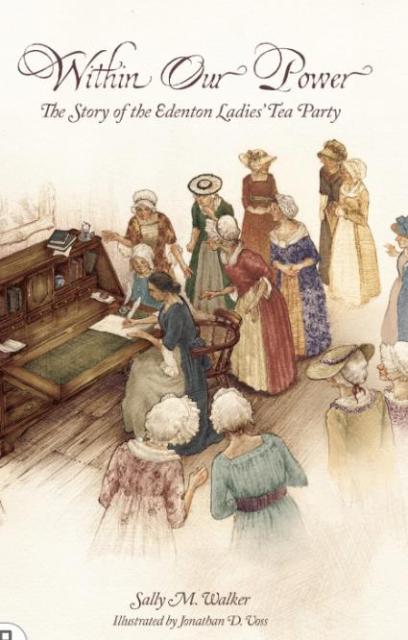
“In 1774, many people in thirteen of Great Britain’s North American colonies were angry. They had been ordered to pay money—taxes—to the government. However, they had no governmental representatives in faraway England to say how they wanted their money spent. The colonists rallied around the cry “Taxation Without Representation.” They boycotted tea, cloth, and other British products. Fearing punishment for protesting the unfair practice, some disguised themselves to avoid recognition, specifically when dumping tea in a harbor. Others wrote about it but hid their identity by using an alias.
A group of fifty-one women in Edenton, North Carolina, strongly opposed taxation without representation. At that time, women could not serve in the government, nor were they permitted to vote. But the Edenton ladies knew that their beliefs mattered. They decided they would make a difference. Like others, they would boycott British products. Unlike others, they shunned anonymity.
Using a “tea party” of a different sort, Edenton’s courageous women powerfully expressed their belief in a very public way. One that spread their belief and commitment not only throughout the North American colonies, but also across the Atlantic Ocean. The Edenton ladies’ courage still resonates today. They show us that people can join together and create a strong voice that stands firm against injustice.
Historical Research Office Supervisor Ansley Wegner promoted Within Our Power to great acclaim at this summer’s Library of Congress Center for the Book Festival 2024, where our earlier publication Bountiful Red Acres was being recognized as one of two North Carolina books recognized by the Festival.
We have also prepared a teacher’s guide for this book with plans to do so for our other upcoming titles for America 250, including a book about the Overmountain Campaign, the red wolf, and the Harlow Patriots.
It can be purchased through UNC Press. You will also receive a copy today “hot off the presses.”
- Mosaic Digital Documentary Projects. The dedicated historical editors of the Governor’s Papers and Colonial Records continue to build out our offerings on the Historical Research Office’s digital humanities website, NC Mosaic. The latest exhibit is about the 1774 Edenton Tea Party Resolves, and the role played by North Carolina women to support Patriotic ideals, including its leader Penelope Ann Barker. It will be an online complement to a children’s book under development by our Historical Research Office entitled Within Our Power for the America 250 commemoration.
- May Highway Historical Marker approvals include the following new markers with texts (they are being cast now with dedications yet to be scheduled):
Plymouth Massacre, Plymouth:
“Confederate attack on U.S. troops, April 1864 led to killing of Black soldiers and civilians. Atrocity diminished the placement of Black troops in N.C.
Citizens for Responsible Zoning, Kingsboro vicinity, Edgecombe County:
“The historically Black community of Kingsboro organized to stop hog slaughterhoude efforts, 1996. Environmental victory. Met 1/2 mile west.
L. Richardson Memorial Hospital, Greensboro:
“Opened in 1927 to serve Black patients during Jim Crow era. Housed nursing school, 1929-1954. Operated here until it relocated in 1966.”
Office of State Archaeology (OSA)
Coastal surveys wrapping up. In FY2023-2024, the Office of State Archaeology (OSA) has been undertaking a North Carolina Shorescape Survey to identify and document archeological resources within state-owned and -managed lands in twelve coastal counties (Beaufort, Bertie, Brunswick, Carteret, Craven, Dare, Hyde, New Hanover, Onslow, Pamlico, Pender, and Tyrrell) that are most at risk of being damaged by storm events. The focus is on identifying and documenting terrestrial and underwater sites within 200 ft (60 meters) each side of the shoreline. These surveys are allowing OSA to determine the location and extent of shoreline archaeological resources, the conditions of these sites and their associated shorelines, the historical significance of these resources, and management strategies to preserve these shoreline archaeological resources. The project will also support the ongoing effort to digitize existing paper records.
At the same time, OSA has been conducting a North Carolina Coastal Cemetery Archaeological Survey to identify, document, and assess the condition of historical cemeteries on state lands in nine coastal NC counties (Beaufort, Brunswick, Carteret, Dare, Hyde, New Hanover, Onslow, Pamlico, and Pender). In addition to treefall and wind-borne debris damage, fragile and environmentally sensitive historic cemeteries and their features are under threat from erosion, subsidence, flooding, and storm surge. Particular attention will be directed toward recording those cemeteries traditionally associated with enslaved and African American communities, which are underrepresented in state records.
Both of these projects are being funded with our special Congressional Emergency Supplemental Historic Preservation Fund grant program (aka “hurricane grant program”) for Hurricanes Florence and Michael recovery. OSA hurricane grant archaeologist Allyson Ropp is conducting public outreach about these projects, including a session entitled “NC Coastal Archaeology: Documenting Sites and Identifying Impacts to Preserve Our Stories” at the upcoming North Carolina Coastal Conference (sponsored by NC Sea Grant) in New Bern in November.
- Office of State Archaeology Cemetery Survey Digitization Project. As part of an ongoing effort to document, preserve, and support historic cemeteries across the state, the Office of State Archaeology’s (OSA) Historic Cemetery Program continues to digitize DNCR’s long-held cemetery survey records, including files maintained by the State Archives. These surveys, some of which date to the 1930s, will be incorporated into the NC Site File system and georeferenced on state maps. More than 50,000 historic surveys have been digitized. The goal of the project is to make the information more useful for North Carolinians, descendant communities, researchers, local, state, federal entities, and others.
- Hardaway Site. The Office of State Archaeology is participating as a member of a new advisory committee for stewardship of the National Historic Landmark Hardaway Site, now state owned, and managed by the Division of State Parks. There are less than 40 National Historic Landmarks in North Carolina.
Our deep thanks to the Commission for its support of and engagement with our Division.
North Carolina Historical Commission Report August 2024
North Carolina Museum of History
Visitation: My through August 1, 2024, we welcomed 57,804 members of the public.
Exhibits- Now on display in the main lobby! Tar Heel Junior Historian Association Contest Winners Exhibit. Sharing the most recent winners of THJHA Annual Contests, that allows junior historians to share what they have learned with thousands of annual visitors.
Public Programs- Highlights- History at High Noon: The Hidden History of Raleigh’s LGBTQIA+ Community (Virtual), History + Highballs: How Hip Hop Took Shape in North Carolina and Changed Everything. Speaker: Damon “Doc” Johnson, DJ and radio producer (Virtual), Juneteenth Programming: George H. White: Searching for Freedom. Speaker: Stedman Graham, philanthropist, author, motivational speaker, and George H. White relative. Panelists: Earl Ijames, curator of African American history, NC Museum of History; and Mike O’Connell, award-winning film producer, PBS North Carolina. Deputy Secretary Dr. Darin Waters is the moderator for the program, Juneteenth: In Song & Word. Performance including Nnenna Freelon with Pierce Freelon, Shana Tucker, Freddy Greene “Street Genie”, The Martin Luther King, Jr. All-Children’s Choir, Destiny Hemphill, Fred Joiner. This special performance was sponsored by Come Hear NC, the African American Heritage Commission, and the North Carolina Department of Natural and Cultural Resources.
Concerts-Tar Heel Troubadours: Henhouse Prowlers. A celebration of Americana, roots, bluegrass, and traditional music performed by artists from or living and working in North Carolina.
Family Programs- Weaving Wednesdays. Experts practice the craft of handweaving and spinning and told stories about their works in progress, Hands-on History, Make a Kite. Celebrated summer by making a paper kite and a gallery hunt and get Summer Passports stamped, Artist at Work: The Triangle Weavers Guild. Members of the Triangle Weavers Guild demonstrated a craft woven into North Carolina’s history. Visitors were able to try their hands at the loom!
North Carolina REGIONAL HISTORY MUSEUMS
Museum of the Albemarle
History for Lunch: In Search of Sir Walter Raleigh’s Lost Colonists. Nicholas Luccketti, an archaeologist who participated in excavations at Roanoke Island and served as the co-director of the First Colony Foundation investigations that discovered Site X and Site Y, reviewed the previous archaeological work at Roanoke Island and the findings of excavations at Site X and Site Y. Currituck Jack, African American Revolutionary Hero. Barbara Snowden, Currituck County historian, provided an informative talk on Currituck Jack, an enslaved man who got free, freed the owners, and recaptured a ship. But the story did not end there, the exciting life of this man was shared with visitors and well received. Shad and Herring Fisheries of the Albemarle Sounds and its Tributaries. David Bennett, curator of maritime history with the North Carolina Maritime Museums, will explore the development of shad and herring fisheries in the Albemarle Sound. Legacies of Survival-Enslaved People’s Journey through the Civil War. Joshua Strayhorn, PhD, a Mellon Humanities Fellow with the National Park Service, discussed the legacies of freedom seekers in North Carolina by highlighting how enslaved people used the strategies they developed during slavery and their knowledge of the environment in and around North Carolina that helped them to evade capture, negotiate their labor, and create freedom for themselves.
Summer of Fun Day: A Day on the Farm. Participants spent the day “down on the farm” enjoying fun activities such as farming through virtual headsets by Northeast Ag Expo Agri-Pride, learning about seeds by Tidewater Seed, Northeastern, North Carolina and Southeastern, Virginia Field Sales Representative Lauren Pendleton, quilting by members of the Colonial Quilt Lover’s Guild, planting by Pasquotank County Extension, farm animals from A Triple C Farm Party, and hands-on activities.
Junior Docent Workshop. Teenagers ages 13 to 17 enjoyed group activities and gained experience with the public while learning to help the museum this summer and year-round with programs and behind-the-scenes assistance.
Take-It, Make-It: Juneteenth. Free Take It, Make It packet to celebrate Juneteenth included at-home activities, learning resources, and information about regional sites that explore the history of slavery and emancipation in Albemarle.
Summer Fun Day: A Day at the Beach. Participants enjoying fun activities related to the beach, from guest presenters to hands-on activities. Educational programming was provided by the Outer Banks Center for Wildlife Education Currituck County, author Hannah West, Save Our Sand Danes, YMCA will discuss water safety, and Lighthouse keeper Madison Philips of the 1886 Roanoke River Lighthouse.
North Carolina Maritime Museum, Southport
Anchors Aweigh: Got the Blues? Dyeing with Indigo and Go the Distance: Map Reading and Orienteering. Anchors Away was geared toward families and all ages with hands-on activities that focus on a specific part of Lower Cape Fear and North Carolina history.
Skipper’s Crew: Light it Up with Lighthouses and Shell-abrate America! Designed for all ages, but specifically geared toward younger patrons, Skipper’s Crew featured hands-on activities and crafts focusing on combining arts and history. Lights were dimmed, and interactives muted during the first two hours to provide a calmer environment for those with sensory sensitivities.
THIRD TUESDAY: NC 250: It’s Not 1976 Again! July 4, 2026, will mark 250 years since the signing of the Declaration of Independence, and the North Carolina Maritime Museums are joining in North Carolina’s multi-year commemoration of the anniversary. Presenter LeRae Umfleet, co-lead of the NC 250 committee, explored the Revolutionary history of North Carolina, with a specific focus on Southport and Fort Johnston activity during that time.
Maritime Museum at Beaufort
Behind the scenes at the Whale Center. A 40-minute behind-the-scenes look at the Bonehenge Whale Center. Participants learned about the marine mammals, including bottlenose dolphins, that live off the coast of North Carolina. The preparation of marine mammal skeletons for educational display was covered. The Bonehenge Whale Center operates as a partnership between the North Carolina Department of Natural and Cultural Resources and the Carolina Cay Maritime Foundation.
Introduction to Wooden Boat Building. Participants explored the art of boatbuilding — beginning with lofting, and moving on to the setup, steam bending and different methods of creating the backbone of small boats — in this two-day, hands-on course.
Kids’ Cove. Kids’ Cove was a free-play program designed for children ages 0-5 and their caregivers with a different maritime themed craft and wiggle activity offered several times each month.
Exploring Coastal Habitats on the Rachel Carson Reserve. Participants joined a member of our education team and discovered the various plants and animals of the salt marsh and tidal flats at the Rachel Carson Reserve. The guided hike took participants through the different habitats and the sandy, muddy, and wet terrain found on Town Marsh and Bird Shoal. The program is recommended for ages 12 and up. All participants under 18 must be accompanied by an adult.
Fish and Fishing. Children entering grades three and four learned about coastal fish and fishing methods. Cane poles, bait, and tackle are provided for dock fishing, seine nets were used along a tidal flat. Students also used nets to catch and identify marine life in nearshore waters and created take home artwork to share with their family. This program was offered several times per summer.
Kayak the Salt Marsh. Participants joined a member of our education team for basic kayak instruction and safety lessons on shore followed by a 1.5-mile paddle through the salt marsh in our sit-in cockpit touring kayaks. The program is recommended for ages 12 and up. All participants under 18 must be accompanied by an adult. Participants must know how to swim; some kayak experience is recommended.
Sailors Life. Young mariners entering grades one and two worked together with their fearless captain to learn how sailors lived aboard a ship while sailing the seas. The crew set the rules of the ship and went on a treasure hunt through the museum. The program was part of our Summer Science School, which gives students an opportunity to learn about the natural and maritime history of coastal North Carolina through creative, hands-on experiences during the summer break.
Seashore Life I. Students entering grades 1 and 2 investigated coastal marine life of the tidal flats, salt marshes, and sounds on local islands during this two-day class. The field-based classes included ferry ride, barrier island hiking, and animal identification.
Seashore Life II. Students entering grades 5 and 6 investigated estuarine habitats, plants, and animals through field and lab studies. This three-day course includes a field trip to the Rachel Carson National Estuarine Research Reserve, water quality testing, plankton identification, and many more activities.
Build a Boat in a Day Course. Participating teams of up to four people each assembled a prepared kit for a small flat-bottomed plywood boat suitable for paddling during this course, offered at the museum’s Harvey W. Smith Watercraft Center. The boat is 12 feet long, 32 inches wide, and weighs about 40 pounds.
Underwater Filmography with James Brickell. James Brickell, a three-time BAFTA and two-time EMMY awarding winning director and show runner, spoke about his body of work. His presentation specifically covered filming underwater sequences all over the world on various projects for the BBC, National Geographic and the new Sphere in Las Vegas. He also spoke about his newest project, “Blue Planet 3,” which is currently in production. A Q&A session with Brickell followed the free presentation.
Mountain Gateway Museum
Birds & Blooms. This family-friendly crafts class was held on Father’s Day weekend, children and adults of all ages built and decorate a wooden birdhouse and created a bouquet of button-and-felt flowers to take home in a glass vase of their choice.
Red, White, and Blue Ice Cream Social. Free ice cream, watermelon, a ducky derby, and a voter registration drive will be happening at the museum’s annual "Red, White, and Blue Ice Cream Social." before the annual Old Fort 4th of July Parade. This year, we also welcome back the Old Fort Ruritan Club and their Ducky Derby fundraiser.
Graveyard of the Atlantic Museum
North Carolina Aquariums’ Aquatic Wildlife Inhabiting Shipwrecks. Staff with the North Carolina Aquarium at Roanoke were on-site with hands-on activities.
Tuesday Talks: Whales, Keith Rittmaster, natural science Curator of the NC Maritime Museum in Beaufort and director of the Bonehenge Whale Center, shared an overview of species he encounters through his work and some of the conservation issues they face. The informal lecture is part of the Graveyard of the Atlantic Museum’s Salty Dawgs Lecture Series, which features presentations on North Carolina maritime history and culture. Early NC Ferry Crossings, Benjamin Wunderly, education curator of the NC Maritime Museum in Beaufort, shared about some colonial-era river crossings and the ferry systems that carried vehicles and passengers to the outer barrier islands of the state’s coast. In the Eye of the Storm: Hurricanes, Archaeological Sites, and Environmental Change in Coastal NC, Allyson Ropp, a maritime archaeologist and historic preservation archaeological specialist with the NC Office of State Archaeology, shared a presentation that looked at how hurricanes impact the work of finding and of finding and preserving history. U.S. Life-Saving Service, James Charlet presented an informal lecture on the U.S. Life Saving Service. Climate Change and Heritage, East Carolina University PhD candidate Maddie Roth presented an informal lecture on the impact of climate change. Hatteras Heroes, History, and Mystery. What did Alexander Hamilton, Pat Etheridge, Billy Mitchell, Sam Dosier, B.B. Dailey, John Rollinson and other Hatterasmen and Hatteraswomen do for Hatteras? They put it on the map! Visitors checked out old maps, artifacts, lore, mysteries, history, and old and loved stories with a strictly Hatteras twist with Hatteras historian and storyteller Danny Couch.
Maritime Crafts for kids. The museum offered free maritime crafts on Mondays through August. The drop-in style classes were open to the public, and all supplies are furnished.
Division wide digital program participants May through July was 38,414.
News from the Division of State Historic Sites and Properties: September 2024
Michelle Lanier, Director
Overview
- North Carolina State Historic Sites reported total onsite visitation of 1,676,543 for FY 2023-24, a 4 percent decrease from fiscal year 2022-2023, which had total visitation of 1,745,572.
- State Historic Sites had 594,676 website visitors in FY 2023-24, a 3.3 percent increase over 2022-2023, and has a total of 360,703 followers on Facebook, Instagram, and Twitter.
Personnel
Susanna Whalen was named Historic Interpreter II at the President James K. Polk State Historic Site. Susanna, a recent graduate of N.C. State University, completed internships at the N.C. Maritime Museum in Southport and the Gregg Museum of Art and Design as well as an archaeological field school in Cyprus.
Adarra Blount was named Assistant Site Manager at Historic Stagville. Adarra completed internships at the White House Historical Association, the N.C. History Museum, and Fuquay-Varina Museums. She holds a degree in history and political science from Hollins University.
Business and Finance
Bentonville Battlefield has been awarded a National Park Service Battlefield Restoration Grant of $100,000 to develop a Cultural Landscape Report, which will guide the restoration of key portions of the battleground.
Brunswick Town/Fort Anderson has been awarded $2.5 million through the federal Community Project grant program, administered by NOAA, for shore stabilization and regeneration as well as environmental monitoring. Another 1,000 linear feet of shoreline is expected to be installed at the site by January 2027.
The National Trust for Historic Preservation’s African American Cultural Heritage Action Fund has awarded $75,000 to the Charlotte Hawkins Brown Museum, which will enable the site to begin development of a strategic financial plan that supports future preservation efforts and growth in interpretive and education programs.
The National Park Service has awarded the Department of Natural and Cultural Resources $750,000 for the rehabilitation of the 1767 Chowan County Courthouse at Historic Edenton as part of its Semiquincentennial Grant Program.
When Are We US? and America 250
America 250 NC and When Are We US? are dedicated to honoring the signing of the Declaration of Independence while exploring freedom, civic responsibility, and the ideals of democracy over the past 250 years. Some State Historic Sites events that are engaging with these themes and encouraging civic dialogue include:
Making Our Voices Heard – This traveling exhibit exploring the history of voting rights in North Carolina made stops at Town Creek Indian Mound and Bennett Place this summer.
Where the Water is Shallow and the Current Is Strong: Stone Fish Weirs of the Yadkin River (August 24) – David Cranford of the N.C. Office of State Archaeology led a discussion at Horne Creek Living History Farm on the importance of fish weirs, which were used by American Indians and White settlers in the Yadkin Valley to trap or direct fish.
The Voice of Seaman and Private Israel Pearce (August 10) – At Historic Somerset, historian Chris Grimes discussed the life of Pearce, a free person of color who served in the 10th Regiment of the North Carolina Continental Line in the Siege of Charleston and the Battle of Camden.
PUSH Projects
As work progresses on Priority Updates to State History (PUSH) initiatives, State Historic Sites has continued to collaborate with audiovisual vendor Horizon Productions on new orientation videos for Aycock Birthplace, Bentonville Battlefield, Bennett Place, and the Vance Birthplace. Horizon is performing outreach, scheduling interviews, and drafting scripts, with support from site staff as well as PUSH project manager Laura Rogers, Director of Curatorial Services Elizabeth Reighn, and Research Historian Michelle Witt. Additionally, Horizon is embracing photogrammetry and helping to produce audio experiences and interactive content for visitor center kiosks.
In addition to the orientation video work currently under way, the Division has secured approval for new orientation videos for Historic Edenton, Historic Halifax, House in the Horseshoe, Fort Fisher, and Town Creek Indian Mound.
Other site-specific PUSH priorities include:
Aycock Birthplace: An exhibit that invites visitors to engage with the history of suffrage, with attention given to the role of Gov. Aycock, is in development. This interactive display will include exploration of primary source material, activities, and audiovisual components. Installation is anticipated by November.
Bentonville Battlefield: Updates are under way to waysides that tell the story of Bentonville along walking paths through the battlefield. These additional waysides will help to tell a more complete story of the people involved in the battle, including enslaved laborers and members of the U.S. Colored Troops. Installation is planned in advance of the 160th anniversary commemoration in March 2025.
Curatorial Services
Director of Curatorial Services Elizabeth Reighn produced the first Curatorial Services annual report in July, highlighting the team’s skills and accomplishments in 2023-2024.
In June, the Collections Branch joined numerous volunteers in transferring all remaining artifacts to Fort Fisher’s new visitor center and preparing them for installation, as well as collaborating with State Capitol site staff to prepare the Capitol for its July reopening. In July, Registrar Catherine Harper and Chief Curator Michael Moore coordinated the donation of the Museum of History’s Julia Wolfe clothing collection to the Thomas Wolfe Memorial and assisted Underwater Archaeology Branch in moving their dry collections to the new storage facility at Fort Fisher.
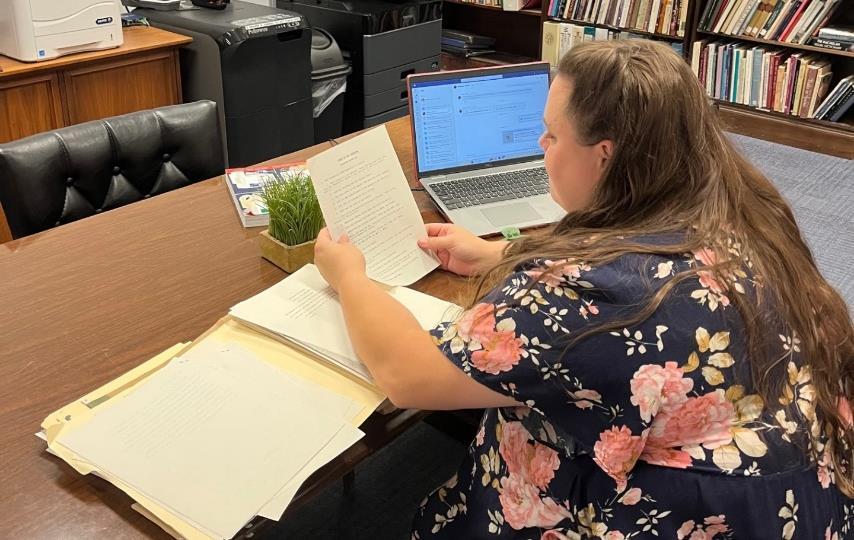
Research Historian Michelle Witt welcomed Tanesha Anthony in June and Amanda Brantley in August to the State Historic Sites Research Library as each conducted research for their respective sites. Tanesha reviewed nearly 100 years of architectural drawings for buildings on the Charlotte Hawkins Brown campus, and Amanda reviewed and requested digitization of a collection of mid-20th century photos of Alston House at House in the Horseshoe.
In June, Education and Interpretation Supervisor Andrew Duppstadt provided support for two programs: Fort Macon State Park’s 100th anniversary artillery program and Bentonville Battlefield’s summer artillery program. In July, Andrew collaborated with Fort Fisher in planning the 160th anniversary battle program. Education Specialist Bob Bemis participated in the 2024 ALHFAM National Conference in New Jersey, where insights from a log hewing class were quickly put to use as he helped Nathan Schultz of Alamance Battleground plan future interpretation after a tree was downed in late June during a storm.
West Region
Fort Dobbs
The Atsila Anotasgi, or “Fire Builders,” from the Museum of the Cherokee People, delivered a series of demonstrations highlighting the resilience of Native American culture in an event at Fort Dobbs on July 27.
Horne Creek Living History Farm
North Carolina Living Historical Farm Committee met July 23 to review a pending contract with Triad Builders. The group recognized a shortfall between available funds and the bid, which will be addressed through fundraising and potential project cuts.
N.C. Transportation Museum
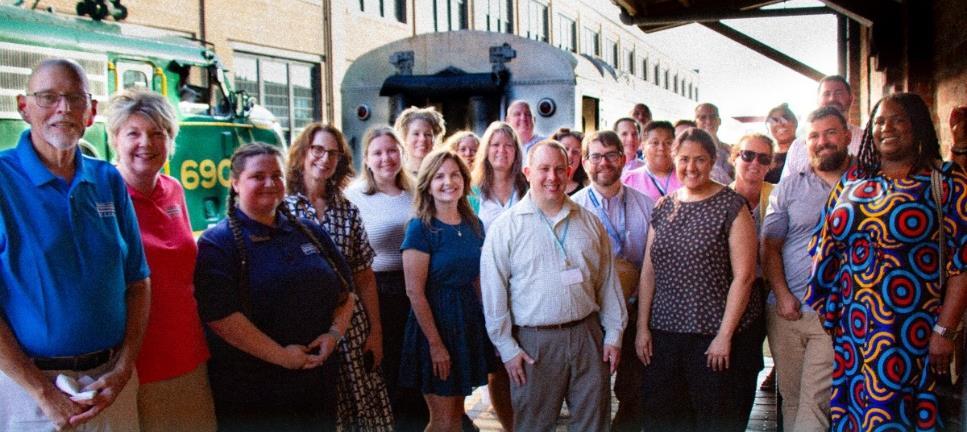
The North Carolina Transportation Museum welcomed 22 primary and secondary teachers from across the state to learn about the Museum’s resources and enjoy a three-course dinner on the museum’s train. Re-Engage 2024: Local Government, Civic Education, and YOU, hosted by the N.C. City & County Managers Association, Carolina K-12, the DNCR’s America 250 NC Initiative, and the Museum, invited teachers to learn more about the museum and explore activities for engaging youths with the knowledge, skills, dispositions, and motivation to be responsible, informed and active citizens and community members.
Reed Gold Mine
Sewer line replacement and additional maintenance took place in July and August, and bathrooms and water fountains were officially reopened ahead of schedule on August 20. In other infrastructure news, Vulcan donated 20 tons of ABC gravel to fill potholes on the entrance road and in the parking lot.
Thomas Wolfe Memorial
After holding a sold-out screening and discussion (August 23) of the movie Genius, a Hollywood dramatization of the relationship between Thomas Wolfe and literary editor Maxwell Perkins, the site scheduled an encore screening to be held in the fall.
Piedmont Region
On July 22-23, staff from several Piedmont Region sites traveled to Virginia to tour the Jamestown/Yorktown Foundation visitor centers and exhibit galleries to meet with staff there and gather ideas and insights for future visitor center development.
Alamance Battleground
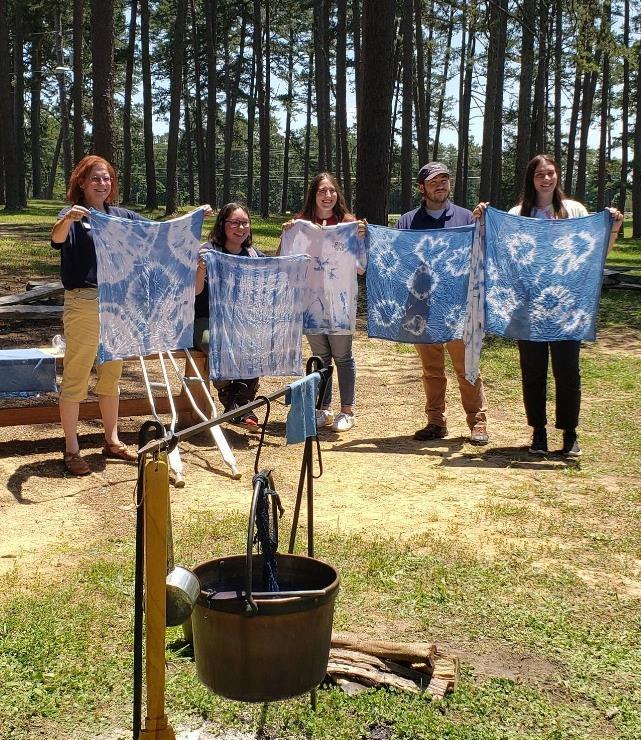
An indigo-dyeing workshop at Alamance Battleground in June drew participants from numerous sites, including site staff from Brunswick Town/Fort Anderson, Somerset Place, Historic Edenton, Historic Halifax, and House in the Horseshoe. The hands-on workshop shed light on the history of indigo as a cash crop and provided valuable insight into historic interpretation of the indigo dyeing process.
In July, the site hosted the Life in a Month event series, providing participants with a window into the experiences of Jemima Merrill, wife of Regulator Benjamin Merrill, as she grappled with birth, death, religion, and purpose in the 18th century.
Charlotte Hawkins Brown Museum
The Palmer Institute Alumni Association hosted a free screening and panel discussion on Palmer Memorial Institute, a documentary produced by Palmerite Dr. Eric Winston on the history of the institute. Site Manager Tanesha Anthony moderated the discussion, with panelists including William Brooks (Class of 1959), Kay Gordon Brandon (Class of 1962), Dr. Fleda Mask Jackson (Class of 1968) and Gregory Dean (Class of 1970).
House in the Horseshoe
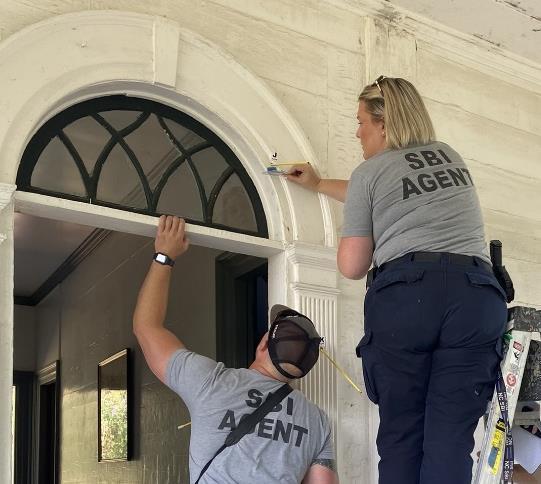
The 243rd commemoration of the Battle of House in the Horseshoe took place August 3, with site staff from Alamance Battleground and Fort Dobbs contributing to the re-enactment.
Research on Alston House continues as part of a grant from the National Park Service Semiquincentennial Grant Program.
Historic Stagville
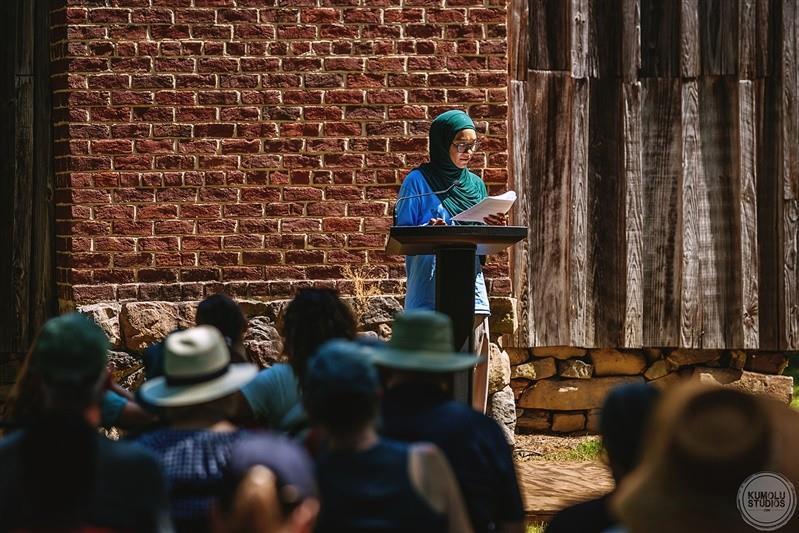
In addition to its annual July 4 Frederick Douglass Community Reading (pictured), the site hosted visits this summer by the Black Solidarity Economy Fund, the Land Loss Prevention Project, the slavevoyages.org HBCU internship program, Upward Bound of Philadelphia, E3 STEM Camp, and the Bay Area Youth Unity Road Trip.
This summer, Site Manager Vera Cecelski hosted the site’s first Spanish-language tour.
N.C. State Capitol
Following a 13-month closure, the State Capitol opened to the public in July, starting with its Independence Day event, at which the America 250 NC Airstream made an appearance, followed by a reading of the Declaration of Independence, musical performances, and a naturalization ceremony for 28 new U.S. citizens.
Town Creek Indian Mound
Site staff traveled to Hollister, N.C., on June 6 to tour tribal offices and historic landmarks of the Haliwa-Saponi Indian Tribe of North Carolina.
Historic Interpreter Megan Allen, Maintenance Tech Josh Beverly, and intern Montressa Hunter represented the site at the 55th annual Lumbee Homecoming event in Pembroke.
In Situ Designs presented three potential layouts for the visitor center renovation and expansion. Installation of the artifact exploration kiosk is expected to be completed in late August or early September.
East Region
Historic Bath
The East Carolina University summer field school, led by Dr. Charles Ewen, worked on the Bonner House dig, excavating the alleged location of John Lawson’s house and opening ground previously unavailable for excavation.
The site co-hosted the Bath Community Library Summer Reading Program. STEAM Saturdays in July included a series of programs for youths ages 6 to 12 covering topics including science, technology, engineering, art, and math.
Bentonville Battlefield
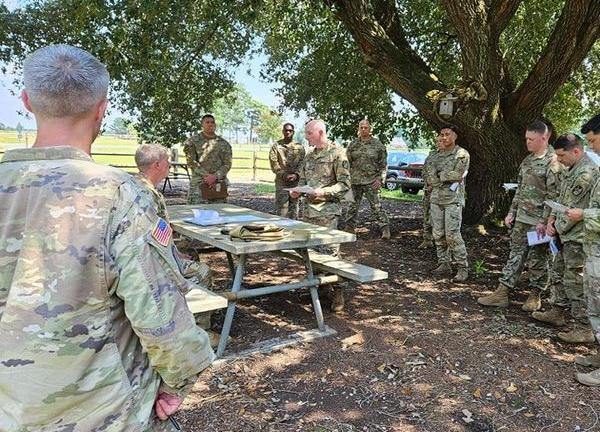
The Heavy Thunder and Artillery event (June 22) featured cannon demonstrations, medical demonstrations, educational displays, and discussions of battlefield preservation efforts.
In August, the site welcomed the 5th Battalion 113th Field Artillery HIMARS.
Brunswick Town/Fort Anderson
On August 17, the site hosted the Back to School Festival in cooperation with the Dark Branch Descendants Association, Kendall Chapel AME Church, and the Paix Foundation. The inaugural event supported local students as they prepare for a new school year with activities and entertainment, school supply giveaways, education workshops, voter registration, and more.
CSS Neuse/Governor Caswell Memorial
Sailors in the Summer: Ironclads and Naval Living History (July 13) highlights the oft-forgotten stories of the hundred or more ironclad vessels that served on both sides of the American Civil War. The event featured discussions, tours, activities, and an intimate look at sailor life in the 19th century.
Historic Edenton
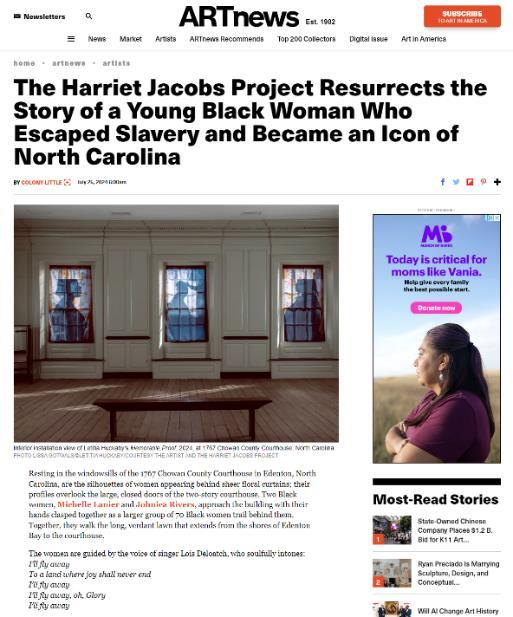
The Harriet Jacobs Project was featured in a July 25, 2024, article in ARTNews. The Memorable Proof exhibit was reinstalled at the 1767 Courthouse.
In July, WUNC’s Leoneda Inge welcomed Division Director Michelle Lanier and Curator-at-Large Johnica Rivers on the program “Due South,” to discuss A Sojourn for Harriet Jacobs.
Historic Halifax
With help from colleagues across the Division, the Historic Halifax team closed its visitor center and moved its offices into Tap Room Tavern in preparation for renovations.
In August, interpreters recreated events surrounding the passage of the Declaration of Independence by the Continental Congress in Philadelphia. Historic Interpreter Tyler Mink of Aycock Birthplace portrayed Cornelius Harnett, president of the Council of Safety, reading the Declaration for the first time to a crowd outside the Halifax Courthouse on August 1, 1776.
Assistant Site Manager Frank McMahon delivered a lecture on Black soldiers in the American Revolution at Tryon Palace’s Rev War Day: Here Comes the 250th! event (July 13).
Feedback From Our Visitors
“Jordan [Jenkins] was the best! We travelled back in time and enjoyed learning about the history. Thank you."
“We’ve lived in North Carolina most of our adult lives and have never heard of the Charlotte Hawkins Brown Museum. We had one of the best Saturdays in a while on the grounds of the museum. The musical groups and the young lady with the spoken word were wonderful! Along with the acts, it was a really great time!”
“Thank you for calling them by name. Each who suffered was a soul and a human deserving of our respect today.”
“I’ve brought groups here five times, and each time the experience exceeds our expectations.”
“These ‘Bites of Bentonville’ [tours] are fantastic. Attended two so far, will be back for more.”