
HITH plaque
[[SCAN_REGION_1_80_60_160_300|Daughters of the American Revolution logo]]
Private John Grady Chapter, NSDAR
Sanford, North Carolina
August 10, 2022
Amanda Brantley
Site Manager
House in the Horseshoe
Division of State Historic Sites and Properties
NC Department of Natural and Cultural Resources
Dear Amanda,
The Private John Grady Chapter of the Daughters of the American Revolution respectfully requests your approval to place a plaque recognizing our Historic Restoration Project of the Alston House which was completed in January 2018. Due to the generosity of many, over $20,000 was provided for structural repairs, stripping & painting, installing UV film on windows, and placing pavers outside.
In compliance with the guidance you have provided, our plaque will be 10" x 10" to be wall mounted in the Museum building. This will be made of bronze at a cost of approximately $400 which will be paid by our Chapter. Below is the the description of the text and National DAR insignia we are proposing to have inscribed on this plaque:
[[SCAN_REGION_1_510_450_590_550|NSDAR chapter seal]]
Private John Grady Chapter
Daughters of the American Revolution
Sanford, North Carolina
The Alston House Historic Preservation Project
funded $20,000
for structural repairs and painting.
Project completed January 2018
The Private John Grady Chapter sincerely appreciates your consideration and approval of our request.
[[SCAN_REGION_2_400_80_600_250|NSDAR chapter seal]]
Private John Grady Chapter
Daughters of the American Revolution
Sanford, North Carolina
The Alston House Historic Preservation Project
funded $20,000 for structural repairs and painting.
Project completed January 2018
Julie Sparks
BEST STAMP & SEAL CO., INC.
631 W. Main Street
Louisville, KY 40202
Phone: (502) 584-4854
Fax: (502) 583-4854
E-mail: beststamp@aol.com
Location of plaque- House in the Horseshoe State Historic Site
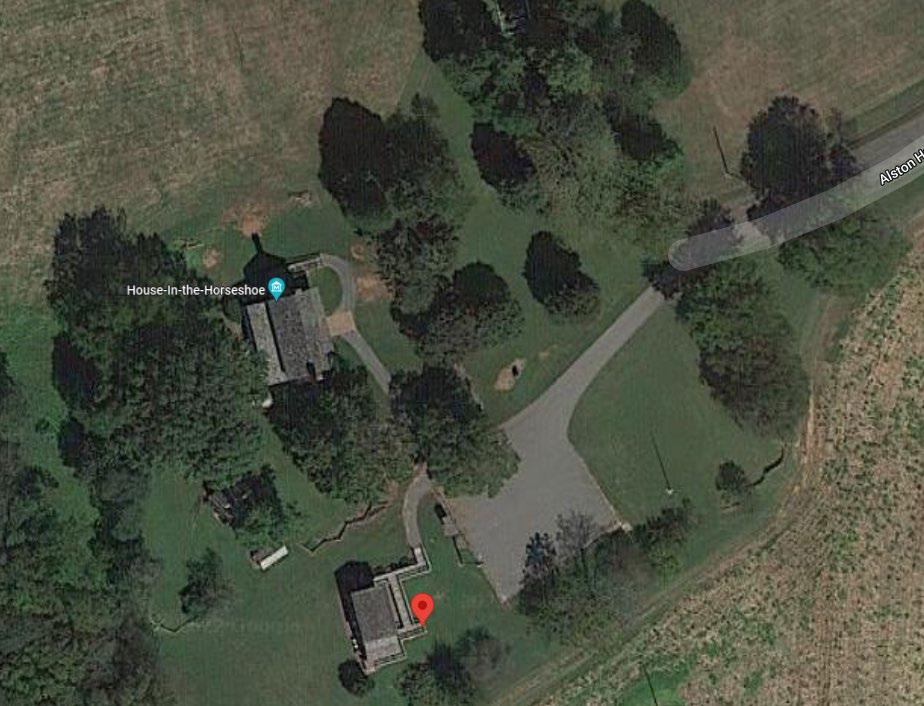
Recognition plaque will be placed inside of the museum adjacent to the Alston House.
Plaque will not require archaeological clearance.
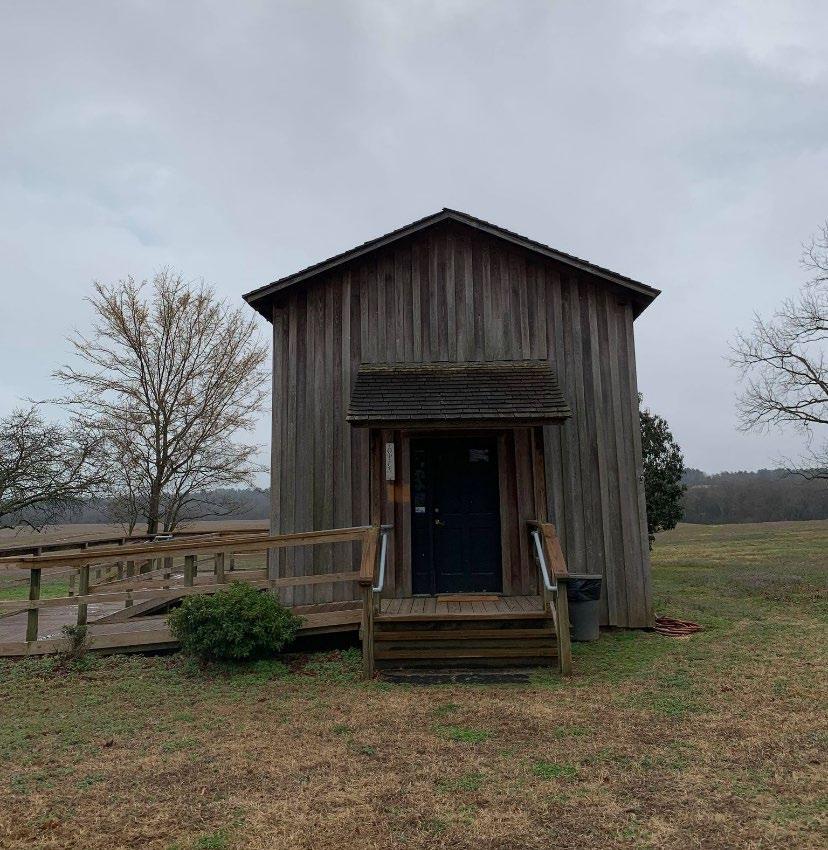
Museum where plaque will be placed.
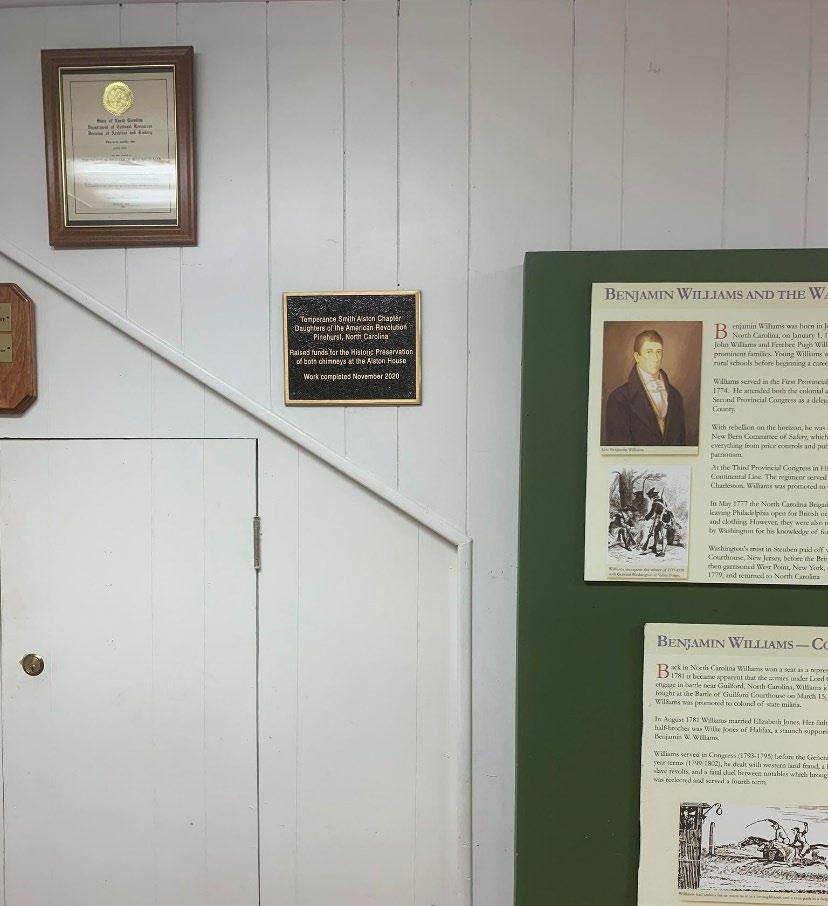
Wall where plaque will be placed alongside other site recognitions.
Mailing Address:
4620 Mail Service Center
Raleigh, NC 27699-4620
Physical Location:
430 N. Salisbury Street, Suite 2050
Raleigh, NC 27603-5926
Office: 919.814.7150

Roy Cooper, Governor
Reid Wilson, Secretary
Michelle Lanier, Director
August 17, 2022
To North Carolina Historical Commission,
I am writing to give my approval of a recognition plaque for Private John Grady DAR Chapter. The plaque should measure no more than 10 inches by 10 inches and be placed in the museum alongside other recognitions.
The Private John Grady DAR Chapter funding made many needed repairs on the c.1772 Alston House. The work, completed in January 2018, included scraping and repainting the exterior of the house, repairing windowsills and broken windowpanes, and other structural repairs. This restorative work improved the appearance and overall condition of the Alston House.
Thank you,

Amanda Brantley
Site Manager
House in the Horseshoe State Historic Site
Brine, Sun and Air Power J.Q. Dickison Salt-Works
American Spirit
Daughters of the American Revolution
May/June 2019
North Carolina's House in the Horseshoe
Memphis Rise of a River Town
Founding Botanist David Hosack
Tomatoes in the Colonial Era
The Old Brick Capitol
$3.95US $6.95CAN 05>
0 74470 63665 6
Historic Homes
The House in the Horseshoe
Alston House
Built in a horseshoe bend of North Carolina's Deep River, the Alston House preserves the history of a western frontier of the Revolutionary War.
By Jamie Roberts | Photography By Jimmy Haire
The two-story, Colonial-style home was originally built around 1772 by Philip Alston, a Whig colonel, area political leader and plantation owner. Featuring a gable roof with large double chimneys, the home was perched on a hilltop near the river. As befitting its owner's prominence, Alston House, near the county seat of Carthage, N.C., in Moore County, was one of the first so-called "big" houses in the state's interior.
Experiencing War in Their Backyard
Though none of the Revolution's major battles happened in the area, the North Carolina backcountry was the setting of a bloody civil war between the Whigs (or Patriots) and Tories (or Loyalists). "As the war wound down, the conflict increased," wrote William H. Thompson Jr. and Guy Smith in the Early History of the House in the Horseshoe. "The departure of [General Charles] Cornwallis and [Nathanael] Greene's armies left these two groups to themselves in an unsupervised free-for-all that reached shocking proportions."
Thrust into the conflict, Alston and his band of revolutionaries took refuge in his home. On the morning of July 29, 1781, a larger unit of Loyalists led by David Fanning waged a surprise attack on Alston House. After about three hours of fighting and casualties on both sides, Alston surrendered.
22 Daughters of the American Revolution
Alston escaped imprisonment and rose through the ranks to become a colonel in the state militia, a justice of the peace and a state senator. However, his career and reputation were ruined after he was twice indicted for murder. He was removed as justice of the peace and suspended from the state legislature. In 1790, Philip Alston sold the house and plantation to Thomas Perkins and left the state.
Expanding the Home
In 1798 Benjamin Williams, a former colonel in the Continental Army and a future governor of North Carolina, bought the 2,500-acre cotton plantation. He named the house the "Retreat."
Williams enlarged the house by adding two wings featuring a kitchen and a master bedroom. (An early 20th-century owner tore down these wings.) He also added elaborate detail to the interior woodwork, including the mantel in the north parlor. By 1803 his home and land were valued at $30,000.
Williams died on the plantation in 1814, and his grave was later moved to the grounds. His family lived in the house until 1853. It changed ownership several times until 1954, when it was bought and restored by the Moore County Historical Association. The state took over ownership in 1955, though the association continued to operate the site.
Finding a Need
After being named a North Carolina Historical Site in 1972, the state assumed full maintenance and operations, employing a site manager and two-person staff. Unfortunately, after the 2008 recession, funding for the home's upkeep evaporated. The state even considered selling the Alston House before concerned citizens petitioned to preserve it. By 2016, capital improvements were sorely needed to contend with aesthetic problems such as cracked windows and crumbling glazing and other more serious structural issues such as wood rot.
Members of Private John Grady DAR Chapter, Sanford, N.C., have long been involved in supporting the Alston House as individuals, but the idea of doing something more collectively was sparked during a May 2016 picnic the chapter hosted at the home.
During the event, Ray Yamrus, husband of Chapter Treasurer Ann Yamrus, spent time wandering the home's grounds, taking note of work that needed to be done. Rotten wood and peeling paint were visible everywhere. Portions of the front and back porches had caved in and been partially cordoned off to prevent injury. The pathway to the main porch was deteriorating, too. The window sills were so rotten that the windows couldn't be opened for fear they wouldn't close again. Though the double chimneys were standing, they were precarious. The exterior paint was peeling off to an alarmingly extent, exposing the original wood structure.
Ray and Ann shared their concerns with Chapter Regent Sally Porter. She agreed the chapter should pursue solutions for some of the house's maintenance challenges, and the chapter soon got the ball rolling to fulfill the requirements for a NSDAR Special Projects Grant.
By September 2016, the chapter had raised $10,000 and was able to apply for a matching grant from the National Society. In April 2017, NSDAR awarded the project a $10,000 Special Projects Grant.
With funds in hand, work began in June 2017. The pillars were cleaned and repaired by a wood restoration specialist. The windows and window sills were cleaned, repaired and replaced where necessary. "It is so sad to lose the original glass, but the panes were leaking water," Ann said.
A painter scraped the entire two-story house and repainted it with special exterior paint for historic buildings. "This job took the bulk of the money," Ann said, "but it was essential, and the results were absolutely beautiful."
Opposite page: Rear exterior of the Alston House This page, clockwise from above: The front porch (facing the river) with the well house in the forefront • An entrance with bullet holes visible around the doorway • The vegetable storage shed
American Spirit | May/June 2019 23
Historic Homes
24 Daughters of the American Revolution
< Opposite page, clockwise from top left: Downstairs bedroom door knob • The main breakfront in the living room • The living room with a portrait of Gov. Benjamin Williams over the mantel • The 247-year-old stairs are quite worn. • The fireplace in the boys' bedroom • 18th-century period objects • An 18th-century pewter pitcher
All necessary repairs were completed in January 2018. "More needs to be done, but the Alston House is safe now since the structural problems were addressed," Ann reported.
Keeping the History Alive
Alston House now offers guided house tours Tuesdays through Saturdays and hosts special events, such as an annual battle reenactment (see sidebar below).
Bullet holes caused by the battle can still be seen on the exterior and interior walls of the house. "Almost every visitor wants to poke their fingers into these 238-year-old holes," Ann says.
From the front of the house, visitors can see the horseshoe turn of the Deep River. Inside, the house is decorated with furniture from the late Colonial and early Federal periods, as well as rope beds and linens appropriate to the late 1700s. The first floor consists of a living room and a master bedroom featuring a four-poster bed, wicker cradle, wooden crib and a circa-1790 trunk made from a tree.
Upstairs are boys' and girls' bedrooms, which are decorated with period-appropriate toys, clothing and furniture.
Summer Events at the House in the Horseshoe
June 8: Life in the 18th Century. At this afternoon lecture, visitors will learn about clothing, social customs and the struggles of everyday life in the 18th-century North Carolina backcountry.
July 13: An Afternoon with General Cornwallis. Cornwallis, portrayed by Trent Carter, will reflect on the Southern Campaign during the Revolutionary War. $10. All proceeds go toward site preservation.
August 3-4, 2019: 40th Annual House in the Horseshoe Battle Reenactment: Visitors can enjoy a variety of Revolutionary War activities and demonstrations, including a reenactment of the fight between Patriot and Loyalist militias at 2 p.m. on Saturday and Sunday.
Among the activities will be musket and cannon firing drills, tomahawk throwing, Revolutionary War militia camps and a wreath-laying ceremony led by the Sons of the American Revolution. On the domestic scene, presentations will include skillet throwing, weaving, spinning, 18th-century beer brewing, a fashion show of period clothing and an interactive look at children's games. A group called Midnight Midwives will give short lectures on Colonial medicinal gardens and apothecary recipes in the home's garden.
The event will be held Saturday from 9:30 a.m. to 5 p.m., and Sunday from 9:30 a.m. to 3 p.m. Admission is free, and parking is $5.
House in the Horseshoe State Historic Site
288 Alston House Road, Sanford, NC 27330.
(910) 947-2051
Advertisement
Exclusives from Gettysburg!
Pottery
Free Gift with All Orders
Coffee
Cigars
Hand Cast Aluminum
717-334-3747
GettysGear.com
American Spirit | May/June 2019 25