
Blue's March Learning Guide


Blue’s March: An Overmountain Men Tale
Learning Guide
Overview
In this lesson, students will explore the story of the Overmountain men through the NC Department of Natural & Cultural Resources’ children’s book Blue’s March: An Overmountain Tale and related resources. They will:
- Discover the role of the Overmountain Men in the Revolutionary War.
- Analyze primary sources to examine the context, conditions, and impact of the Overmountain Men’s journey.
- Research specific individuals who participated in the Overmountain Men’s journey and how their work shaped North Carolina and the coming nation.
- Express learning through creative and thoughtful means.
Historical Context
After the French and Indian War, King George III issued the Proclamation of 1763, declaring that lands west of the Appalachian Mountains were reserved for Native American nations and off-limits to colonial settlement. Despite the legal restrictions, many settlers from Virginia and the Carolinas moved into these western regions (referred to as the “backcountry”), areas that colonial governments had claimed and that would later become part of Tennessee.
While frontier communities in the west initially felt distant from the political tension growing in the eastern colonies, by 1780, the focus of the American Revolutionary War had shifted to the southern states. British forces, aiming to rally Loyalists and gain control of the Carolinas and Georgia, launched their Southern Campaign, bringing military conflict directly into the backcountry. As British officers like Major Patrick Ferguson encroached on frontier settlements, burning homes, arming Loyalists, and threatening rebellion, these independent frontier families found themselves drawn into the war. Patriots in rural Virginia, North Carolina, and present-day Tennessee undertook a revolutionary act: they joined forces to march east over the Blue Ridge Mountains and confront British Loyalist troops at the Battle of Kings Mountain. Called
Overmountain Men, these Patriot troops were dedicated to protecting the Carolinas and preserving independence, no matter how far the journey.
Blue’s March: An Overmountain Men Tale is inspired by these real events and the individuals who shaped them. In the story, Joseph and his loyal hound, Blue, enlist with the Overmountain Men and journey from Sycamore Shoals to the Kings Mountain battlefield, retracing the historic march taken by the Patriot troops who helped secure independence for the new nation.
Grades
- 3rd – 5th grade
- Designed for grades 3-5, this lesson can be adapted for other levels.
Needed Materials
- The book, Blue’s March: An Overmountain Tale, by Katie Hatton and illustrated by Gabhor Utomo
- Crayons or colored pencils
- Small strips of paper or scrap paper
- Sticky notes
Enclosed Educational Materials
Located at the end of this document, please find the following activity accompaniments:
- Mapping Blue’s Journey Activity Sheet
- Joseph’s Journal Activity Sheet
Additional (Optional) Resources
The following are different kinds of multimedia resources that may enrich this learning experience for you and/or your students. Preview them to determine suitability for your specific needs before sharing with children.
- How did people on the frontier get food? Find out what a frontier garden might look like. Watch this five-minute garden update video from Fort Dobbs to see what they might plant and how it should look in the middle of the growing season.
- This video Interview with an Overmountain Man includes a historical reenactor sharing who the Overmountain Men were and why they journeyed to King’s Mountain.
- This post Keeping History Alive by the Overmountain Victory Trail Association provides a detailed account of the journey and may be useful as background information for educators.
- This brief podcast Keyholes to History about John Broddy by the Sons of the American Revolution shares information about John Broddy.
- This brief podcast Keyholes to History about Mary Patton by the Sons of the American Revolution shares information about Mary Patton.
- This 34-minute video from the NC Department of Natural and Cultural Resources features a presentation given by Frank McMahon about his research into the participation of African Americans in the American Revolution.
- How were African Americans involved in the American Revolution? Watch this three-minute video from the American Battlefield Trust to find out.
- This seven-minute video King’s Mountain: The Turn of the Tide of Success by PBS Learning Media shares about the impact that the Battle of King’s Mountain, and thus the Overmountain Men, had on the Revolutionary War.
- What was it like to be a farmer during this time period? How did they live? Find out what they ate during this eight-minute video The Poor Farmer’s Feast from Townsends.
- This video The Quintessential Trekking Kit by Townsends is just under seven minutes and breaks down what a historic reenactor carries for long journeys and shows what may have been carried by the Overmountain Men.
- Watch this brief video from the Zebulon B. Vance Birthplace Historic Site for information about witness trees, then use this to consider how the tree on the McDowell property could serve as a witness tree. If it could talk, what might this tree share about the Revolutionary War period?
- What might Joseph’s family’s cabin have been like, and how did they make it? Watch this five-minute video to learn about the tools used in shaping logs for construction.
Vocabulary/Key Terms
- Bondage
- Captive
- Ford
- Gunpowder
- Hat brim
- Identify
- Independence
- Launch
- Loyalist
- Militia
- Patriot
- Private
- Revolution
- Soldier
- Suspect
- Tory
- Urgent
- Volunteer
Preparation
Students should have a basic understanding of the American Revolution, specifically that it was a time when colonists fought for independence from British rule, and that Patriots and Loyalists took different sides. They should know that life on the 1700s frontier, especially in
the mountains, was difficult and isolated, and that journeys were slow and challenging. It will also be helpful if students are aware that old maps looked different because many towns and roads didn’t exist yet.
Procedure
Warm Up: Book Walk
- Before beginning this activity, use sticky notes to cover the title and text both on the cover and throughout the book. (Teachers can choose to focus on just the cover and a few key pages of art if desired.)
- Begin a book walk with your students. Holding the book up so that students can see the cover art only and circulating throughout the room, ask: What do you see on the cover of this book? Encourage students to name only images they see.
- When they have listed them all, ask: Based on the visuals you’ve pointed out, what do you think this book will be about? If students need encouragement, continue to ask specific questions like:
- Why might the boy be carrying a flag? What do you notice about the stars on the flag?
- What kind of clothes are the people wearing? What does this tell you about when this might take place?
- What is the weather like in the picture? What might this mean?
- Remove the sticky note to show the title. Ask the students:
- Who do you think Blue is?
- Where might Blue be marching? Why?
- Who do you think the Overmountain Men are?
- Continue to show the pictures in the book, one double-paged spread at a time, following this same sequence of questioning.
- First, ask students to describe the images they see. If students do not mention objects in the background, like fireplaces, wagons, lanterns, etc., be sure to ask about these specifically.
- Then ask students to share what they think those images might mean. Guide students towards considering the specific setting of the story. Where and when might it happen?
- Do not remove the sticky notes covering the text before going on to the next page; save the text to read all at once after examining the illustrations.
- Stop after discussing pages 22-23; do not show the students the illustrations at the end of the story yet.
- Ask students to summarize what they think the story is about. Where and when does it take place?
- Share with students that Blue’s March: An Overmountain Men Tale is a story about real history that took place during the American Revolution in North Carolina. While Joseph is a fictional character, the people he meets during his journey were real people.
- Share that some of the people Joseph will meet are Patriots and some are Loyalists or Tories. Briefly discuss who each of these groups are.
Diving into the Book: Blue’s March
Tell students that they are going to learn more about the Overmountain Men by reading Blue’s March: An Overmountain Men Tale. Teachers can utilize the page-by-page questions below to ensure student comprehension and/or utilize the overarching discussion questions for small group or whole class discussion. Prompts can also be assigned for written reflection.
- Page 1
- What was life like for Joseph and his family, who were living as farmers in the mountains?
- What did it mean for people in Washington County that they were free from British rule?
- Page 2-3
- Who is Edward and why is his job so important right now?
- Why does Betty wish Edward were home?
- Page 4-5
- What is Joseph’s home and family like?
- What big things are happening in Joseph’s life and community right now?
- Page 6-7
- How are the Patriots doing in the war at this point?
- Why did Edward come home?
- Why doesn’t Edward know exactly where Major Ferguson is? Why would it matter if he were nearby?
- Page 8-9
-
- What is Joseph planning? Why?
- How do you think Joseph felt when he decided to leave home? How might his family have felt?
- Page 10-11
- What kind of supplies do Joseph and the other soldiers need and what are the supplies used for?
- Why do the barrels need to stay dry?
- Page 12-13
- What does the snow signal? What does this tell you about Joseph and the others?
- Why are these men called ‘Overmountain Men?’
- Page 14-15
- Why is crossing the Catawba River difficult?
- What kind of friend is Blue?
- Page 16-17
- Why might Major Ferguson move into a Patriot’s house and capture people who aren’t soldiers?
- Joseph says that the Patriots need to stick together. What do you think that means?
- Page 18-19
- Why are Joseph and the others willing to travel so far?
- Colonel Shelby says they need to travel quickly. How do you think the soldiers will do that?
- Page 20-21
- If Joseph Kerr is going to spy for the Patriots, what will he have to do? What risks does he face?
- Why might the Patriots want to surprise Major Ferguson and the Loyalists?
- Page 22-23
- Why is it important that Joseph and the Patriots be able to identify each other?
- Why do you think Blue wanted to stay with Joseph, even when things were dangerous?
- Why is the flag that rises on the hill important?
- John Broddy says he hopes his people can be free someday too. What does this tell you about his life, and why might freedom be especially important to him?
- Page 24-25
-
- Is independence saved? For whom?
- Why are Joseph and Blue going home? How will they get there?
- Author’s Note:
This note provides an excellent opportunity for discussing how historical fiction differs from fiction and the nuance and detail that went into creating this story. Ensuring that students understand which characters are based on real people will help them engage with the realities of this journey.- Which people in the story do you think were real historical figures?
- Which aspects of the story do you think really happened? Which parts were fictional?
Overarching Discussion Questions
- What was life like for families living in the mountains during the Revolutionary War?
- Why were the Patriots fighting for independence? What did “freedom” mean to them?
- Why do you think Joseph has decided to volunteer to help the Patriots? What does this tell us about him?
- What challenges did the Overmountain Men face on their march, and how did they work together to solve them?
- How did geography (mountains, rivers, weather) affect the Patriots’ march?
- How does Blue help Joseph throughout the journey? What does this show about friendship and loyalty?
- What important places did Joseph and Blue visit, and why were these places important in the fight for independence?
- How does meeting people like Mary Patton, William Walker, and John Broddy help Joseph understand the importance of the journey?
- How do Joseph, his family, and the other Patriots show bravery in different ways?
- How does the idea of independence show up throughout the book?
- What is a hero? Who would you characterize as a hero in this story and why?
- Why is working together important in this story? Can you find moments where teamwork made a big difference?
- What does the story teach us about helping others and standing up for what you believe in?
Extension
The Overmountain Men marched from their homes on the western frontier to Kings Mountain, where they fought a short but decisive battle that helped the Patriot cause. Although Blue’s March focuses on what this journey may have felt like for a young person traveling with the militia, the entire history around this event is far more complex.
The Overmountain Men were not professional soldiers but local frontiersmen who volunteered to defend their communities from Major Patrick Ferguson’s threats, and many of these same men had previously been involved in conflicts with the Cherokee people whose homelands bordered their settlements.
Both free and enslaved African Americans were also present at Kings Mountain. (The story touches briefly on the contradiction between fighting for “independence” while many people were denied freedom themselves.)
Teachers may wish to extend the book by exploring themes including Indigenous homelands and displacement, the lives of enslaved and free African Americans during the Revolution, and how different groups experienced this period in very different ways. These topics offer meaningful opportunities to help students build empathy, understand multiple perspectives, and recognize that history is complex.
Understanding the Journey: Working with Maps
Activate prior knowledge:
- Ask:
- Imagine you were marching with Joseph and Blue. What parts of their journey do you think would have been the hardest?
- Thinking about the mountains, rivers, and places mentioned in the story, how far do you think the Overmountain Men had to travel?
- If you had to make that trip yourself, how long do you think it would take you — and what would slow you down or help you move faster Share: Let’s find out what this journey was like!
- Project the Map Of North And South Carolina With Their Indian Frontiers. (Northern Section) and invite students to explore it with you. Use the full-screen option to be able to move freely around the map and to zoom in on different areas.
- Ask students: What do you notice? Encourage them to share what they see on this map, such as symbols, shapes, or anything interesting. Continue prompting until they identify the title, year of creation, and general area of coverage. Explain how historical documents like this map are called primary sources and explain that maps like this can help us learn about the past by seeing the landscape as people understood it at the time.
- Focus students on the geography the map features. Zoom in on the western part of the map and spark discussion with questions like:
- How can you tell where the mountains are
- What towns and rivers are labeled?
- Do you see any early roads or landmarks?
Help students compare these features to what they see on modern maps and think about how geography affected travel.
- Ask students to recall the places mentioned in Blue’s March. Invite them to search for any of those locations on the map. Encourage them to notice spelling differences, missing towns, and geographic clues that might help them find related locations.
- Prompt students to find the Blue Ridge Mountains. Ask them what features helped them identify the mountain range and how it might have shaped the Overmountain Men’s journey.
- Ask students to look for Sycamore Shoals or Elizabethton and notice that they aren’t shown. Explain that these places were on the far western frontier when this map was made, so they hadn’t appeared on maps yet. This helps students understand just how rugged and newly settled the area was when the Overmountain Men began their march.
Activity: Mapping Blue’s Journey
- Tell students they get to be cartographers for the day, creating their own map that traces the Overmountain Men’s route from Blue’s March. Explain that they’ll use clues from the story to locate important places, events, and geographic features.
- Read a short section of your choice aloud that mentions a place, landmark, or direction. Ask students to listen like detectives by asking: What clues do you hear that might help us place this on a map? Did they go over a river? Up a mountain? Toward a town?” Emphasize how authors leave hints about movement.
- Work as a class to name major places from the story, such as starting points, natural landmarks, towns, river crossings, meeting spots, and the destination. Let students recall
details to create a collective “journey list,” reinforcing how stories can be used to map real paths.
- Give students the Blue’s March Map Activity sheet and let them work individually or in pairs/small groups. They can reference the projected historic map or the map printed in the book. If the story mentions a place that isn’t labeled on the map, encourage students to make a reasonable guess based on context (for example, “west of the mountains,” “near a river,” “on the other side of the pass”). Allow them to mark each stop with a dot or symbol of their choosing.
- Connect the stops into a journey by having students draw a line that shows the route taken by the Overmountain Men. Encourage them to use arrows to show direction and movement through the landscape.
- Add meaning by asking students to add a short note or small drawing at each point (something that represents what happened there.) Examples: “Joseph volunteers,” “Loaded gunpowder,” “Crossed the Catawba River,” “Reached Kings Mountain.”
This helps students connect geography to events. - Have students share their maps with their partners or small groups, and/or present to the class. Encourage them to compare similarities and differences in how they interpreted clues, placed locations, and drew routes. Highlight that historical maps often require thoughtful interpretation.
- Facilitate a closing reflection to help students connect geography, history, and empathy for the people in the story:
- How did mapping the journey help you understand what the Overmountain Men went through? (Invite a few students to share ideas about distance, difficulty, terrain, weather, and perseverance.)
- Now that you’ve mapped their journey, what do you think about what Joseph, Blue, and the Overmountain Men accomplished?
Culminating Activity Options
After exploring the Overmountain Men’s story in Blue’s March, students will synthesize what they’ve learned through one (or more) of the following creative activities. Each option encourages critical thinking, imagination, and historical perspective.
Option 1: Create a Collaborative Journal
- Set the stage: Decide whether students will work individually or in pairs/groups. Explain that many soldiers kept journals during long journeys, and students will create journal entries as if Joseph wrote them.
- Introduce the purpose: Tell students: “A journal helps us understand what someone experienced, thought, and felt.” Explain that they’ll use events from the book to imagine Joseph’s point of view.
- Share the journal structure. Using the Joseph’s Journal activity sheet, explain that each entry should include:
- Where Joseph is and what the place is like
- What Joseph is doing
- How Joseph feels about what is happening
- Why this moment matters
- Invite students to go beyond simple statements. Encourage them to imagine sensory details:
- What did Joseph see or hear today?
- What was difficult about the terrain?
- How might he feel—worried, hopeful, proud?
- Why is this moment important in the journey?
- Push them to describe the experience as if Joseph is truly writing from the march.
- Assign students to the page ranges (1, 2–5, 6–7, 8–9, 10–11, 12–13, 14–15, 16–17, 18–19, 20–21, 22–23, 24–25). If working individually students can compile the entries into multiple complete journals. If working in pairs/groups, gather one entry from each student to create one or two complete class journals.
- Have students draw a picture to accompany their entry. Remind them to add details that deepen Joseph’s story (e.g., landforms, weather, supplies, people, or actions.) Early finishers or advanced students can be instructed to further research the real locations Joseph visits and add historically accurate details.
Option 2: Create an Exhibit
- Reconnect with the story by having students briefly revisit key moments, people, and places from Blue’s March. Ask students to recall the biggest turning points of the Overmountain Men’s march.
- Introduce the curator role. Tell students: “You get to be museum curators today. Your job is to teach others about the Overmountain Men by creating a small exhibit.” Explain that exhibits use objects, labels, and short explanations to tell a story.
- Brainstorm exhibit items by instructing students (in small groups or as a class) list important elements that could be included, such as:
- Important locations on the march
- Major events or decisions
- Tools or supplies (gunpowder, uniforms, etc.)
- People the Overmountain Men met or marched with
- Explain that each item should be shown in a simple, manageable way, such as through a labeled drawing, symbol, or brief written description. Encourage creativity but keep expectations focused and clear.
- Model museum-style labels. Show students how to write an exhibit label that includes:
- What the item is
- Why it matters
- How it connects to Blue’s March
- Build the exhibit. Give students time to create their items and write their labels. When finished, have them arrange their exhibit logically, either in time order (start to finish of the march) or grouped by themes (people, places, supplies).
- Share the exhibits! Have students present their exhibits to partners or the class. Encourage them to explain their choices and how their exhibit helps others understand the Overmountain Men’s experience.
- After sharing, guide whole-class reflection:
- Why does the Overmountain Men’s journey still matter today?
- How can your exhibit help someone understand what the Patriots went through?
- If you could include one real artifact in your exhibit, what would you choose and why?
- What additional stories are not represented in our exhibits that we could explore?
Name: _____________________
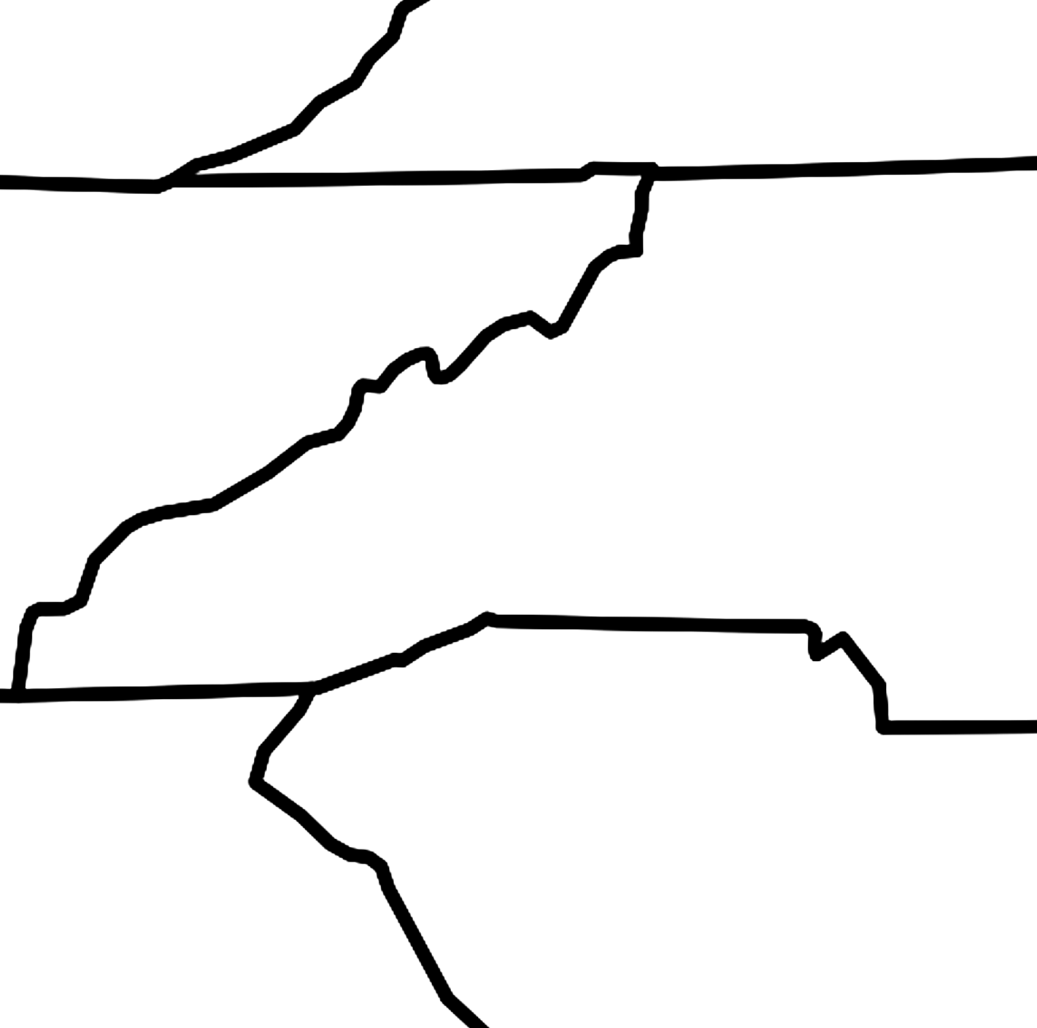
Mapping Blue’s Journey
Use this map to show the journey of Blue and the Overmountain Men. Use the story to mark the places they traveled, and the path they followed.
Name: _____________________
Joseph’s Journal
Your teacher will give you a part of Blue’s March to read. Imagine you are Joseph during this part of the journey and write a journal entry from his point of view. Describe what Joseph might have seen, heard, felt, and done in that moment. Try to picture the weather, the land around him, the people he’s with, and what might be on his mind as he marches.
| Journal Entry |
|---|