
Rivers and Resistance: Freedom Seeking in Eastern NC
Join us for Rivers and Resistance: Freedom Seeking in Eastern North Carolina
A transformative, place-based workshop designed for middle and high school teachers.
- Virtual Event Kick Off (via Zoom) on Thursday, March 26 (5 PM - 7:30 PM)
- Immersive Learning in Eastern NC Friday, April 10 - Sunday, April 12, 2026
APPLICATION DEADLINE is February 22
Event Overview
Throughout North Carolina's early history, many enslaved people carved out freedom for themselves, some using the waterways, swamps, and diverse landscapes of eastern North Carolina as pathways to liberation. This immersive weekend experience will highlight the courageous acts of resistance and resilience by those who escaped or aided others in their journey to freedom.
Participants will explore the historical significance of key sites, including DNCR's Somerset Place and Historic Edenton, delving into the stories of enslaved people like Harriet Jacobs and many others. Through interaction with top scholars, tours, discussions, and hands-on activities, the workshop will weave together history and science, connecting the natural ecology of the region—its rivers, swamps, and forests—with the survival strategies of freedom seekers.
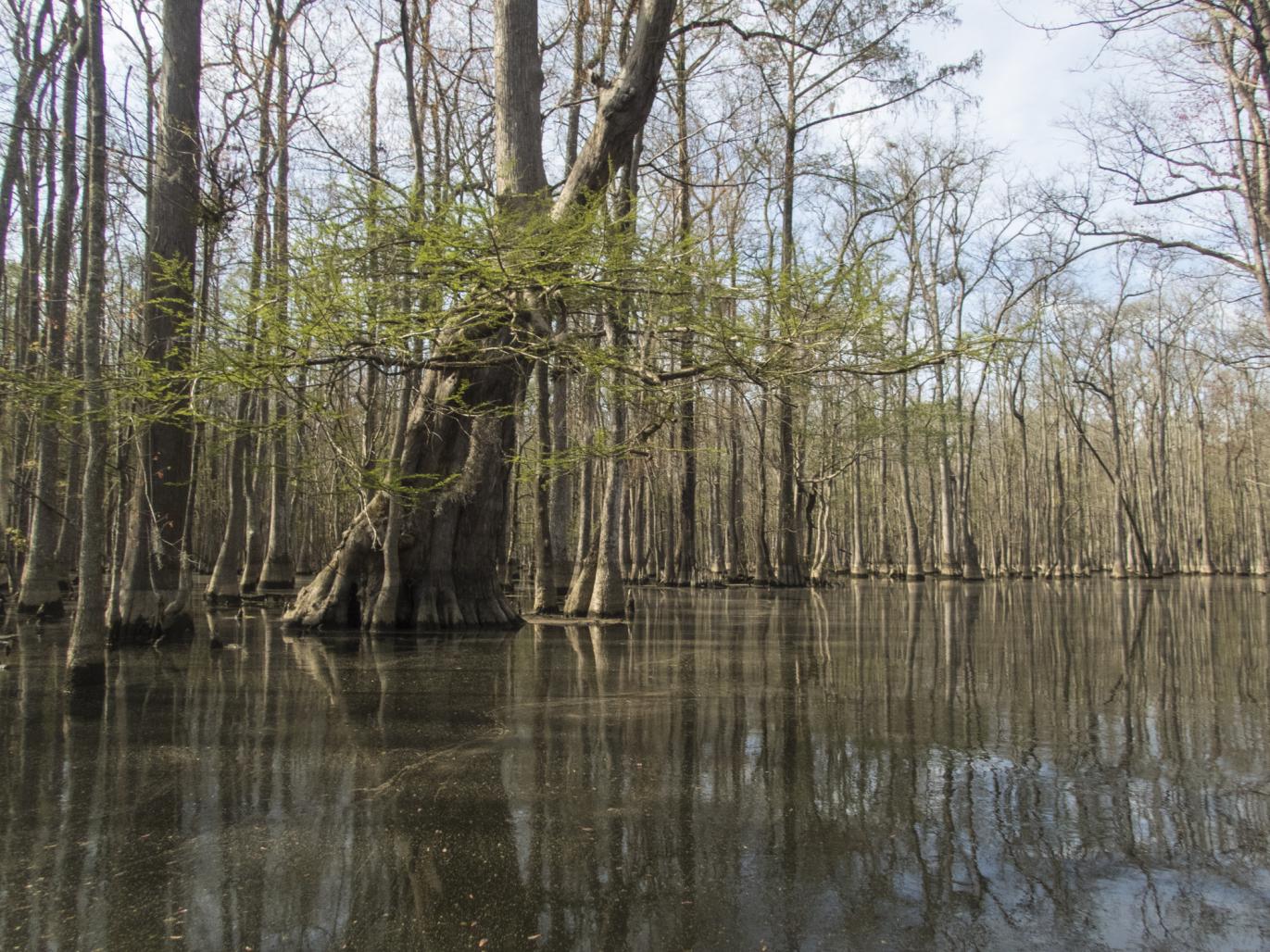
Attendees will also have the unique opportunity to canoe the very waterways enslaved people navigated, offering an immersive experience in the natural environment that shaped their journeys. Guided by DNCR's NC Museum of Natural Sciences, teachers will gain insights into the region’s ecosystems and learn how waterways and landscapes influenced the history, culture and experiences of freedom seekers.
In addition to examining the physical landscapes of resistance, we will explore cultural strategies of survival and freedom, such as the role of foodways in sustaining communities. We will be joined by Adé Carrena, an award-winning chef, culinary artist, storyteller, and filmmaker, who will guide us through the rich tapestry of Southern culinary traditions and their deep roots in African diasporic culture. As she leads our group in preparing a shared meal, participants will experience firsthand how recipes became vessels of memory and resilience.
Equally powerful is the role of music and spirituals, songs that served as both comfort and covert communication, embedding directions and encouragement within their melodies. Acclaimed scholar and singer Mary D. Williams will join us for a private performance sharing some of the spirituals that were a source of strength through generations. These cultural practices were not mere expressions of creativity; they were acts of quiet defiance, sustaining hope and forging pathways to liberation.
Teachers will leave with new perspectives on integrating history, culture, science, and nature into comprehensive lessons, as well as strategies for teaching the history of slavery and freedom seeking in effective and responsible ways.
Rivers and Resistance Agenda
- 5:30 PM - Introductions and Event Overview
- 5:45 PM - Freedom and Resistance in Eastern NC | Dr. Antwain Hunter, UNC-Chapel Hill
Dr. Antwain Hunter will provide context regarding the complex landscape of enslavement, resistance, and community-building in eastern North Carolina. Drawing on his expertise in the history of slavery, maroon communities, and Black life in the rural South, Dr. Hunter will illuminate how the region’s waterways, swamps, and small-town networks shaped both the daily realities of bondage and the possibilities for freedom. This session will help us begin to understand how eastern North Carolina became a distinctive site of both oppression and liberation.
- 3:30 PM - Arrivals
- 4:00 PM - Opening Circle: Roots, Rivers, and Shared Purpose
A facilitated welcome session will build community, sets intentions, and introduce the themes of resistance, ecology, and cultural memory that will guide our three-day experience together. - 4:30 PM - Land, Labor, and Liberation: Stories from Somerset Place
Somerset Place, part of DNCR’s State Historic Sites Division, is one of North Carolina’s largest plantation sites. In a private tour, we will focus on the lives, resistance strategies, and enduring legacies of the enslaved people who lived and labored on this land. - 6:00 PM - Dinner & Gathering at Day’s End
We will end our time at Someset with a shared meal offering space for reflection, connection, and informal conversation with fellow participants and facilitators. - 7:30 PM - Travel to Eastern 4-H Center
- 6:00 AM - Depart for Cashie River Canoe & Kayak Rentals
- 7:00 AM - Pathways to Freedom: Canoeing the Cashie
The Cashie River is a slow‑moving blackwater river that flows through dense
wetlands, cypress stands, and quiet bottomland forests. Long used by
Indigenous peoples, traders, and river communities, it also served as a pathway
for freedom seekers who navigated the region’s dense swamps and winding
channels. An immersive paddle guided by DNCR’s NC Museum of Natural
Sciences will allow participants to explore the ecological landscape and consider
the natural conditions that shaped escape routes, survival strategies, and acts of
quiet resistance. - 11:15 AM - Return to Eastern 4-H Center + Break
Time to decompress, journal, or simply absorb the morning’s experience. - 12:30 PM - Exploring Memory, Culture, and Resistance Through Foodways
Chef and storyteller Adé Carrena will lead participants in preparing a shared meal while exploring the role of food in sustaining enslaved communities, preserving identity, and transmitting knowledge across generations. - 2:30 PM - Rest
Unstructured time to rest, walk, or reflect before the afternoon’s programming. - 3:30 PM - Depart for Historic Edenton
- 4:00 PM - Walking Tour of Historic Edenton
Site staff from Historic Edenton, part of DNCR’s Division of State Historic Sites, will provide a guided tour tracing the rich African American history of the town, including stories of freedom seekers such as Harriet Jacobs, while illuminating the town’s layered histories of enslavement, resistance, and community resilience. - 6:00 PM - Dinner and Songs of Freedom
We’ll have an evening meal to dine, reflect and fellowship, followed by an intimate performance and discussion with scholar and vocalist Mary D. Williams, exploring how spirituals carried messages of hope, direction, and liberation.
- 8:30 AM - Breakfast
- 9:00 AM - Teaching Rivers and Resistance: Integrating History, Ecology & Culture
This collaborative session will help translate the weekend’s experiences into classroom practice, offering strategies for teaching the history of slavery and freedom seeking with accuracy, sensitivity, and interdisciplinary depth. - 11:00 AM - Adjourn: Carrying the Stories Forward
Participants head home with new insights, resources, and connections to support their teaching and continued learning.
Attending educators will receive:
- 2.0 CEUs (with the completion of pre-readings)
- Overnight accommodations (Friday and Saturday evening) at the Eastern 4-H Center and meals
- Private access to key historic sites such as Historic Edenton and Somerset Place.
- A guided paddle (via canoe) along the Cashie River, with a focus on nature and the environmental factors that shaped the experiences of enslaved people. Discussions on the intersections of history, nature, and science in the region
- A virtual keynote by Dr. Antwain Hunter, UNC-Chapel Hill
- A hands-on foodways workshop and lunch with Adé Carrena, an award-winning chef, culinary artist, storyteller, and filmmaker
- A private performance by Mary D. Williams that focuses on the role of music in the resistance and resilience of enslaved people
- Resources and strategies for teaching about slavery, resistance, freedom, and resilience.
Application and Requirements
Applications are open to teachers of all disciplines in grades 6-12 who evidence in their application how this experience directly connects with their work in the classroom.
Space is limited to 16 teachers; filling out this application does not guarantee your registration. Selections will be made based on the responses provided, as well as ensuring representation from multiple grades, subject areas, and geographies.
Priority will be given to applications from cross-disciplinary teams of two or more teachers from the same school who apply (e.g., a social studies teacher and a science teacher from the same school interested in teaching this content across curriculums) Registrants who have not previously participated in a workshop provided by the hosting organizations will also receive preference.
Applicants must be currently employed full-time in a North Carolina public school (including public charters), teaching at least 50% in person, and must make clear in their responses how they will utilize this experience back in the classroom.
Before submitting an application, please ensure you can participate in the virtual kick-off on Thurs. March 26 at 5:30 PM, arrive at Somerset Place by 4 PM on Friday, April 10, and that you can attend all portions of the agenda until 11 AM on Sunday, April 12. (If you will need to leave school early to arrive by 4 pm on April 10, please get approval from your principal before applying.) Late arrivals and early departures cannot be accommodated.
You will know that your application was submitted when you receive an auto-message noting such. (We recommend keeping a local copy of your responses before submitting.) If you are unsure your application was submitted, you can e-mail educationoutreach@dncr.nc.gov for a confirmation.
You should receive a response to your application no later than March 9. (Please hold the dates until that point.) If after March 9 you have not received a response and a message is not in your junk/spam folder, please contact us at educationoutreach@dncr.nc.gov.
Acceptances & Cancellations
If a spot is offered to you, you must confirm your participation by responding to your acceptance e-mail within three business days. If you are accepted and at any point find that you are no longer able to participate, it is critical that you provide ample notice of cancellation. Failure to do so prevents other teachers on the wait list from participating and results in waste of food, accommodations, and other resources. Teachers who do not cancel and do not show up may have their school billed for a "no show" fee of $100.
Questions?
Contact christie.norris@dncr.nc.gov.
This workshop is a collaboration between the North Carolina Department of Natural and Cultural Resources (DNCR) divisions/programs (including the North Carolina Museum of Natural Sciences, the America 250 NC initiative, Division of Historic Sites) and Carolina K-12. It is funded by DNCR’s America 250 NC initiative.