Learn about back-to-school challenges from over 50 years ago in a free online program hosted by the State Archives of North Carolina, a division of the N.C. Department of Natural and Cultural Resources.
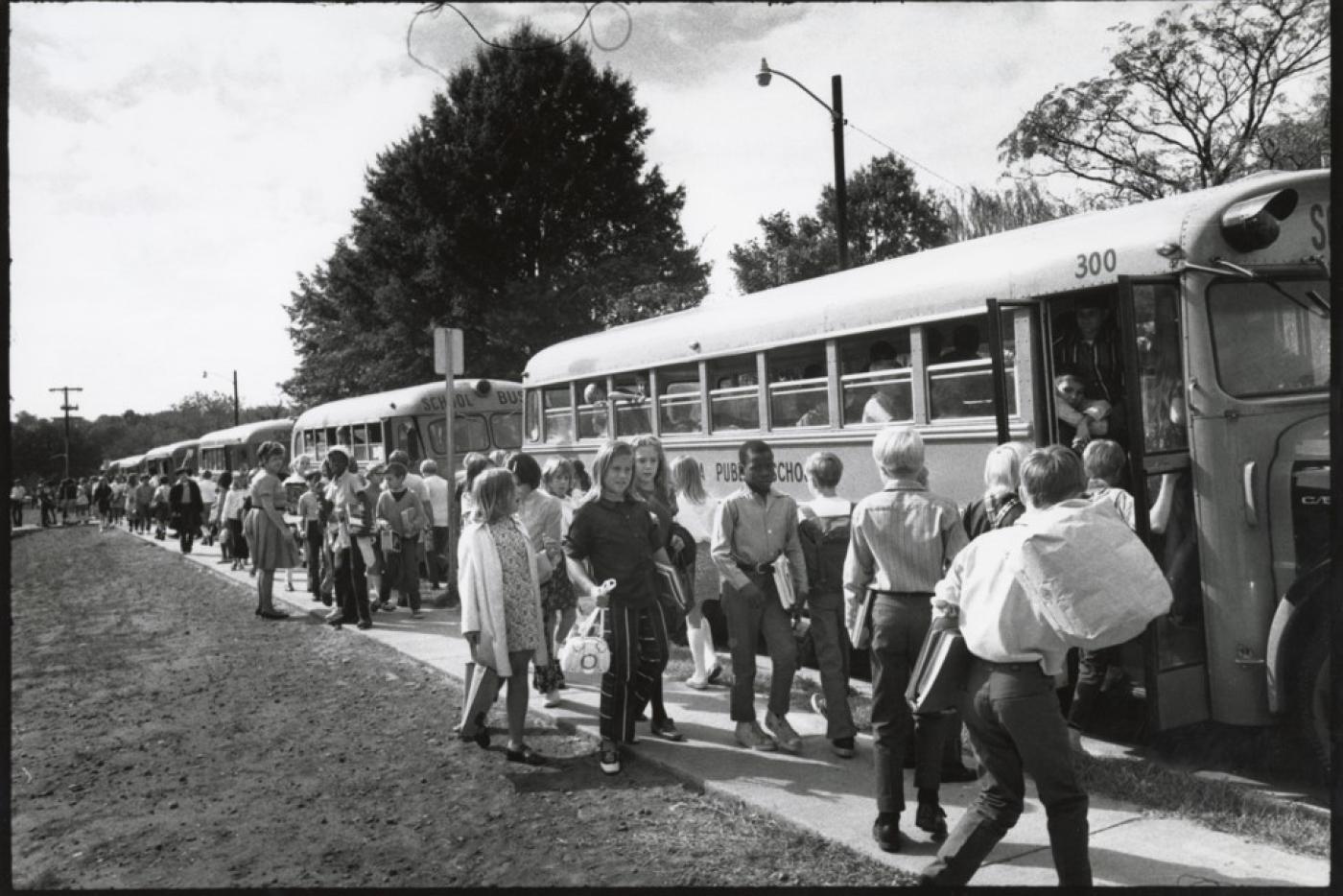
Archivists will present historical materials including letters to the governor and oral histories relating to the busing controversy during the early 1970s in “All Eyes on Charlotte: Perspectives on Busing in the Battle to Integrate North Carolina Schools.” The records shed light on public opinion surrounding integration and public officials’ efforts to adhere to the federal government’s integration mandate after the U.S. Supreme Court case Swann v. Charlotte-Mecklenburg Board of Education (1971).
This free webinar happens Sept. 16 from 1-2 p.m. Participation is free but advanced registration is required at this Zoom link. For more information, contact Adrienne Berney at adrienne.berney@dncr.nc.gov or 919-814-6863.
Swann was a landmark court case in which civil rights attorney Julius Chambers sued school administrators on behalf of six Black families, paving the way for a new Charlotte-Mecklenburg school assignment plan in 1969. This plan required the busing of students away from their neighborhoods to previously segregated schools in order to achieve a racial balance.
Backlash to this plan spread quickly, and constituents statewide vented their frustrations in letters to Governor Bob Scott as the day-to-day reality of compulsory integration took hold. Along with oral histories, a newly digitized collection of thousands of letters from concerned citizens to Governor Scott documents the longstanding battle for equality through the voices of those who experienced the growing pains of school integration firsthand.
About the State Archives of North Carolina
The State Archives of North Carolina preserves and provides access to the state's historical records. Through its extensive collections, educational programs and exhibitions, the State Archives helps connect North Carolinians with their shared history.
About the North Carolina Department of Natural and Cultural Resources
The N.C. Department of Natural and Cultural Resources (DNCR) manages, promotes, and enhances the things that people love about North Carolina – its diverse arts and culture, rich history, and spectacular natural areas. At more than 100 sites across the state, the department enhances education, stimulates economic development, improves public health, expands accessibility, and strengthens community resiliency. For more information, please visit www.dncr.nc.gov.