
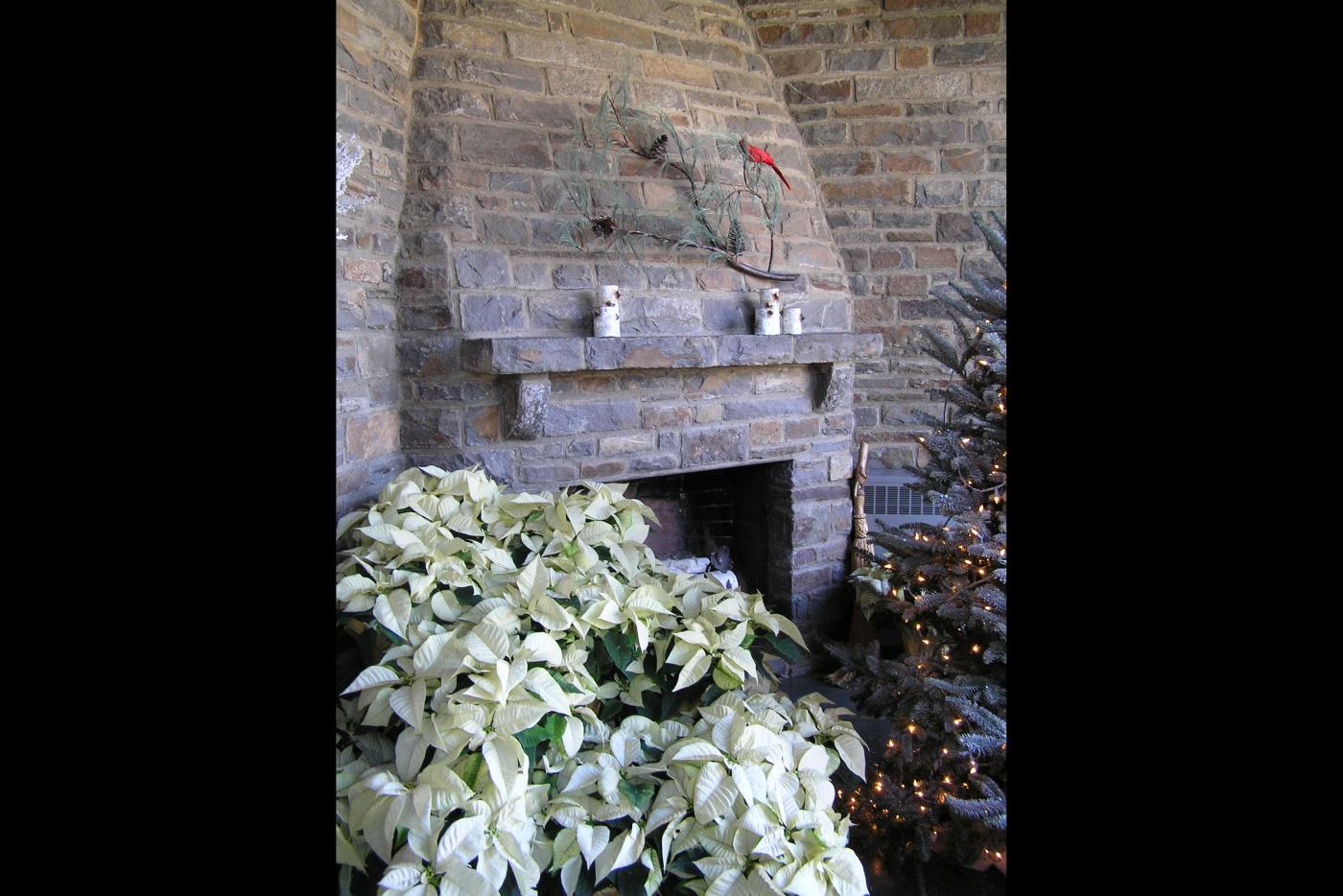
Celebrate the holiday season at the Governor’s Western Residence Holiday Open House, Saturday, Dec. 13 from 10 a.m.-5 p.m. and Sunday, Dec. 14 from 10 a.m.-5 p.m.
Guests are invited to travel to the Western Residence via shuttle bus. Shuttles will be available for guests to board in the parking lot located at 143 Executive Park, at the base of Town Mountain Road, and will run continuously during the event. There is no charge for the shuttle or the open house.
Reservations are not needed to attend the open house. Guests are invited to tour the residence, which has been decorated for the season.
Visitors are welcome to bring canned food donations for the MANNA Food Bank, which will be collected during the open house.
Purses and personal bags will not be permitted at the residence, but plastic or paper grocery bags for transporting canned food will be permitted. Guests should prepare to leave bags and purses in their cars before boarding the shuttle bus.
The Western Residence features breathtaking views of Mt. Pisgah and downtown Asheville. Built in 1939, the home was donated to the state in 1964 by the Asheville Chamber of Commerce. It has been used by 12 administrations and is one of only four official state second residences in the United States. See a video tour of the Western Residence at https://www.youtube.com/watch?v=VgME7sw9uQY.
Note to Reporters and Editors: For a tour of the residence, please contact Holly Jones at 828-7071649 or d.holly.jones@nc.gov for scheduling.
About the North Carolina Department of Natural and Cultural Resources
The N.C. Department of Natural and Cultural Resources (DNCR) manages, promotes, and enhances the things that people love about North Carolina – its diverse arts and culture, rich history, and spectacular natural areas. Through its programs, the department enhances education, stimulates economic development, improves public health, expands accessibility, and strengthens community resiliency.
The department manages over 100 locations across the state, including 27 historic sites, seven history museums, two art museums, five science museums, four aquariums, 35 state parks, four recreation areas, dozens of state trails and natural areas, the North Carolina Zoo, the State Library, the State Archives, the N.C. Arts Council, the African American Heritage Commission, the American Indian Heritage Commission, the State Historic Preservation Office, the Office of State Archaeology, the Highway Historical Markers program, the N.C. Land and Water Fund, and the Natural Heritage Program. For more information, please visit www.dncr.nc.gov.