
Find a treasure trove of places to explore the themes of freedom and revolution in Greensboro and the surrounding area. Leading up to the Revolutionary War, all the way through the Civil Rights movement, this area sparked ideas and actions that shaped our country.
Here are important stops in and around Greensboro, NC that you’ll want to include on the Road to America 250:
1. Alamance Battleground State Historic Site
Alamance Battleground State Historic Site, 19 miles east of downtown Greensboro, takes you back to the first rumblings of revolution. On this site in 1771, an armed rebellion of farmers battled against royal governor William Tryon’s militia. The War of the Regulation erupted from the dissatisfaction of the population in the years leading up to the American Revolution.
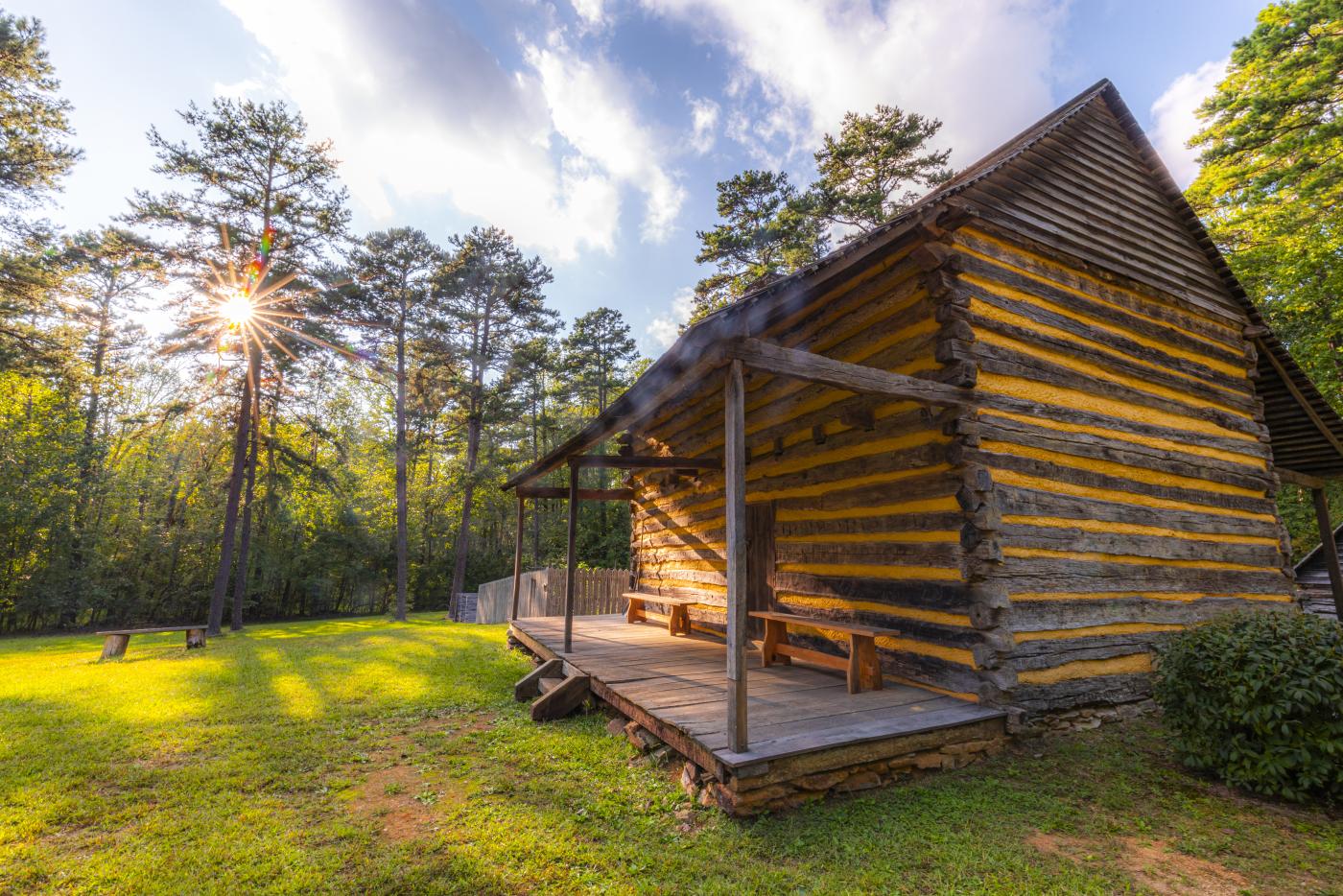
At this historic site, visitors can explore the grounds including monuments and a three-quarter-mile nature trail. Guided tours of the Allen House are available upon request. This log dwelling is characteristic of the time period in the Piedmont region of North Carolina.
2. Guilford Courthouse National Military Park
Guilford Courthouse National Military Park commemorates the Battle of Guilford Courthouse in 1781, a crucial turning point in the American Revolution. Trails and interpretive markers guide visitors through the grounds. Highlights of the site are the Fisher’s Hornets Monument and Colonel Greene Monument.
3. Greensboro History Museum
The Greensboro History Museum showcases Greensboro’s story in the fight for independence and freedom. This includes in-depth exploration of local Revolutionary War history, and the city’s extraordinary impact on the Civil Rights Movement. Exhibits highlight the resilience and contributions of Black residents in shaping the nation’s social and cultural landscape.
4. The Historic Magnolia House
The Historic Magnolia House represents an important story in North Carolina’s Black history. “The Negro Motorist Green Book,” published between 1936 and 1966, was both a travel guide and a tool of resistance designed to confront the realities of racial discrimination in the United States and beyond. The Historic Magnolia House was listed as a refuge for African American travelers during the segregation period.
5. The International Civil Rights Center and Museum
Downtown Greensboro is home to The International Civil Rights Center & Museum. This is where four North Carolina A&T students sparked a nationwide movement when they sat at the Woolworths lunch counter on Feb. 1, 1960. Visitors are invited to explore its powerful exhibits that honor the courage of those who fought against segregation and reflect on the ongoing struggle for civil rights and equality.
6. February One Monument
On the campus of North Carolina A&T State University, you’ll find The February One Monument. Those four N.C. A&T freshmen who launched the Greensboro lunch counter sit-in on Feb. 1, 1960, are immortalized in this monument dedicated to them and all those who supported the movement.
More to Explore:
- Historical Attractions and Activities in Alamance County
- Visit NC’s Encounter Revolutionary History in North Carolina
- Visit Greensboro’s Revolutionary Road Itinerary
- Visit NC’s Journey through History on the NC Civil Rights Trial
- Visit Greensboro’s African American History
- Learn more about The Greenbook Project