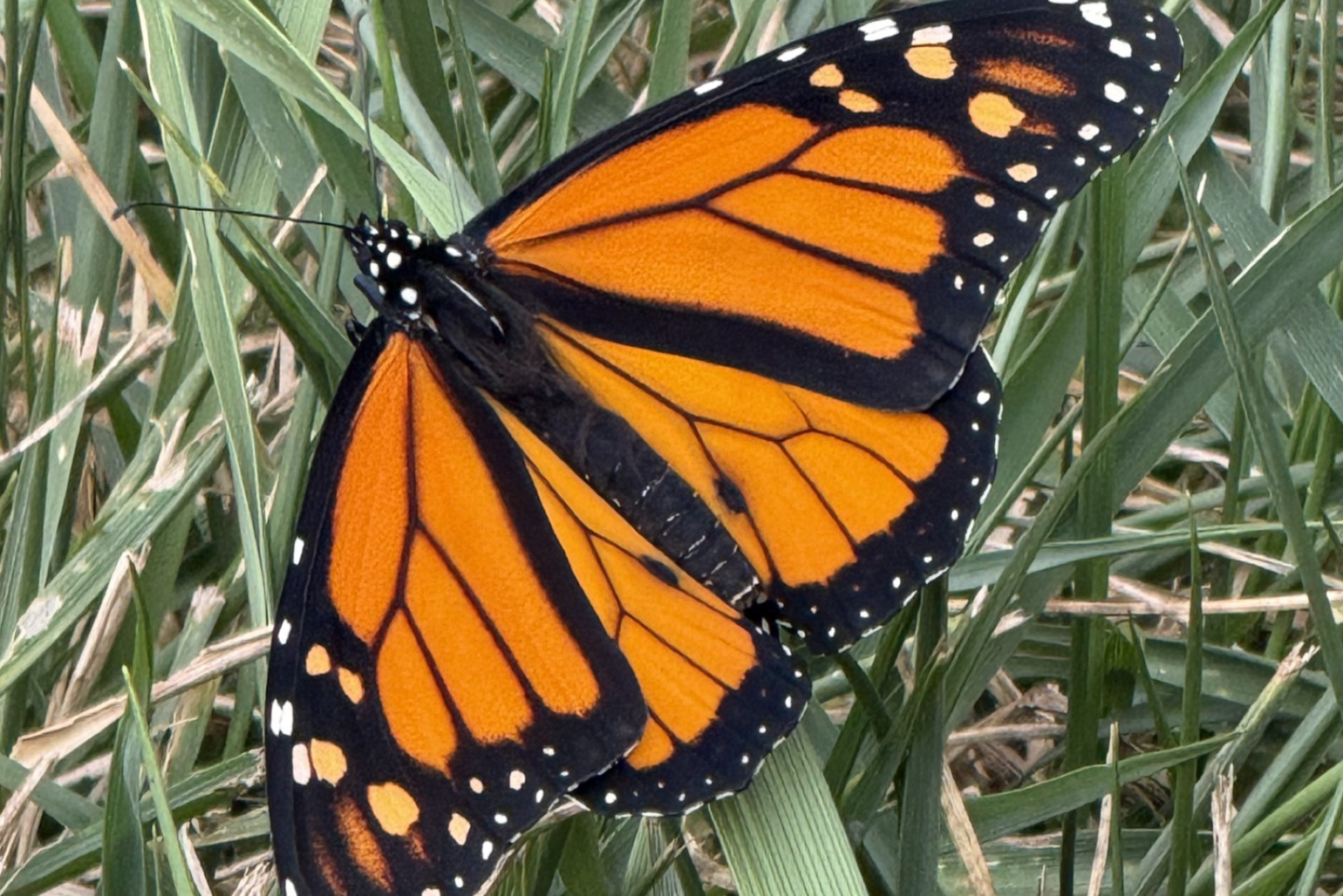
Monarch butterflies have long held a special place in my heart. Since 2018, my family and I have cultivated a monarch pollinator garden, participated in tagging monarchs for the Monarch Watch program, and enjoyed watching Flight of the Butterflies. Visiting the El Rosario Butterfly Sanctuary remains a dream on my bucket list! This passion naturally found its way into my classroom, where I introduce Monarchs as a cultural symbol during our Day of the Dead unit in Spanish class.
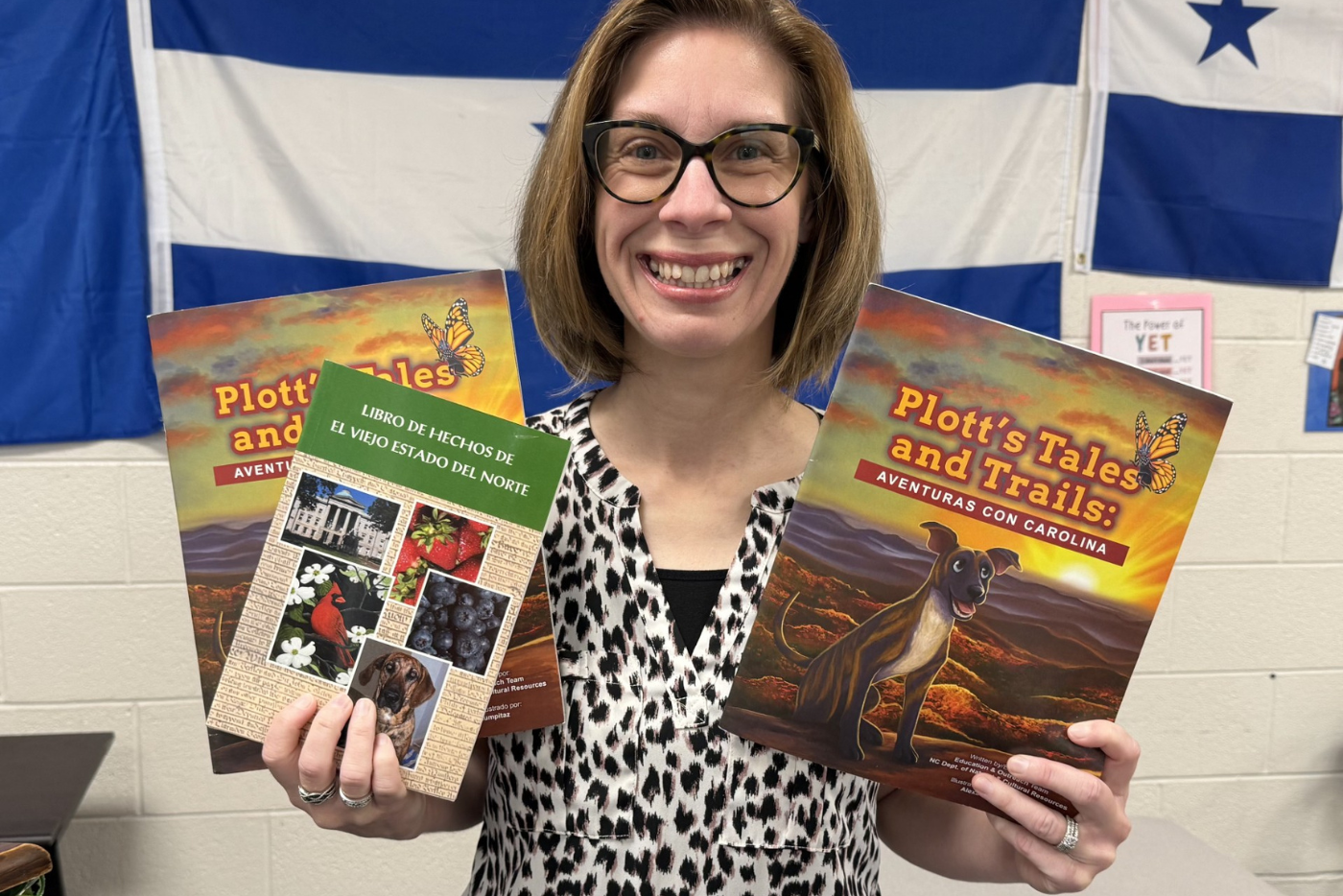
As a former high school teacher now navigating the vibrant world of middle school, I’m constantly seeking ways to tailor my instruction to be more interactive and age-appropriate. I quickly learned that movement and hands-on learning are essential for engaging middle schoolers. Thanks to Plott’s Tales and Trails: Aventuras con Carolina, a free dual-language publication offered by the North Carolina Department of Natural and Cultural Resources (DNCR), I’ve been able to enrich my cultural lessons, building language skills and fostering cross-curricular connections in ways I hadn’t imagined before.
Before we read Plott’s Tales & Trails, my 6th graders and I participated in the Symbolic Monarch Migration Project, which sends the monarch butterflies that we colored to children who live near Monarch sanctuaries in Mexico. I shared photos of monarchs from my yard and students learned how to correctly ID male and female monarchs. Students shared stories of where they have seen monarchs in their yard or at the park and we all agreed that being able to visit a monarch sanctuary in the future would be amazing!
To introduce the book, we began by exploring cognates and false cognates between Spanish and English. I curated a vocabulary list of true cognates for students to study and created matching cards featuring non-cognate Spanish vocabulary paired with images. These were used in a classroom scavenger hunt: I placed the cards around the room, and students searched for matches (Spanish to English, English to Spanish, or Spanish to image) to complete a vocabulary chart. The activity got students moving, and many turned it into a friendly competition, teaming up or racing solo to find all the terms first. It was an effective and engaging way to support vocabulary acquisition, especially for my lower-level English readers, while using visuals to build non-verbal connections.
The following day, students took turns reading aloud the bilingual dialogue between Plott and Carolina. This was another great opportunity for my emerging readers to interact with the text in a supportive and meaningful way. After reading, our discussion naturally shifted to places students had visited in North Carolina. They enthusiastically identified sites from the story and voted on which ones they’d most like to explore themselves.
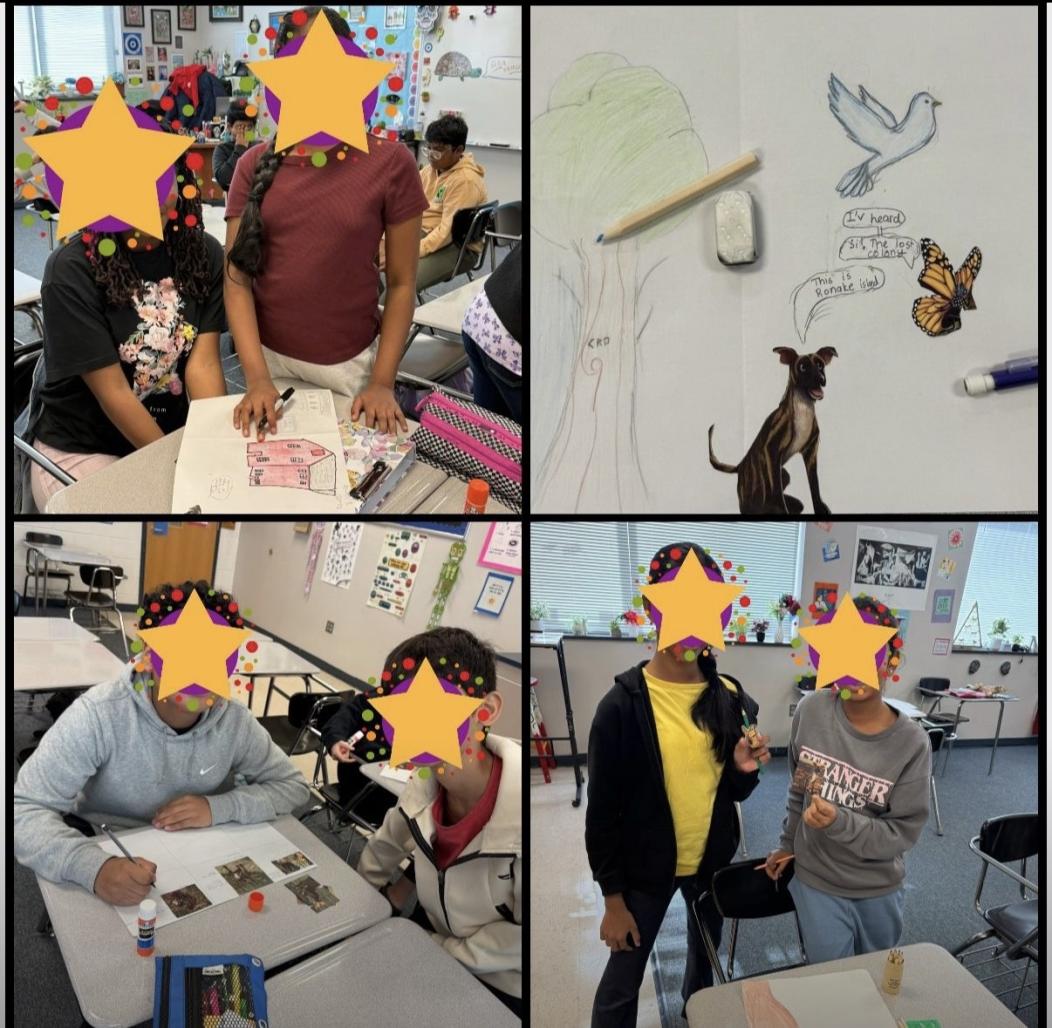
Inspired by their excitement, I extended the lesson by inviting students to write the next “page” of Plott and Carolina’s journey. Working in pairs, they researched additional historical or culturally significant locations in North Carolina, including places they had visited or hoped to see one day. Each student-created page included dialogue bubbles with at least three Spanish terms. They could reuse vocabulary from the original story or select new words that fit their narrative, which I helped them translate. Most chose to do both, expanding their vocabulary while applying it creatively.
Students were highly engaged throughout the research process, citing sources appropriately and discovering new insights about their own “backyard.” After three days of preparation, they proudly read their stories aloud to the class. Plott and Carolina’s adventures continued, learning new Spanish words like volar (to fly) and batalla (battle), while “traveling” to the mountains to visit the Cherokee, to the coast to learn about the Wright Brothers, to DNCR’s Alamance Battleground, and beyond.
I was incredibly proud of their work. They seamlessly blended Spanish vocabulary with fun facts about North Carolina, and everyone enjoyed hearing the imaginative stories their classmates created. But the excitement didn’t stop there! A first for both me and my students was taking a virtual field trip with the NC Museum of Art (NCMA) to learn about Día de los Muertos. Students made connections to prior lessons on architecture and recognized the Xoloitzcuintli dog sculpture from our earlier unit on Alebrijes.
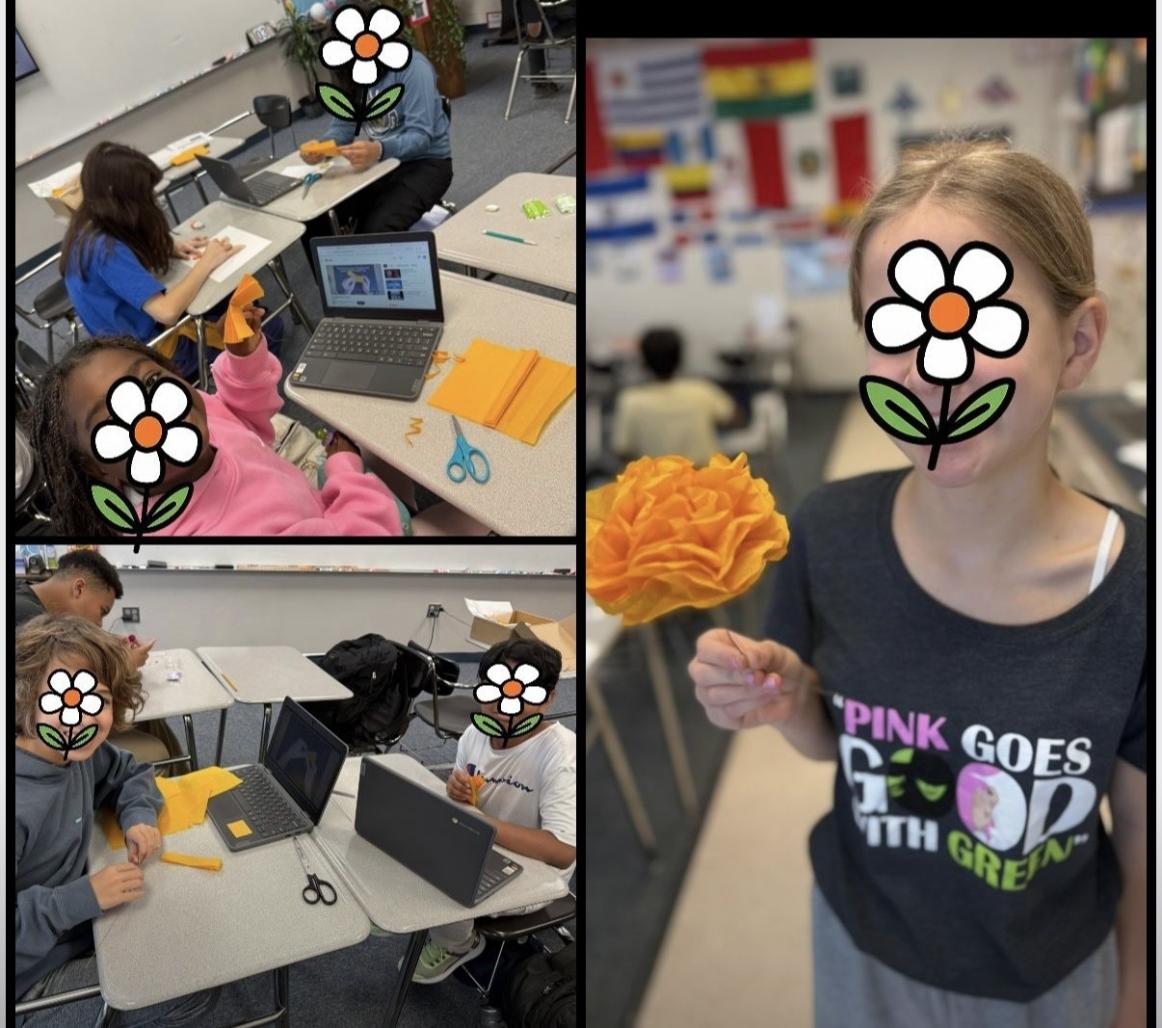
As part of the virtual tour, NCMA sent us a free craft kit to make paper marigolds. Students added their flowers to our classroom ofrenda alongside handmade papier-mâché monarch butterflies, tying together our cultural exploration with creativity and personal expression.
Thanks to DNCR, our journey wasn’t just about reading a story or learning a few Spanish words. It became a rich exploration of North Carolina and Mexico, past and present, filled with meaningful connections and joyful learning.
About the Author:
Jennifer Nichols is a Spanish teacher in Concord, NC who loves making cross-curricular and cross-cultural connections with her students through incorporating art, history, literature, and language in the classroom. This is made possible in part thanks to the North Carolina Department of Natural and Cultural Resources, including its NCMA and NCMA Winston-Salem divisions.
After 22 years of teaching she consistently seeks out innovative ways to hone her craft by participating in teacher fellowships with universities & organizations across North Carolina, the U.S., and abroad - including with the UNC African Studies Center, UNC Center for Middle East and Islamic Studies, TED, TCAB, UNC World View, and National Humanities Center.
Aside from teaching, Jennifer enjoys good books, chocolate, being outdoors with her family...and one day hopes to be fluent (or at least conversational) in Arabic, French, and ASL.